
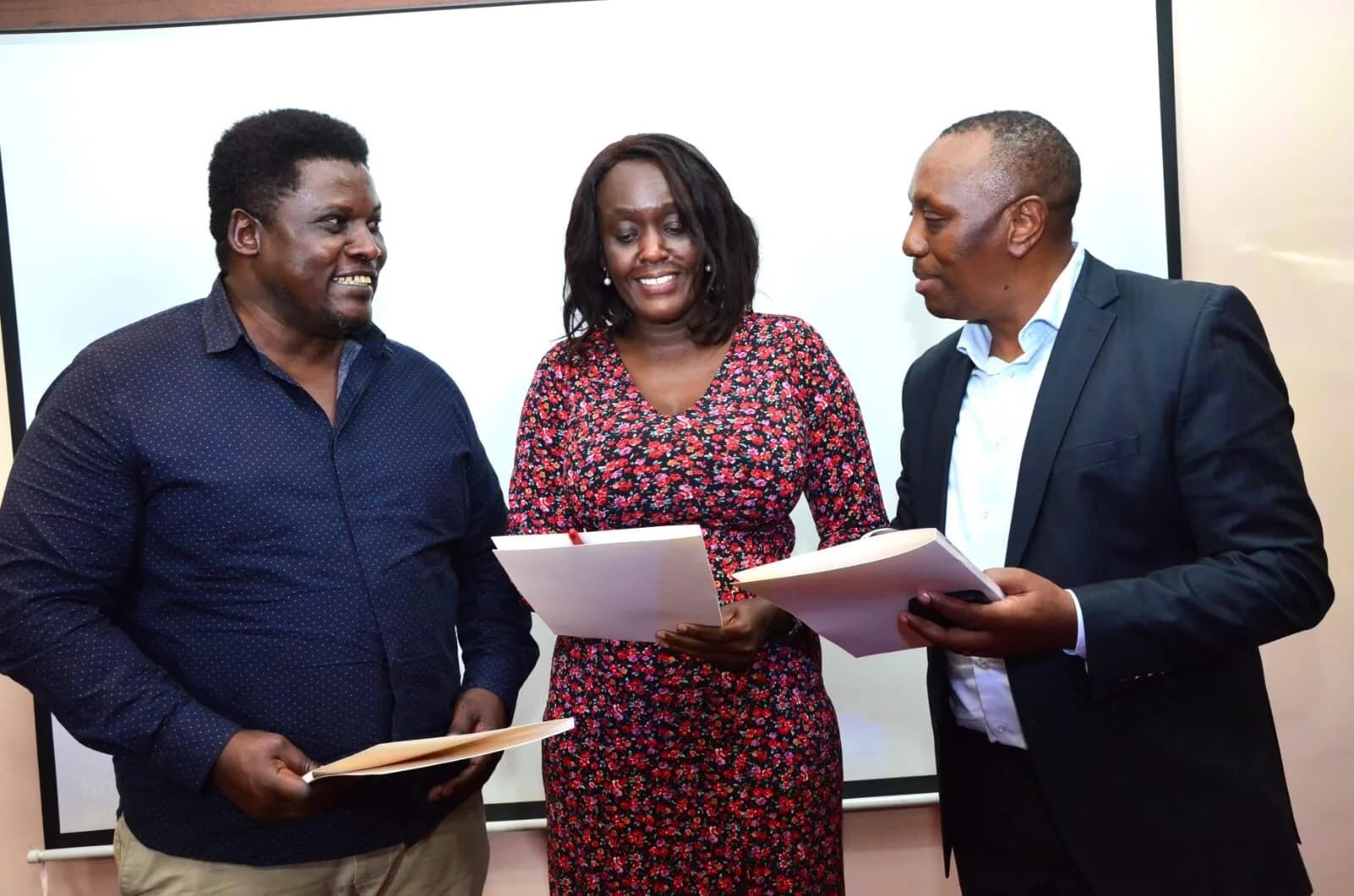
NAIROBI, Kenya,Oct 29 – High campaign costs, harassment and limited access to media platforms are emerging as barriers facing women and young people seeking elective positions ahead of Kenya’s 2027 General Election.
Political aspirants and media practitioners raised the concerns during a media salon organized by the Women and Youth Democratic Engagement (WYDE) Political Parties Project in Nairobi, calling for fair political coverage and greater inclusion within political parties.
The October 22 meeting brought together journalists, editors and political leaders to discuss how political parties and newsrooms can improve the participation and representation of women and young people in electoral politics.
Isaiah Kaaka, an aspirant for Kajiado West MP, said young candidates should not be limited to pursuing lower elective positions because of their age or financial circumstances.
“People can now choose a leader not by how much money is in their pocket or the bank. We should not have the mentality that because you are young, you should only vie for the MCA position; you can also vie for big positions.”
Wandiru Gladys, an aspirant for Kibra MP, said harassment remained a challenge for young women seeking political office, extending beyond physical assault to sexual harassment.
“Harassment is very real, especially for us young women. It goes beyond assault and goes up to sexual harassment. Politics is not a matter of life and death. We do not have to hurt each other to get the seat.”
Wanjiku Thiga, National Youth Leader of the Democracy for the Citizens Party, identified campaign financing and tokenism as issues requiring attention to enable more young people to contest elective positions.
“If I could change one thing, it would be campaign financing, and I would ask Kenyans to stop tokenism so that more young people can run for office,” said Thiga.
The concerns come as the cost of administering Kenya’s elections rises, putting pressure on public finances ahead of the 2027 General Election.
According to the National Treasury’s 2022 Post-Election Economic and Fiscal Report, the Independent Electoral and Boundaries Commission (IEBC) spent Sh34.54 billion on the 2022 polls, against an approved budget of Sh44.85 billion.
The IEBC has since revised its proposed budget for the 2027 General Election to Sh57.3 billion, with the funds intended to cover voter registration, election technology, ballot printing, staffing and logistics.
The electoral agency has cited the need to replace ageing Kenya Integrated Election Management System kits and register additional voters among the requirements driving its budget.
The figures cover the administration of elections and are separate from campaign expenditure by individual candidates, which includes transport, publicity, campaign staff and voter mobilisation.
The discussions also examined the role of newsrooms in covering women and young political leaders, with participants calling for consistent editorial standards that avoid gender- and age-based stereotypes.
Ela Obota, a sub-editor at Citizen Digital, said candidates should be subjected to the same editorial standards regardless of their gender or age.
“We can have more young people and more women vying for these elective positions. When covering a story about a candidate, just apply the same editorial test you would use to gauge a male aspirant versus a female aspirant or a young aspirant. Fair coverage is not necessarily favourable coverage. If a woman or young person is doing something wrong, it will be highlighted.”
The salon was held in connection with We Shall Lead: Voices Shaping the Future of Africa, a documentary filmed in Kenya, Uganda and Ghana exploring the experiences of women and young political leaders working within political institutions.


Comments
No comments yet. Be the first to share your thoughts.