

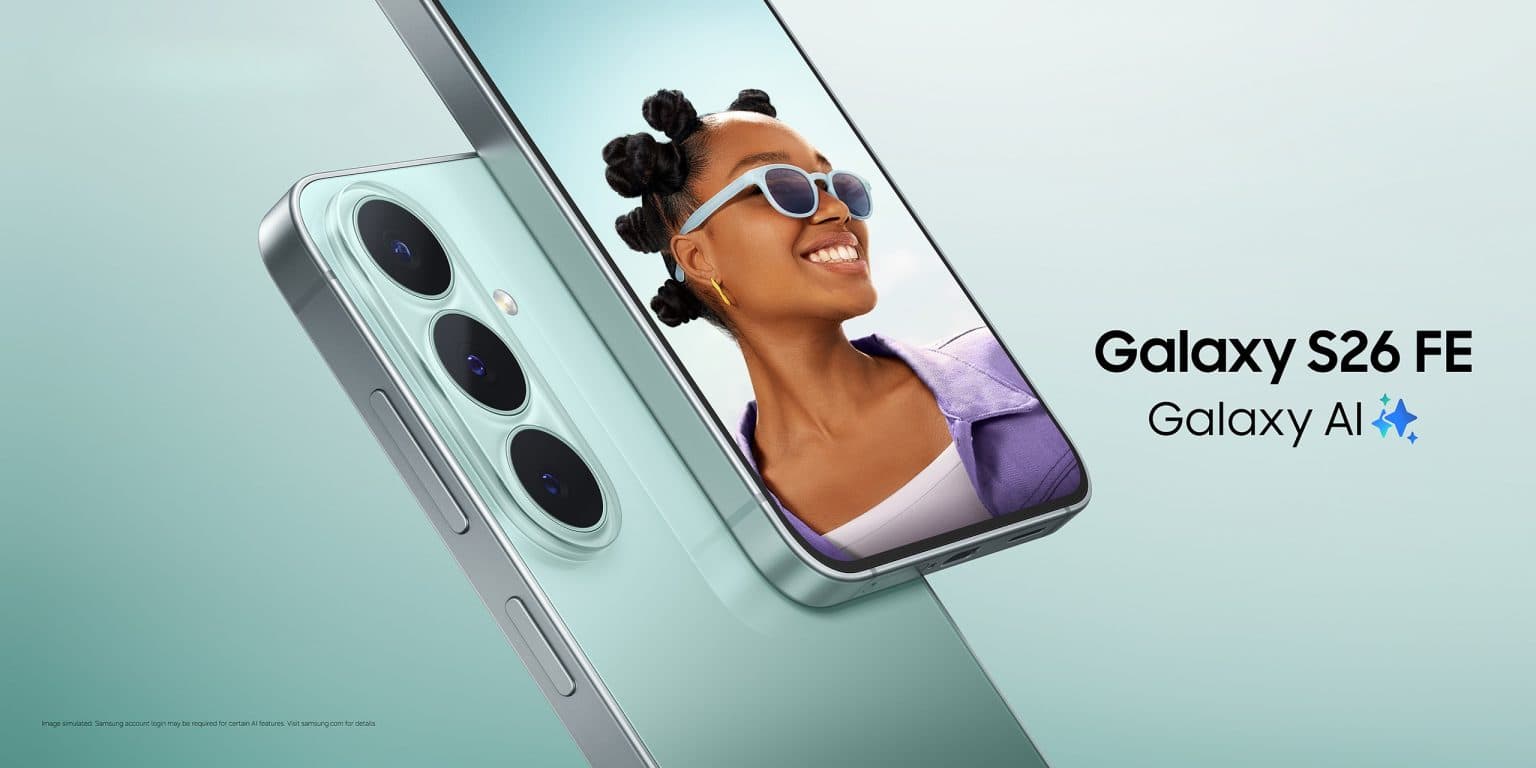
Samsung’s Fan Edition phones have traditionally offered a middle ground between flagship performance and a more approachable price. The Galaxy S26 FE continues that formula, but this time Samsung has made several changes that go beyond a simple cosmetic refresh.
Compared with the Galaxy S25 FE, the new model brings a newer 3nm processor, expanded Galaxy AI capabilities, upgraded image processing and a redesigned finish. The battery capacity and core camera configuration remain largely familiar, however, making the upgrade question less straightforward for existing owners.
Here’s how the two generations compare.
| Feature | Galaxy S25 FE | Galaxy S26 FE |
|---|---|---|
| Processor | 4nm Exynos 2400 | 3nm Exynos 2500 |
| CPU/GPU performance | — | Up to 30% faster |
| NPU performance | — | Up to 40% faster |
| Operating system | Android 16 / One UI 8 | Android 17 / One UI 9 |
| Main camera | 50MP | 50MP |
| Ultra-wide | 12MP | 12MP |
| Telephoto | 8MP, 3x optical zoom | 8MP, 3x optical zoom |
| Battery | 4,900mAh | 4,900mAh |
| Fast charging | 45W | 45W |
| Durability | Gorilla Glass Victus®+ / IP68 | Gorilla Glass Victus®+ / IP68 |
| Notable AI features | Generative Edit, Circle to Search | My FanCam, Now Nudge, subject tracking |
| Google AI Pro | — | 6-month trial |
The Galaxy S25 FE opted for a more understated matte aesthetic, while the Galaxy S26 FE takes a noticeably more expressive approach.
The newer phone introduces a glossy finish and fresh color options, including Pistachio and Blueberry. Both models continue to offer Corning® Gorilla® Glass Victus®+ protection and an IP68 rating for water and dust resistance.
The change isn’t necessarily about durability—the two phones offer similar protection—but the S26 FE has a more attention-grabbing appearance.
For buyers who care about how their phone looks and feels, the new finishes could be one of the more immediately noticeable differences.
The biggest upgrade is inside the phone.
The Galaxy S25 FE uses the 4nm Exynos 2400, a processor capable of handling everyday tasks, multitasking, social media and casual gaming without much trouble.
The Galaxy S26 FE moves to Samsung’s 3nm Exynos 2500. Samsung claims up to a 30% improvement in CPU and GPU performance, while NPU performance is up by as much as 40%.
Those gains should matter most to demanding users. Mobile games can benefit from additional graphics performance, while creators working with video, photography and other demanding applications can take advantage of the extra processing headroom.
The newer manufacturing process can also improve efficiency and thermal performance, potentially allowing the S26 FE to maintain performance for longer before heat becomes a limiting factor.
For ordinary users, the difference may not always be dramatic. For power users, however, the processor upgrade is one of the S26 FE’s most significant improvements.
Samsung is also putting greater emphasis on artificial intelligence with the S26 FE.
The phone arrives with Android 17 and One UI 9, introducing newer Galaxy AI tools such as My FanCam, Now Nudge and automated subject tracking for video capture.
The S25 FE already offered features such as Generative Edit and Circle to Search, so Samsung isn’t starting from scratch. Instead, the S26 FE builds on that foundation with faster processing and additional AI capabilities.
Tasks such as photo editing, voice transcription and AI-powered suggestions should benefit from the newer processor and its faster NPU.
The S26 FE also comes with a six-month trial of Google AI Pro, adding another incentive for users who want access to Google’s premium generative AI tools.
On paper, the camera hardware looks remarkably similar.
Both phones use a 50MP main camera, a 12MP ultra-wide camera and an 8MP telephoto camera offering 3x optical zoom.
The S26 FE’s advantage comes from processing rather than dramatically different camera hardware.
Its upgraded Image Signal Processor is designed to improve low-light photography, dynamic range and video stabilization. Super Steady Horizon Lock also adds a new stabilization capability for video recording.
That means the S26 FE isn’t necessarily a completely different camera phone. Instead, it is designed to produce better results from a familiar camera configuration through improved processing and software.
Samsung hasn’t increased battery capacity.
Both generations use a 4,900mAh battery and support 45W fast charging.
The difference is efficiency. The S26 FE’s 3nm processor is designed to deliver more performance while consuming less power, which can translate into longer battery life under comparable usage.
The actual improvement will depend on how the phone is used, but heavy users stand to benefit most from efficiency gains.
The answer depends largely on which phone you’re coming from.
The S26 FE represents a substantial generational step. You’ll get newer hardware, improved performance, newer AI capabilities and a refreshed design.
The S26 FE offers Samsung’s latest Fan Edition hardware and software, making it the more current option if the price difference is reasonable.
That’s where things get more complicated.
The S25 FE remains capable of handling everyday tasks, gaming, photography and Samsung’s existing AI features. Its 4,900mAh battery, 45W charging and triple-camera setup also remain competitive.
The S26 FE’s improvements are most compelling for users who regularly demand more from their phones—particularly gamers, content creators and heavy multitaskers.
The Galaxy S26 FE is a clear evolution of Samsung’s Fan Edition formula.
The 3nm Exynos 2500 is the biggest hardware change, while the expanded AI experience, improved image processing and refreshed design add further reasons to consider the newer phone.
But the similarities matter too. The camera configuration, battery capacity and charging speed remain unchanged, so S25 FE owners shouldn’t expect an entirely different smartphone experience.
For someone upgrading from an older Fan Edition model, the S26 FE makes a stronger case. For S25 FE owners, the decision comes down to how much they value the performance gains, newer AI features and design changes.
In short, the Galaxy S26 FE is an upgrade and it’s worth upgrading.

Comments
No comments yet. Be the first to share your thoughts.