
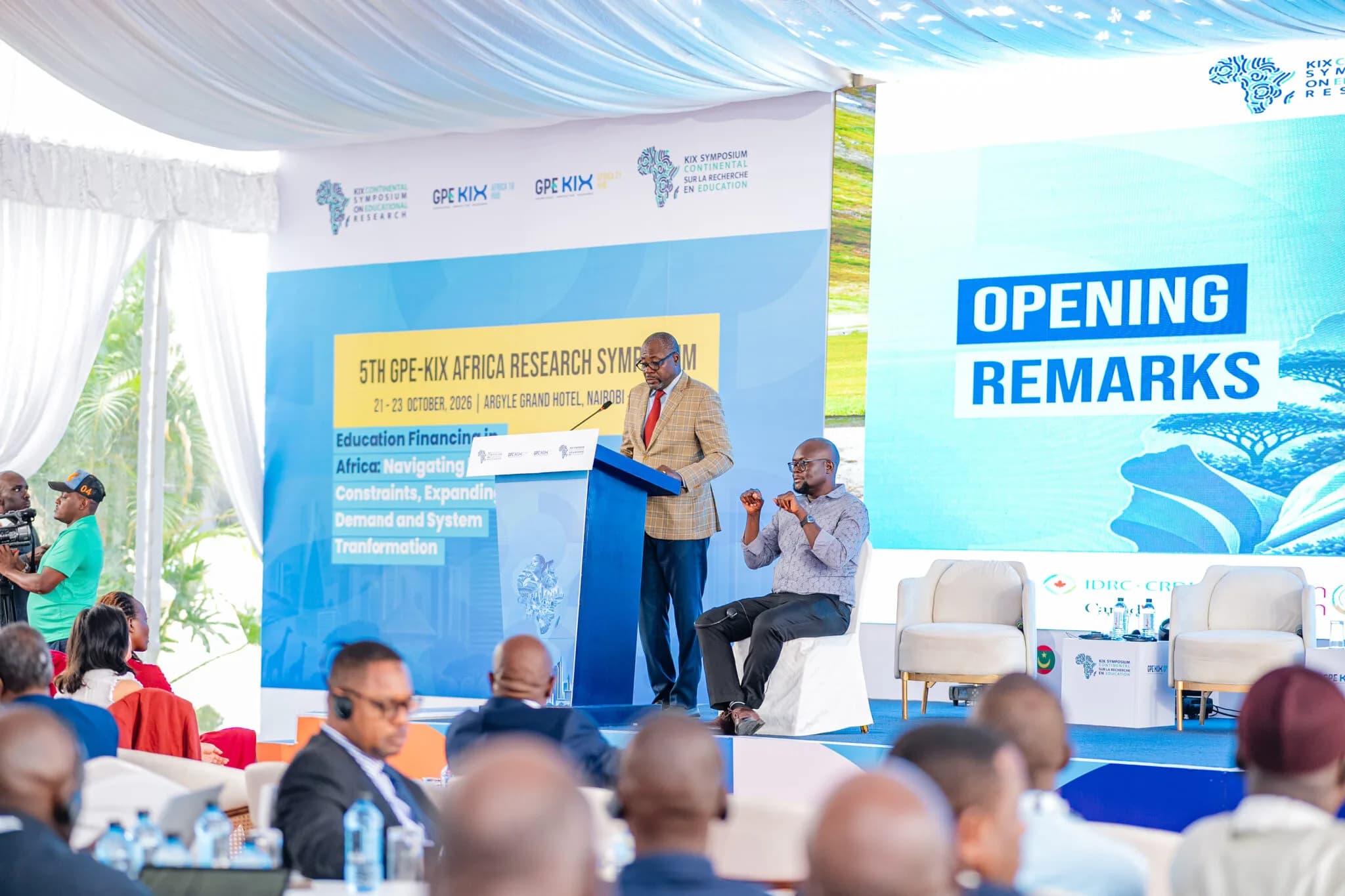
NAIROBI, Kenya, Oct 22 – African policymakers and researchers have called on governments to improve how they allocate and spend education funds, saying increased budgets must translate into better learning outcomes and skills for young people.
The call was made during the 5th GPE-KIX Africa Research Symposium in Nairobi, which runs from October 21 to 23 and brings together education researchers, policymakers and development partners to discuss ways of financing education amid tight government budgets.
Kenya’s Principal Secretary for Basic Education, John Lekakeny Ololtuaa, said governments must focus on how money is spent, not just how much they allocate to education.
“Governments must focus not only on spending more, but also on spending better and mobilising resources sustainably,” Ololtuaa said.
He called for education policies and budgets to be linked to measurable classroom outcomes, with support directed towards vulnerable and marginalised learners.
Discussions at the symposium highlighted pressure on education budgets from growing enrolment, public debt and competing government priorities. Participants said approved funds must be released on time and reach the schools and learners who need them most.
They also called for education funding to reflect differences in school conditions, regional needs and learners’ circumstances, rather than distributing resources uniformly.
Researchers said reliable data could help governments plan teacher recruitment, deployment and school funding more effectively. They urged education and finance ministries to improve coordination and link school records with budgets, payrolls and expenditure tracking to establish whether money reaches its intended beneficiaries.
The meeting also examined barriers to education in conflict-affected countries, including the Democratic Republic of the Congo, South Sudan and Ethiopia, where disrupted schooling, displacement and delayed funding can limit access to learning.
Participants called for more predictable funding to keep schools operating and support teachers in affected communities.
Financing for technical and higher education was also discussed, with research from Zimbabwe, Cameroon and Tanzania highlighting the need for functional training facilities, practical learning opportunities and partnerships with industry.
Proposals included funding institutions according to their needs and tracking results such as skills acquisition, graduation and employability.
The symposium is organised under the Global Partnership for Education Knowledge and Innovation Exchange (GPE-KIX), a joint initiative of the Global Partnership for Education and Canada’s International Development Research Centre. It supports research and the use of evidence to improve education policies and systems.
Comments
No comments yet. Be the first to share your thoughts.