
By Wanderi Kamau and Jenny Luesby
The Consumer Federation of Kenya (COFEK) has called on government to lift its contentious ban on Kenya’s powdered milk, as Kenyans enter a second month of milk shortages driven by drought, the widening Kiambu Foot and Mouth Disease outbreak, and the shortfall in imported milks.
Speaking exclusively to Farm Biz Africa, Consumer Federation of Kenya (COFEK) Secretary-General Stephen Mutoro called for urgent government action to address the shortage.
“COFEK is calling on the Ministry of Agriculture and the Kenya Dairy Board to publicly confirm the scale of the deficit and its expected duration, and to consider a time-bound, transparent import window for UHT and powder milk – with clear conditions to protect local farmers once supply recovers – as has been done in past shortages,” said Stephen.
Around 98 percent of Kenyan households normally buy milk regularly, representing almost 55 million consumers. The government first sought to protect farmers from the impact of cheap powdered milk in 2023, triggering a trade dispute in efforts to keep out powdered milk from Uganda.
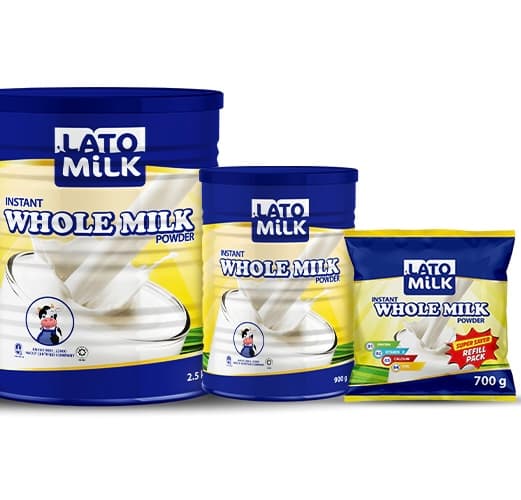
The moves have not been followed with the gazetting of any minimum milk price to protect Kenyan farmers, but has benefited powdered milk sales by Kenyan firm Brookside, versus Ugandan producer Lato.
The measures have also cut out low-income access to milk.
Speaking to Farm Biz Africa, Wangui Kamau of Juja, Kiambu County, said she had been using powdered milk since 2020, because it was cheaper for her family. She started by using Nura milk powder from the Arab countries. “I used to get my powdered milk from Eastleigh, as it was not available in most local outlets in my locality,” she said.
Since then, the powder had become available locally. “I have been using Lato and Brookside from Kenya.” She said, which retail at around Sh2,700 per 2.5 kgs. Using it for tea for her young family and for baking gives a low-income milk option , she said.
“Having been an active user of powdered milk for six years, I suggest that the state should lift the ban imposed on the milk…as this would give Kenyan consumers viable alternatives.”
The relatively low cost of powdered milk for consumers had previously driven up its demand. By 2023, Kenya was importing some $85.3m of dairy products, of which around $36m, or 42 per cent, was as whole and skimmed milk powder, according to the US Department of Agriculture (USDA). The majority of this powdered milk was being imported from Uganda.
However, in March 2023, the government banned the imports, claiming the ban would increase milk sales and prices for Kenyan farmers, at a time when good weather had increased production and created an oversupply reported by the Nation at 290 litres of wasted milk.
The ban was challenged by Uganda at EAC level and officially lifted a week later, but Kenya was documented as issuing no further import permits, thereby unofficially maintaining the ban, while processors anyway cut prices to farmers by Sh10 per litre in mid-2024.
In December 2025, Agriculture Cabinet Secretary Mutahi Kagwe, announced the ban was being made official again, citing the benefits to farmers, alongside a raft of agricultural import bans.
Beyond the needs of farmers and consumers, Kenya has long run a deficit on its trade account, importing more than it exports. This was offset by remittances coming in from Kenyans living abroad. But the global slowdown has sharply reduced remittances during 2026, putting pressure on the country’s foreign currency reserves.
Most significantly, around two thirds of the government’s debt repayments are paid in US dollars, meaning any slide in the exchange rate adds huge extra costs in repaying debt.
This has focussed the government’s mind on blocking food imports, as a debt repayment cost saver.
“We spend as a nation about half a trillion shillings every year importing food, soy, wheat, rice, edible oils. You can imagine what that does to our balance of payments balance of trade and our exchange rates, said Kagwe at the March 2026 Kilimo Biashara Expo.
The Ministry has since blocked several rounds of agricultural import permits and announced a row of new agricultural import bans.

Comments
No comments yet. Be the first to share your thoughts.