
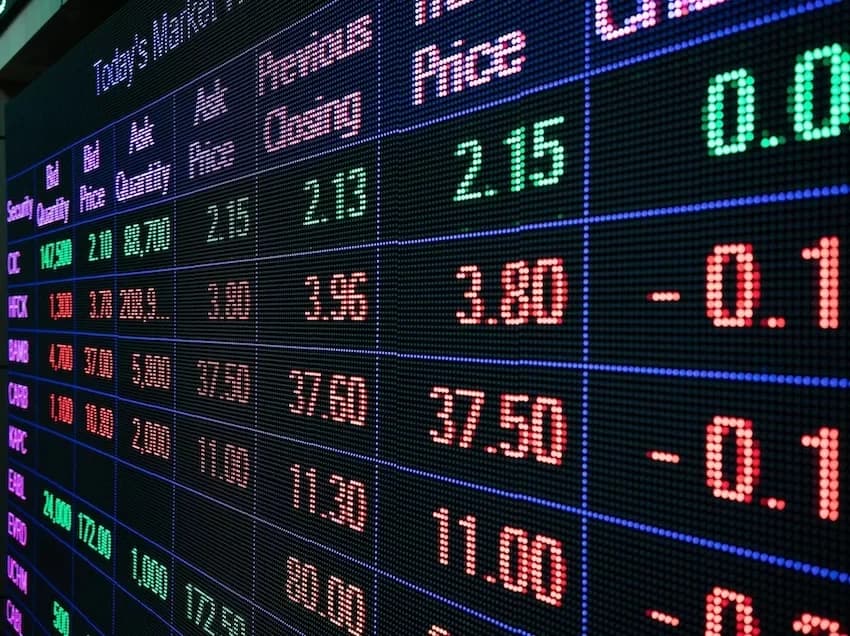
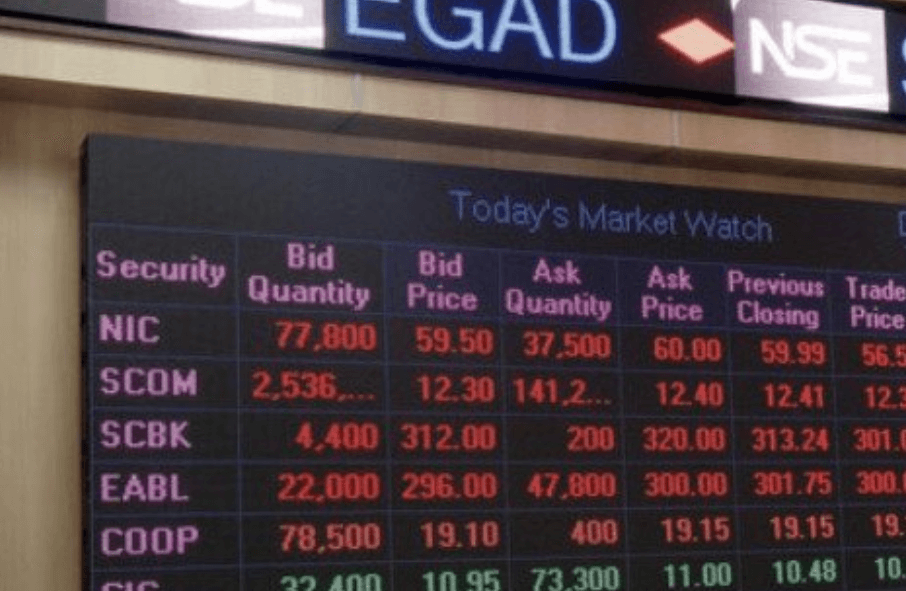
The NSE (Nairobi Securities Exchange) lost KSh 139.63 Billion in market capitalization this Wednesday, the largest single-day loss on record.
But this sell off or market correction is not new to the NSE. Available data shows several trading sessions in the past when the NSE lost KSh 70 billion, KSh 125 billion in a single day-especially during period of global or local uncertainty.
This Wednesday loss coincided with the US Fed meeting, that was expected to raise interest rates, prompting foreign investors to flee from the NSE.
Available data shows that some of the big losses to the NSE Market capitalization occurred on:
- 16th September 2026- KSh 139.63 billion
- 9th March 2020-KSh 125 billion
- 12th March 2020- KSh 117.67 billion
- 13th March 2020-KSh 116.35 billion
- 15th October 2015-KSh 108.46 billion
- 20th September 2018-KSh 108.45 billion
- 25th August 2016-KSh 105.7 billion
- 23rd March 2026- KSh 96.21 billion
- 24th February 2022-KSh 92.21 billion
- 1st September 2017-KSh 92.06 billion
And this single-day loss of market capitalization continues. Markets move through cycles of accumulation, mark-up, distribution and mark-down. At times, liquidity, portfolio positioning, global interest rates and investor sentiments can overwhelm fundamentals and push the market to the red zone.
The Wednesday sell off or NSE bloodbath wiped out a big chunk of market capitalization, pushing it below the KSh 4 trillion mark to KSh 3.987 trillion.
The haemorrhage was broad-based with 46 counters declining against only 9 price gainers, with major market blue-chips taking a big hit.
- Co-op Bank: -7.32%
- KCB: -6.39%
- Equity: -5.41%
- Safaricom: -3.84%
- NASI: -3.38%
The ongoing market correction is no longer confined to a few counters, selling pressure has spread across the market, with the largest and most liquid stocks leading the decline.
Investors at the NSE being advised to understand precisely what is driving the correction that react emotionally to the red on their screens.
NSE Correction: Why is the Market Under so much pressure?
There are several things happening at the same time. The NSE has had a very strong run and reached new highs. When markets fall sharply, some investors will naturally take profits. This is part of the market cycle. So, some of the current selling is simply a normal correction after a strong run.
Since late 2024, some foreign investors, fund managers, institutional investors and seasoned investors have been adjusting their risk strategies ahead of the 2027 polls. The Fed has added another catalyst.
When US interest rates rise, the US Treasury securities become more attractive to global investors.
An investor has the choice of taking higher-risk exposure at the NSE and other frontier markets or put more money into US Government securities offering a higher yield.
When the return on the safer assets improves, the investor may decide to reduce some of the risk exposure. Money does not necessarily disappear from the market. It can simply move from one asset class to another.
If investors expect US rates to rise, they can start repositioning before the Fed actually announces the decision.
Foreign investors can also raise liquidity from frontier markets such as Kenya before moving that capital into more attractive opportunities elsewhere.
Some sophisticated Kenyan investors and fund managers also have exposure to international markets, including US Treasury Securities, so the same capital-allocation decision can happen locally.
Once the market starts falling, psychology takes over. Some retail investors see several consecutive red days and begin selling simply because the market is falling. This creates another cycle.
The election period has increased the need for liquidity and flexibility. Global investors are also reassessing where their money should be allocated as US rates and Treasury yields become more attractive.
Retail investors are also responding to the falling prices. The above combination is what is creating the blood bath being currently witnessed at the NSE.

Comments
No comments yet. Be the first to share your thoughts.