
Jane reached menarche on a dull afternoon during a biology lab lesson. She felt she had ‘bloomed’ rather late since she was already in high school. In her primary school, the girls who had entered womanhood earlier were treated differently and often had mishaps, which led to class whispers. This was at a time when period shame was normalized.
But by class 8, especially in boarding schools, Jane and other girls who were yet to see their first moon felt like they were running late. Even so, there was no rushing fate, and she just had to wait it out. She would later miss those days with fondness, accepting that her life had changed forever.
Between the books she’d read, the talks girls had received, and other girls’ experiences, she knew she might experience some cramping. It was one of those things, like heartburn, where people talk about experiencing them without giving an accurate description, and you only fully comprehend what it is once you have one.
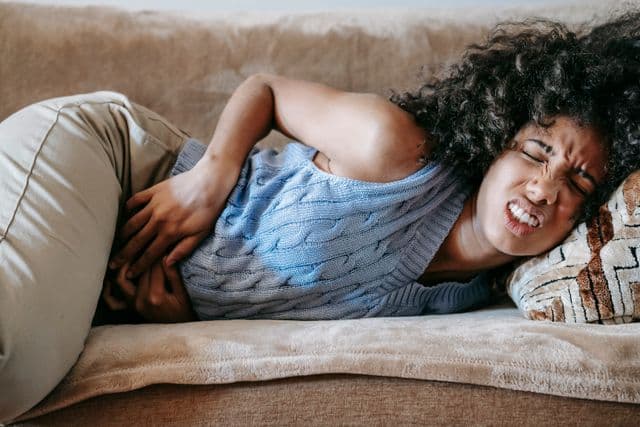
She imagined it would feel like a stomach upset, but what she was experiencing felt more intense than that. Jane managed to endure the pain during the remaining classes, but by evening, she could hardly sit without clutching her stomach. The school nurse had already gone home by then, so one of her classmates helped her with painkillers.
They barely scratched the surface. It felt like the pain increased as time passed by. Another classmate helped her with a hot water bottle. This soothed her pain a bit. The following day, she went to the school nurse, who told her cramping was normal, especially with the first period, as the body readjusts. The nurse also gave her more painkillers.
Her next period came when she was home. It was as painful as the previous one. She stayed in bed writhing in pain.
“Jane, some pain is normal with periods,” her mother told her.
“It’s really painful,” Jane told her.
“Don’t exaggerate it and womanhood is that way,” said her mother.
When she didn’t eat dinner, her mother gave her some painkillers. By the end of that year, Jane was very knowledgeable about the strengths of different over-the-counter painkillers. The nurse knew her by name because even though her period was irregular, when it was time, she always went for painkillers.
After two years of menstruation accompanied by intense pain, Jane’s mother began to believe that she wasn’t exaggerating her pain. She took her to see a doctor. The doctor suggested getting Jane on birth control.
“She’s too young to start taking birth control pills,” Jane’s mother argued.
“They’ve proven effective in dealing with the problem,” the doctor told her.
Jane’s mother was hesitant about it, so they got stronger painkillers. Jane’s period had become regular by this time, and each month, she went through her nightmare. Not only was she in physical pain, but it became her identity. At first, teachers treated her as if she were pretending to be in that much pain, and it often came with scolding. When they eventually considered that she might be in actual pain, they started expecting her not to show up to class at least on two days each month.
Some students also treated her differently, especially during that period. It didn’t help that she wasn’t spared the typical issues adolescents face. Once a top scorer in class, she became an average student.
Her grades had dropped, and she was to sit for exams the following year. In addition to the pain, Jane also felt tired quite often. Her lack of energy led her mother and others to believe she was lazy. What else were they to think?
Her final year of school pushed her mother to accept the doctor’s suggestion of putting her on birth control. It went against everything she believed in, but those were desperate times. The medication gave Jane some form of relief, but it also came with some challenges.
“Why would you be taking these pills in high school?” Jane often had to explain when resuming school during gate searches, when teachers would frisk them to ensure they didn’t carry to school anything that wasn’t permitted. Some teachers didn’t need an explanation, but others looked at her judgmentally. She felt like she had a placard that said she was sexually active and needed those pills.
She was in her late teens when she finished high school. It was rough experiencing a private thing in such a public way every month. She envied the girls whom you only knew about their menstruation because they told you so.
Her situation only got worse. The pain wasn’t restricted to her menstrual phase only, and she struggled with bowel movements. Jane was in and out of hospitals quite often. She was given a myriad of antibiotics to deal with her bowel issues, and the strength of her painkillers was on an upward trajectory.
She moved from hospital to hospital, test after test, but couldn’t give her a definitive diagnosis. When they told her it was one thing and started treating her for it, she would have the same issue and something else would come up.
By the time she was 20 years old, Jane was a shell of herself. Once an outgoing girl, she became sheltered. She’d learned to stay away from people when she was having a flare-up, and it seemed like the flare-ups had become more frequent. She had never had a boyfriend despite being 20 years old.
On her health journey from hospital to hospital, Jane crossed paths with someone who finally had an answer for her. After a couple of tests and a lengthy discussion about her health history, the doctor told her, “You have endometriosis.”
“How can you cure it? My daughter has really suffered,” said Jane’s mother.
“Unfortunately, there’s no known cure for it yet but there are ways to manage it,” said the doctor.
The hope on their faces dimmed.
“What exactly is the problem?” Jane finally asked.
“During your menstrual cycle, the lining of a woman’s uterus grows and this is what is shed during your period if you don’t get pregnant. With endometriosis, similar tissues like that lining grow outside the uterus, mostly in the pelvic cavity on organs like the ovaries and fallopian tubes, but they can also grow on the bladder and bowels,” the doctor explained.
“So it is cancer?” Jane asked, looking alarmed.
“No, endometriosis isn’t cancer but because these tissues behave like the ones in the uterus, they also bleed. Now with the uterus lining, there’s a natural exit, but with these ones on the wrong organs, the blood has no exit and it forms lesions and scars which causes inflammation.”
The doctor went on to explain the possible ways of managing the disease. Given Jane’s imaging results, the doctor suggested having surgery. Jane’s family needed some time to get the needed funds for the surgery. Fortunately, she sailed through the surgery without any complications.
She felt like she had a new lease of life. She was well aware that it wasn’t a cure, but it would improve her quality of life for a while as she continued working with the doctor to manage the disease.
Check out more stories
He Left Me When I Was Sick And Then Made It About Himself
She Broke Up With Him When She Discovered She Was Sick To Avoid Future Heartbreak

Comments
No comments yet. Be the first to share your thoughts.