

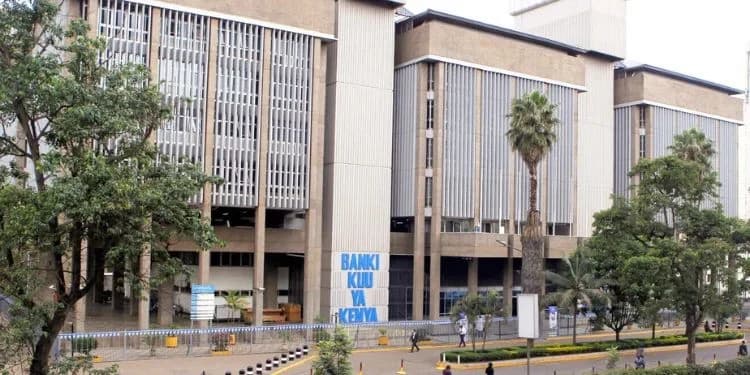
The Central Bank of Kenya (CBK) has published the average lending and deposit interest rates for all commercial banks across the country for July 2026.
In data released by CBK on September 2, Kenyan commercial banks reported widely varying lending rates in July, with the cost of borrowing ranging from 10.59 percent to 19.06 percent.
Citibank N.A. Kenya recorded the lowest lending rate at 10.59 percent, followed by Standard Chartered Bank Kenya at 11.55 percent and Stanbic Bank Kenya at 11.97 percent.
Habib Bank A.G. Zurich posted a lending rate of 12.68 percent, while HFC Limited and Guardian Bank stood at 13.04 percent and 13.47 percent, respectively.
CBK Lists Banks Offering Kenyans the Cheapest and Highest Loans
Bank of Baroda Kenya followed at 13.49 percent, with ABSA Bank Kenya at 13.64 percent and I&M Bank at 13.68 percent.
Among the country’s major lenders, KCB Bank Kenya recorded 14.79 percent, while Equity Bank Kenya stood at 14.83 percent and Co-operative Bank of Kenya at 15.10 percent. UBA Kenya Bank recorded 15.24 percent, while Family Bank stood at 15.92 percent.
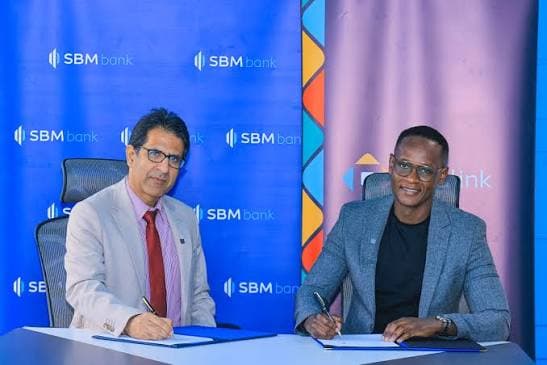
At the upper end of the list, KCB Bank recorded 17.00 percent, followed by SBM Bank Kenya at 17.33 percent, Access Bank Kenya at 17.45 percent, and Bank of Africa Kenya at 17.49 percent.
Credit Bank PLC recorded the highest lending rate at 19.06 percent, making it the lender with the highest rate among the 38 commercial banks covered in the CBK data.
Summary:
CBK Retains Lending Rates at 8.75 Percent
In August, CBK retained its benchmark interest rate at 8.75 per cent, keeping it unchanged for a fourth consecutive monetary policy meeting as inflation remained within the bank’s target range.
According to the lender, the Private-sector credit growth had strengthened, reaching 10.2 per cent in July, although this was slightly lower than the 10.6 per cent recorded in June.
At the same time, the latest figures marked a significant recovery from the 2.9 per cent contraction recorded in January 2025, signalling improved access to credit as previous monetary policy easing continued to filter through the economy.
This marked a significant recovery from the 2.9 percent contraction recorded in January 2025, signalling improved access to credit as previous monetary policy easing continued to filter through the economy.
Meanwhile, headline inflation rose marginally to 6.5 percent in July from 6.4 per cent in June, while core inflation stood at 3.2 percent.
Non-core inflation eased slightly to 15.0 percent from 15.1 percent, with CBK attributing part of the moderation to government measures, including fuel subsidies and a temporary reduction in VAT on fuel.
Food prices remained a concern, particularly due to higher vegetable prices, while global oil prices and potential second-round effects on inflation remained key risks.
The Monetary Policy Committee (MPC) expected inflation to remain within its target in the near term, supported by relatively stable food prices, the exchange rate and government interventions, provided geopolitical tensions in the Middle East eased.
Follow our WhatsApp Channel and X Account for real-time news updates.


Comments
No comments yet. Be the first to share your thoughts.