
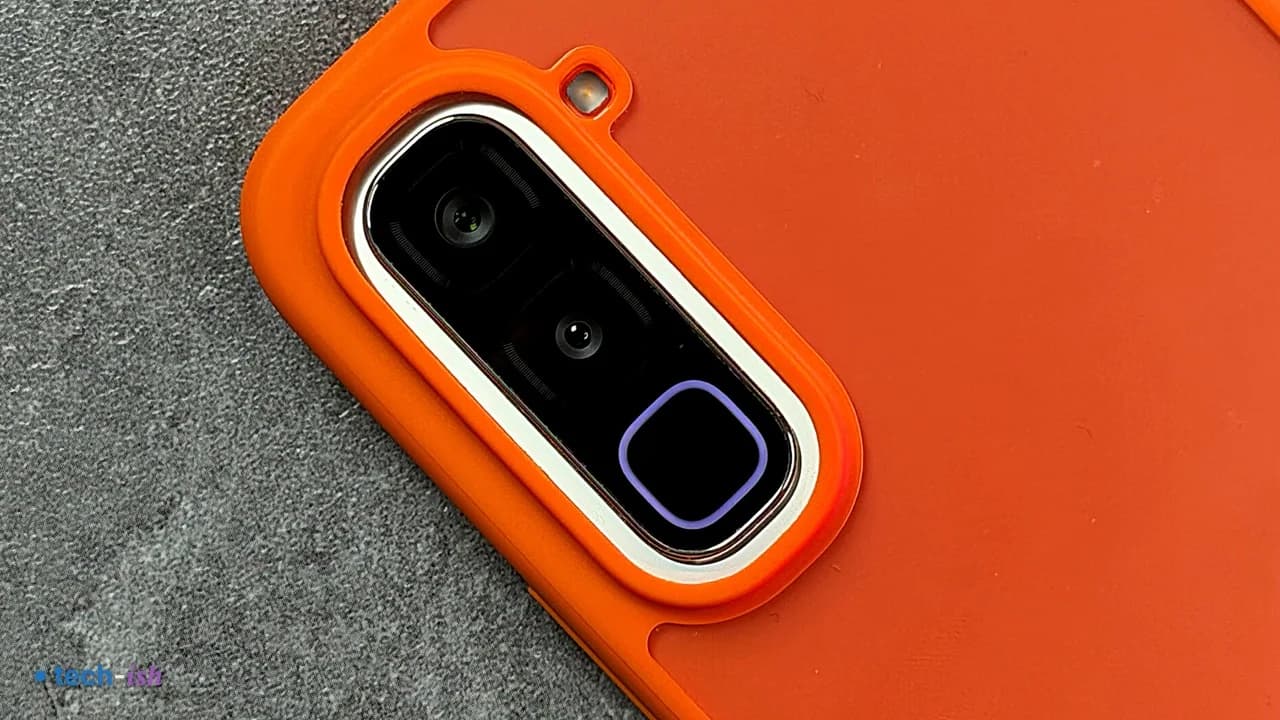
Picking a phone between KES 20,000 and KES 60,000 is hard because the spec sheets all look the same. Nearly every phone has a 50MP camera. Most claim 8GB of RAM and a battery of 6,000mAh or more. Those numbers tell you very little about how the phone will feel a year after you buy it.
So we scored over 100 phones launched in 2025 and 2026 on the parts that do decide it, then divided each score by the price. The phone that gives you more for every shilling ranks higher. We split them into three budgets: about KES 20,000 to 30,000, KES 30,000 to 45,000 and KES 45,000 to 60,000. Many of you import your phones, so this is a global list. It includes phones sold only in China or India.
The surprise is in the middle budget. Four of its five best-value phones launched in 2025, not 2026. That’s because memory chips got more expensive this year and phone makers passed the cost on. Earlier this month we covered Samsung adding USD 100 to the Galaxy S26 range for the same reason, and cheaper phones have been hit just as hard. The OnePlus Nord 6 launched in India in April at about KES 53,000. After three rises it is about KES 64,000, which pushed it off this list. Last year’s phones with flagship-class chips held their prices, so they now beat most 2026 phones at the same money.
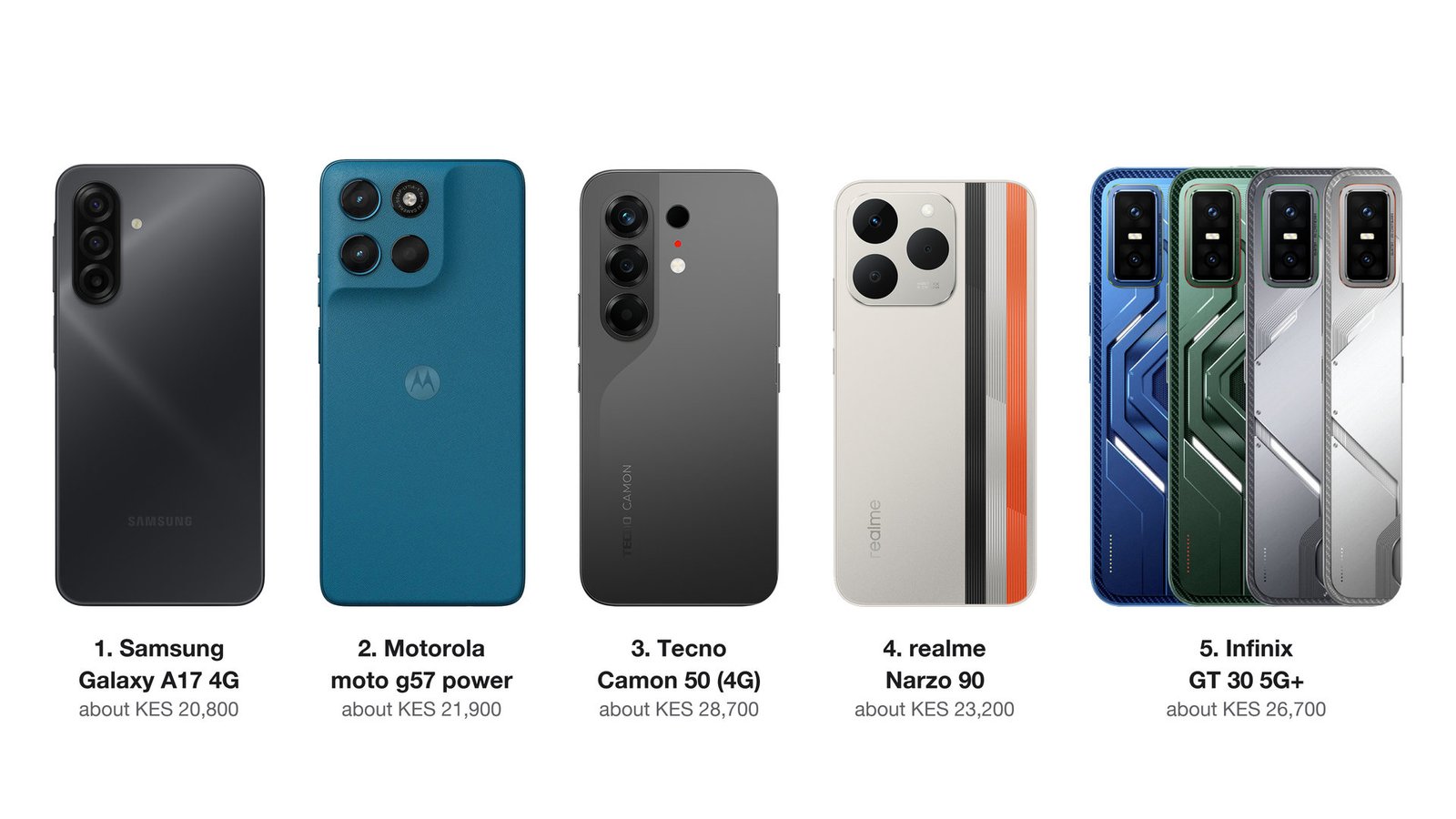
Samsung launched it in Kenya at KES 20,800 in September 2025, and it’s the best value on this whole list. The Helio G99 chip is slow and 4GB of RAM fills up fast. You get an AMOLED screen, a main camera with OIS and six Android upgrades, with security patches until 30th September 2031.
Its Snapdragon 6s Gen 4 is faster than the Galaxy’s chip, and its 7,000mAh silicon-carbon battery is bigger. Silicon-carbon is a newer material that packs more energy into the same space. Importing one? The European model’s battery is rated at only 5,100mAh. Updates are its weak spot: one Android upgrade and three years of security patches.
It has the best camera in this budget, a Sony LYTIA 700C sensor with OIS, and a 1.5K AMOLED panel at 144Hz. Tecno’s footnote says the chip draws the picture at 1080p and an upscaling chip stretches it to fill the panel. It’s as slow as the Galaxy, and Kenyan units have a 6,150mAh battery. In Kenya it went on pre-order at KES 34,999 in February.
realme launched the Narzo 90 in India in December 2025 at INR 16,999 for 6GB and 128GB, and we found no official price change since. You get an OLED screen at 120Hz, a 7,000mAh battery and three Android upgrades with four years of updates. The Dimensity 6400 Max is about as quick as the Galaxy’s chip, and the second camera is a 2MP mono lens, so there’s no ultrawide.
The GT 30 5G+ launched in India in August 2025 at INR 19,499 for 8GB and 128GB. It has the same kind of 1.5K AMOLED screen at 144Hz as the Camon 50, and its Dimensity 7400 is the fastest chip of these five, paired with LPDDR5X RAM. The 64MP Sony IMX682 camera has no OIS, and Infinix promises two Android upgrades and three years of security patches.
| Phone | RAM / storage | Screen | Main camera | Battery |
|---|---|---|---|---|
| Samsung Galaxy A17 4G | 4GB, type not given / 128GB | 6.7″ 1080p 90Hz AMOLED | 50MP 1/2.76″ OIS | 5,000mAh |
| Motorola moto g57 power | 8GB / 128GB UFS 2.2 | 6.72″ 1080p 120Hz LCD | 50MP LYTIA 600 1/1.95″ + 8MP ultrawide | 7,000mAh (EU 5,100 rated) |
| Tecno Camon 50 (4G) | 8GB / 256GB, types not given | 6.78″ 1.5K 144Hz AMOLED | 50MP LYTIA 700C 1/1.56″ OIS + 8MP ultrawide | 6,500mAh |
| realme Narzo 90 | 6GB LPDDR4X / 128GB UFS 2.2 | 1080p 120Hz OLED | 50MP + 2MP mono | 7,000mAh |
| Infinix GT 30 5G+ | 8GB LPDDR5X / 128GB UFS 2.2 | 1.5K 144Hz AMOLED | 64MP IMX682 1/1.73″ + 8MP ultrawide | 5,500mAh |
- the HMD Vibe 2 Pro (about KES 21,900),
- Nothing Phone (3a) Lite (KES 28,700),
- Samsung Galaxy A08 (KES 23,300),
- POCO M8s 5G (KES 24,500) and
- Samsung Galaxy M17e 5G (KES 25,300).
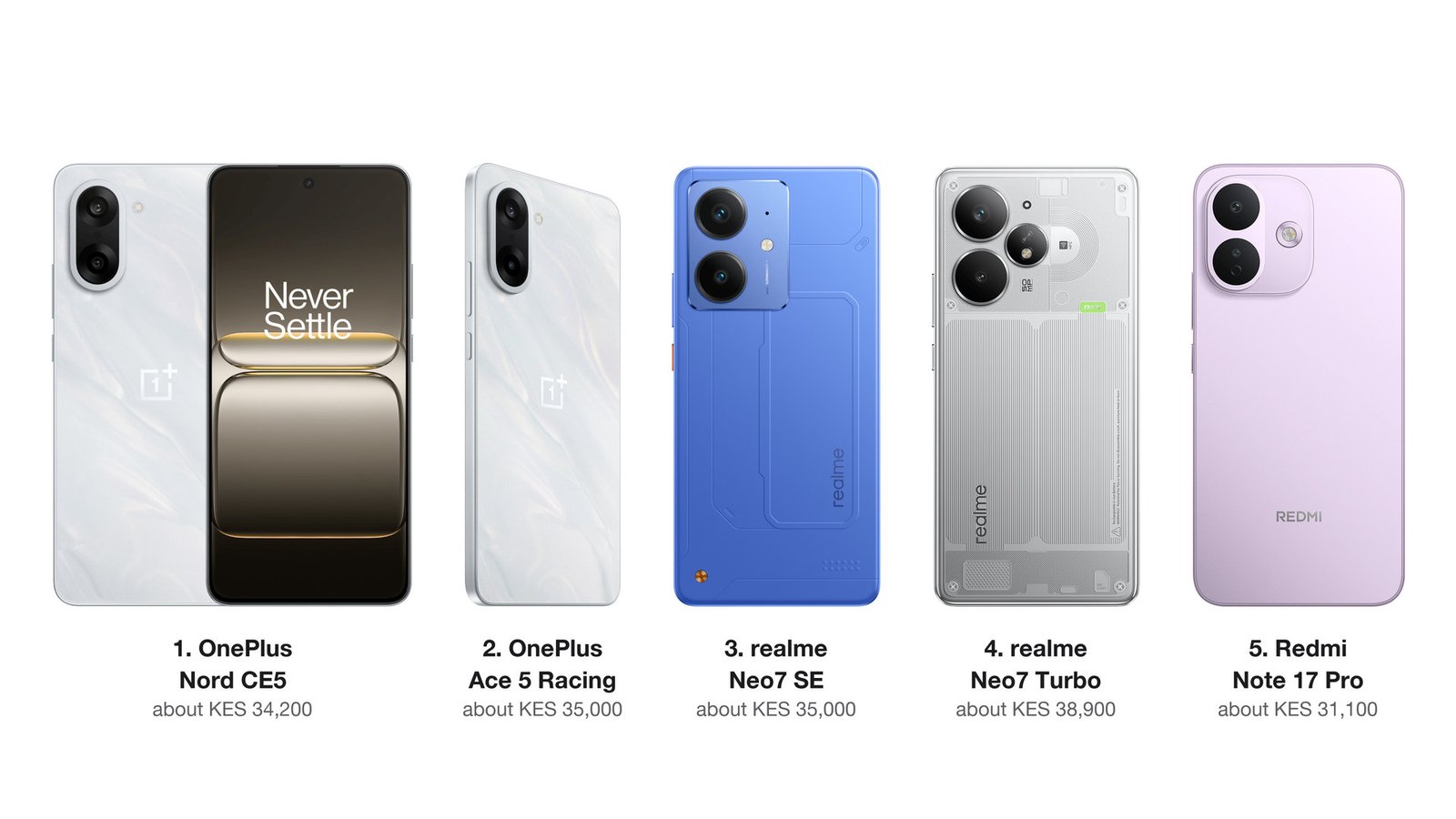
This is the pick here if you want Google Play out of the box. OnePlus’s India store sells it at INR 24,999 for 8GB and 128GB, the same as at its 2025 launch. Its Dimensity 8350 Apex pairs with LPDDR5X RAM and UFS 3.1 storage, and the main camera is a Sony LYTIA 600 with OIS beside an 8MP ultrawide. OnePlus promises four Android upgrades and six years of security patches. The India version has a 7,100mAh battery; OnePlus’s global version has 5,200mAh.
This China-only phone from May 2025 launched at CNY 1,799, about KES 35,000, with a flagship-class Dimensity 9400e. Its multi-core score is more than twice the Redmi Note 17 Pro’s, and it pairs LPDDR5X RAM with UFS 4.0 storage. The camera is weaker: there’s no ultrawide, only a 2MP mono lens beside the main sensor.
For the same money you get a slower but still quick Dimensity 8400-Max, a sharper 1.5K OLED screen and a Sony IMX882 camera with OIS and a proper ultrawide. Like the other China-only phones in this budget, it has no written update promise.
It’s the fastest phone in this budget, with a 144Hz screen, an ultrawide and 100W charging, for about KES 3,900 more than the Ace 5 Racing.
It’s the only 2026 phone in this budget’s top five, and it’s here for its 9,000mAh battery. Xiaomi re-released it in China on 13th October with the same hardware, new colours and a 6GB and 256GB version at CNY 1,599, the same price as the original 8GB and 128GB model. The RAM is the slowest in this group, LPDDR4X.
| Phone | RAM / storage | Screen | Main camera | Battery |
|---|---|---|---|---|
| OnePlus Nord CE5 | 8GB LPDDR5X / 128GB UFS 3.1 | 1080p 120Hz OLED | 50MP LYTIA 600 1/1.95″ OIS + 8MP ultrawide | 7,100mAh (global 5,200) |
| OnePlus Ace 5 Racing | 12GB LPDDR5X / 256GB UFS 4.0 | 6.77″ 1080p 120Hz OLED | 50MP 1/1.95″ OIS | 7,100mAh, 80W |
| realme Neo7 SE | 8GB LPDDR5X / 256GB UFS 4.0 | 6.78″ 1.5K 120Hz OLED | 50MP IMX882 1/1.95″ OIS + 8MP ultrawide | 7,000mAh, 80W |
| realme Neo7 Turbo | 12GB LPDDR5X / 256GB UFS 4.0 | 6.8″ 2800×1280 144Hz OLED | 50MP IMX882 1/1.95″ OIS + 8MP ultrawide | 7,200mAh, 100W |
| Redmi Note 17 Pro (China) | 6GB LPDDR4X / 256GB | 6.83″ 1.5K 120Hz OLED | 50MP OIS | 9,000mAh (global 8,340) |
- the POCO X7 Pro (about KES 36,400),
- Infinix GT 30 Pro (KES 38,300),
- OnePlus Turbo 6 (KES 44,700),
- Infinix Note Edge (KES 30,100) and
- OPPO K13 Turbo Pro (KES 38,900).
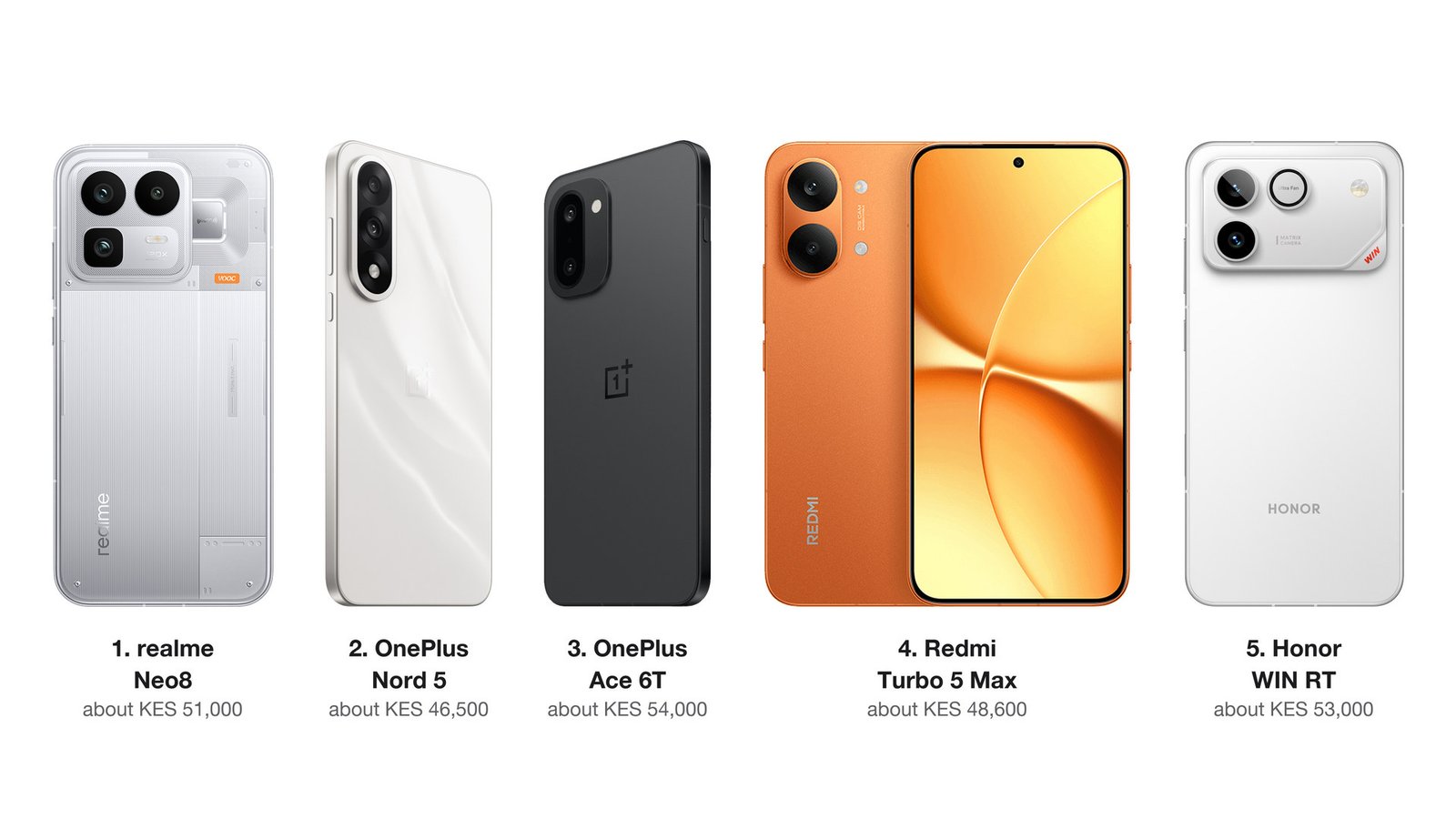
The Neo8 has the highest spec score of any phone on this list. Its Snapdragon 8 Gen 5 is the fastest here on multi-core, and it’s the only phone with a 3.5x periscope zoom camera, next to a large 1/1.56-inch Sony IMX896 main sensor. realme promises three Android upgrades and four years of maintenance updates, now delivered through OPPO’s China service.
This is the pick in this budget if you want Google Play out of the box. OnePlus’s India store sells it at INR 33,999 for 8GB and 256GB. Its Snapdragon 8s Gen 3 is a flagship-class chip from 2024, slower than the China phones around it. It has a 1.5K OLED screen at 144Hz, a Sony LYTIA 700 main camera with OIS and a 6,800mAh battery, though European units have 5,200mAh. OnePlus promises four Android upgrades and six years of security patches.
It has the same chip as the Neo8 and a bigger 8,300mAh battery, but no zoom camera. OnePlus raised it to CNY 2,799, about KES 54,000, on 16th March 2026. Its China president promised three Android upgrades over four years during a livestream before launch.
It’s the cheapest phone here with a 3nm flagship-class chip, the Dimensity 9500s, and it has a 9,000mAh battery. Xiaomi publishes no update promise for it in China. Its global twin, the POCO X8 Pro Max, costs USD 469, about KES 61,000, and has an 8,500mAh battery.
Its Snapdragon 8 Elite has the highest single-core score on this list. It also has a 185Hz screen and a 10,000mAh battery. Honor lists it from CNY 2,699. Its successor, the WIN RT2, launched on 21st October 2026 at CNY 4,199, about KES 82,000.
| Phone | RAM / storage | Screen | Main camera | Battery |
|---|---|---|---|---|
| realme Neo8 | 12GB LPDDR5X / 256GB UFS 4.1 | 6.78″ 2772×1272 165Hz OLED | 50MP IMX896 1/1.56″ OIS + 3.5x periscope + 8MP ultrawide | 8,000mAh (29.76Wh) |
| OnePlus Nord 5 | 8GB LPDDR5X / 256GB UFS 3.1 | 1.5K 144Hz OLED | 50MP LYTIA 700 1/1.56″ OIS + 8MP ultrawide | 6,800mAh (EU 5,200) |
| OnePlus Ace 6T | 12GB LPDDR5X / 256GB UFS 4.1 | 6.83″ 2800×1272 165Hz OLED | 50MP 1/1.56″ OIS + 8MP ultrawide | 8,300mAh (30.88Wh) |
| Redmi Turbo 5 Max | 12GB LPDDR5X / 256GB UFS 4.1 | 6.83″ 2772×1280 120Hz OLED | 50MP Light Fusion 600 1/1.95″ OIS + 8MP ultrawide | 9,000mAh, 100W |
| Honor WIN RT | 12GB LPDDR5X / 256GB UFS 4.1 | 6.83″ 2800×1272 185Hz OLED | 50MP 1/1.56″ OIS + 12MP ultrawide | 10,000mAh, 100W |
- the realme P4 Power (about KES 45,100),
- OnePlus Ace 5 Ultra (KES 48,600),
- Motorola edge 70 pro (KES 55,000),
- POCO X8 Power (KES 49,200) and
- Redmi K90 Ultra (KES 54,000).
If you’re happy to switch on Google Play yourself and live with a short or unwritten update promise, last year’s China-only performance phones give you the most phone for your money in 2026. If you want Google apps from the first boot, you pay more for each point of spec. Under KES 30,000, the Galaxy A17 4G also carries the longest update promise. Above that, OnePlus’s Nord CE5 and Nord 5 are the picks: both run Google’s apps from the first boot and get four Android upgrades and six years of security patches.
Speed counts for 20% of the score. We used Geekbench 6, a test that times how fast a phone’s processor gets through everyday jobs, and took the median score from owners’ phones on its public results database.
Memory and storage count for another 20%. RAM is where your open apps sit, so faster RAM means apps switch and reopen quicker. LPDDR5X is a newer, faster generation of phone RAM than LPDDR4X. Storage works the same way: UFS 4.0 and 4.1 storage is much quicker than UFS 2.2, so apps open and install faster. We ignored “virtual RAM”, which is just storage pretending to be memory. Where a maker doesn’t say which type it uses, we scored the slower one, so a maker that keeps quiet doesn’t get the benefit of the doubt. Earlier this month we found the vivo V80 using older LPDDR4X RAM and UFS 3.1 storage even though it costs more than the phone it replaced.
The camera counts for 15%, and we scored the sensor, not the megapixels. Megapixels tell you how many dots make up a photo. Sensor size tells you how much light the camera catches, so a bigger sensor gives you cleaner photos at night and indoors. Sizes are written as a fraction of an inch, and the smaller the number under the line, the bigger the sensor. A 1/1.56-inch sensor has about three times the area of a 1/2.76-inch one. Optical image stabilisation (OIS), a small motor that moves the lens to cancel hand shake, earned extra points, and so did a real ultrawide or zoom camera. The 2MP “macro” and “depth” cameras earned nothing.
The battery counts for 15%, scored in watt-hours (Wh) rather than milliamp-hours (mAh). Wh is the capacity multiplied by the battery’s voltage, so it’s the real measure of how much energy the phone carries. The Nord 6 shows why that matters. Its India version has a 9,000mAh battery rated at 33.48Wh, while the global version has 7,500mAh in two cells, rated at 29.4Wh. That’s 20% more mAh but only about 14% more energy. Where a maker publishes no Wh figure, we assumed 3.87 volts, a common rating for phone batteries. Each phone is ranked on its biggest battery in any market, the same rule we used when we ranked the biggest phone batteries of 2026 in August, and we note where your version may be smaller.
The screen counts for 15%. Points go to 1080p or sharper resolution, a 120Hz or faster refresh rate (how many times a second the picture updates, which makes scrolling smoother) and an OLED panel. We didn’t drop 720p phones, but they score low here.
Updates make up the last 15%, and only written promises count: how many Android upgrades the phone will get and how many years of security patches. Most China-only phones have no written promise, so they score close to zero on this.
None of the China-only phones ship with Google Play. Honor’s own support page shows how to switch on Google Play services on its MagicOS 10 phones, and OnePlus’s China software has a similar Google services switch in its settings. realme’s China software is built on the same base as OnePlus’s, but we couldn’t confirm the switch on it. realme also moved its China after-sales service to OPPO on 1st April 2026. So if you want Google apps working the moment you switch the phone on, pick from the Samsung, Motorola, Tecno, realme Narzo, Infinix and OnePlus Nord phones above.
Comments
No comments yet. Be the first to share your thoughts.