
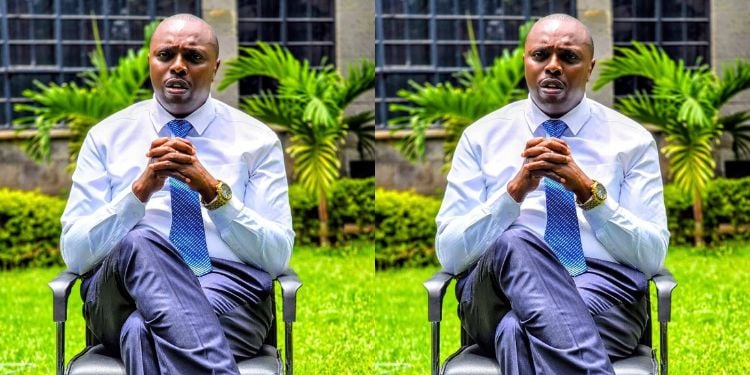
Paul Waiganjo has resigned as an advisor to President William Ruto on Development Matters, saying the position had become redundant and limited his ability to deliver the development agenda he had envisioned.
Waiganjo announced his resignation during a press briefing at Sports View Hotel in Nairobi on Friday, September 25, 2026, saying he had formally tendered his resignation at 3 p.m.
“I have made the firm, principled, and good faith decision to tender my resignation on this 25th day of September 2026 at exactly 3 p.m. Kenyan time. Paul Waiganjo said.
In his address, Waiganjo said he accepted the presidential advisory position with the expectation that it would provide a platform to advance development programs, particularly in his home county of Nyandarua.
He explained his anticipated areas of intervention included school construction, hospital upgrades, borehole drilling, street lighting, and sustainable job creation.
However, Waiganjo said his experience in the position exposed what he described as structural limitations that prevented him from meaningfully executing his mandate.
Waiganjo noted he held discussions with local clergy, professionals, entrepreneurs, community leaders and young people before deciding to leave the government position.
Following the discussion, Paul Waiganjo revealed a disconnect between his government role and the challenges facing residents on the ground.
Paul Waiganjo Explains Decision to Resign
Waiganjo’s appointment as an advisor to the President on Development Matters came on May 28, 2026.
According to Paul, the appointment was an opportunity to contribute to development nationally while advancing projects in Nyandarua.
During his resignation, Waiganjo confirmed that he decided to leave government and join a nationwide movement seeking greater accountability, equity, and social justice.
Invoking Article 1 of the Constitution, which establishes that sovereign power belongs to the people of Kenya, Paul emphasized that government leadership should remain responsive to citizens.
Further, he referenced the constitutional principles of public accountability and the responsibility of leaders to serve the public.
In explaining his decision, Waiganjo questioned whether to remain in a government position while facing what he described as challenges affecting public services and households.
He addressed shortages in hospitals, delays in school capitation, and taxation pressures on businesses as some of the concerns raised during his consultations.
In addition, he raised concerns about statutory deductions affecting workers’ disposable income.
“How could I, in good conscience, draw a salary for a redundant position where our local hospitals suffer from critical resource starvation, school dropout rates spike due to delayed capitation, and businesses shatter under the weight of excessive taxation?” Waiganjo questioned.
Concerns over Nyandarua Development
According to Waiganjo, Nyandarua County has been facing economic challenges.
In addition, the former presidential advisor noted that the county has poor road infrastructure, unreliable electricity, post-harvest losses, unemployment, and limited value addition among the issues affecting residents and businesses.
He further claimed that less than 10 percent of the county’s road network is paved, making it difficult to transport agricultural produce during rainy seasons.
Waiganjo linked inadequate infrastructure to post-harvest losses, saying farmers are sometimes forced to sell perishable produce at low prices because of limited access to reliable transport and markets.
Paul Waiganjo argued that infrastructure investment would enable farmers to retain more value from their produce instead of relying heavily on intermediaries.
Waiganjo’s Plan After Leaving Government
As he announced his departure from government, Waiganjo stated he was prepared to take on a new role in an effort to restore the country.
According to Waiganjo, he will be serving the citizens ahead of his personal needs in the future.
“I stand ready with a clear, actionable plan to lead that restoration. Public office is a trust meant to serve the electorate, never a tool for self-enrichment at the expense of public resources,” Paul Waiganjo said.
Follow our and X Account for real-time news updates.
Comments
No comments yet. Be the first to share your thoughts.