
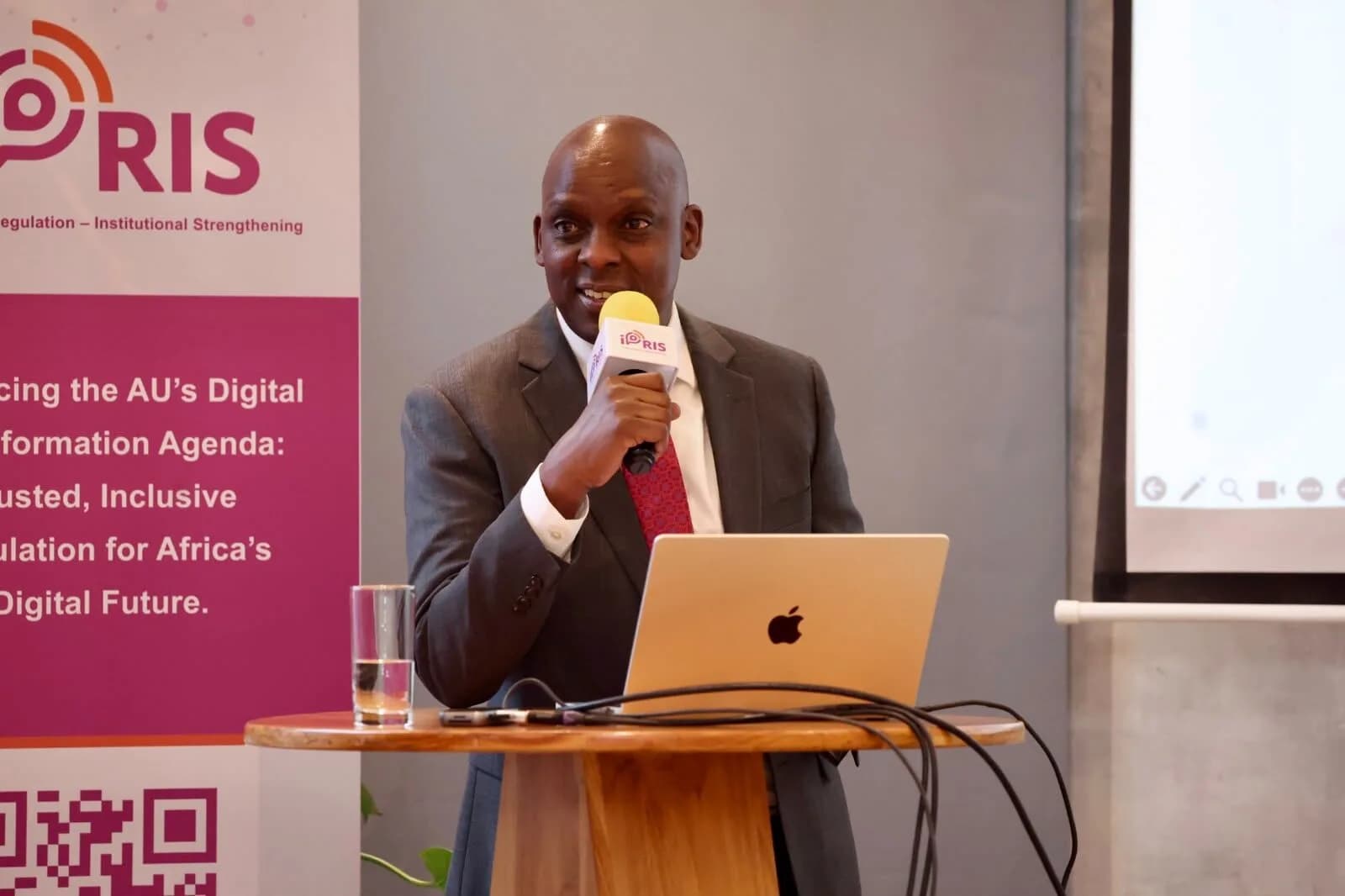
NAIROBI, Kenya, Oct 5 — African ICT regulators must deepen cross-border cooperation to tackle digital threats that increasingly transcend national boundaries, Communications Authority of Kenya Director General David Mugonyi has said.
Mugonyi warned that emerging technologies, cybersecurity threats, digital fraud and disruptions to critical communications infrastructure were creating challenges that could no longer be effectively addressed by regulators working in isolation.
“A damaged submarine cable off one coast can slow commerce across a dozen countries, and a fraud scheme devised in one market can reach consumers in all of ours within hours,” Mugonyi said on Monday during the Regional ICT Regulators’ Forum of the eighth cohort of the ICT Policy and Regulation – Institutional Strengthening Programme (iPRIS), which brings together regulators and ICT institutions from across Africa.
“No single regulator, however capable, can address these challenges alone.”
The forum has brought together officials from national regulatory authorities in Sierra Leone, Mauritius, Namibia, Zimbabwe, Tanzania and Liberia, alongside regional regulatory organisations including the East African Communications Organisation (EACO), Communications Regulators’ Association of Southern Africa (CRASA) and West Africa Telecommunications Regulators Association (WATRA).
He said regulators across the continent needed to become more agile, evidence-driven and collaborative as artificial intelligence, digital platforms and next-generation networks reshape economies and public services.
Mugonyi noted regulation could no longer be limited to developing rules and enforcing compliance, but must also support innovation, protect consumers, promote fair competition and expand access to digital services.
The CA DG said the rapid pace of technological change was also creating difficult regulatory questions around competition, consumer protection, cybersecurity, online safety, digital trust, inclusion and sustainable investment.
He urged participants to use the forum to share practical experiences and develop regulatory approaches that reflect African realities while drawing from international best practice.
Mugonyi said Kenya was already reviewing its regulatory framework to keep pace with changes in the communications sector.
The Authority has reviewed and promulgated a new structure for the telecommunications and postal markets, he said, while an ongoing review of sector laws and regulations seeks to align the regulatory framework with emerging technologies and changing market conditions.
He said the process had benefited from peer learning and knowledge exchange facilitated through the iPRIS and SPIDER programmes.
Over the years, Kenyan regulators participating in the programmes have worked on issues including spectrum auctions and transfer guidelines, institutional development and compliance, universal access, postal quality of service, network resilience, 5G and emerging technologies, fibre deployment and numbering and charging frameworks.
Mugonyi said the value of such programmes should ultimately be measured by improvements in regulatory practice and services to citizens rather than participation or training certificates.
“The true measure of this forum will not be the quality of our presentations,” he said.
“It will be whether, a year from now, a household in a rural village, a small trader in a market town or a student in a remote school is better connected, better protected and better served because of the decisions we shape here.”
The Director General urged the eighth cohort to build professional networks that could continue beyond the Nairobi meeting and turn lessons from the programme into measurable reforms within their respective institutions.
He said the Communications Authority remained committed to regional cooperation and sharing Kenya’s regulatory experience as African countries work towards more responsive regulation, meaningful connectivity and inclusive digital transformation.
The Nairobi meeting builds on an earlier Stockholm convening held this year and is intended to adapt lessons from the international programme to the realities facing African regulators.



Comments
No comments yet. Be the first to share your thoughts.