
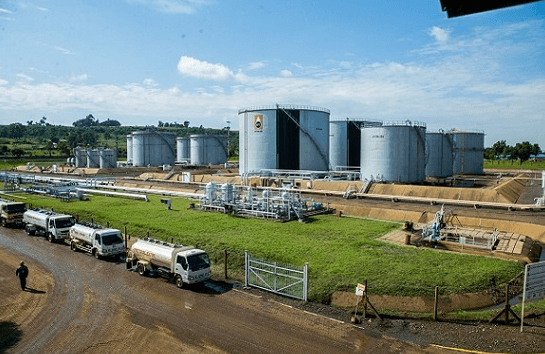
The first fuel consignment under a deal signed between Kenya and Rwanda has arrived at the Kipevu Oil Terminal.
MT Sea Wolf arrived at the Kenya Pipeline Company’s fuel terminal carrying 40,000 metric tonnes of refined petroleum products for Rwanda National Energy Company (RNEC).
The move follows a Memorandum of Understanding (MoU) signed between Kenya’s Ministry of Energy and Petroleum (MoEP) and Rwanda’s Ministry of Trade and Industry signed on June 29, 2026.
Speaking when he received the shipment on Tuesday, Energy and Petroleum Cabinet Secretary Opiyo Wandayi said
“This framework is projected to grow the volume of petroleum products moving through our Northern Corridor to Rwanda tenfold over the coming years. That is a vote of confidence, not just in a pipeline or a port, but in Kenya as a nation, in our institutions, our regulatory environment and our ability to deliver on our word,” he said.
Under the framework, Rwanda will import bulk refined petroleum products through Kenya’s Northern Corridor by capitalising on Kenya’s port infrastructure, pipeline network and logistics ecosystem.
“It cements our position as the logistics and energy transit hub of the East African Community (EAC), and it is a tangible expression of the deeper economic integration we are building with our neighbours, in line with the objectives of the EAC and the African Continental Free Trade Area (AfCFTA),” added Wandayi.
There is also a Tripartite Agreement involving the two Ministries and the Rwanda National Oil Company (RNEC), and a Transport and Storage Agreement between the Kenya Pipeline Company (KPC) and RNEC covering the transportation, storage, scheduling and handling of Rwanda’s petroleum imports through Kenya’s pipeline and terminal infrastructure.
Rwanda State Minister Zingiro noted that the arrangement will further ensure supply chain efficiency.
“Rwanda is a landlocked country that imports all of its petroleum products, and this year has reminded us how quickly instability far from our borders can be felt at our fuel pumps. Our Government’s response has been deliberate, to diversify our import routes and reduce our exposure to any single corridor or supplier,” he said.
Zingiro noted that alongside the new route Rwanda has opened through the Port of Tanga, Rwanda expects to have greater control of its fuel supply through government-to-government agreement.
The two governments regard the arrangement as a practical demonstration of regional integration under the East African Community and the African Continental Free Trade Area, expected to strengthen regional energy security, improve supply chain efficiency and reduce logistical costs for Rwanda’s petroleum sector.



Comments
No comments yet. Be the first to share your thoughts.