
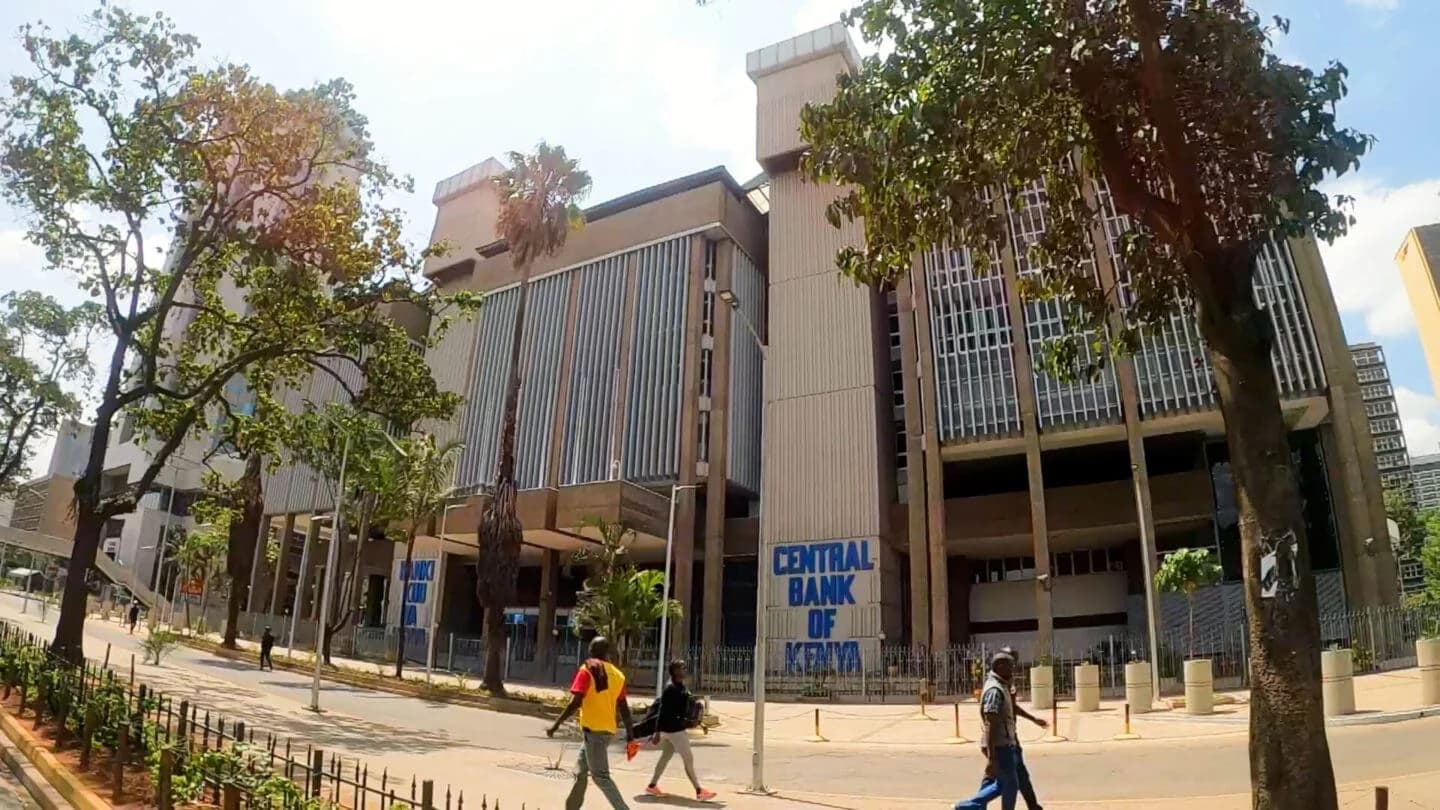
CBK (Central Bank of Kenya) has proposed a framework that seeks to explicitly link dividend distributions to a bank’s capital strength. This means a bank can report record profits and still have less available to pay dividends to its shareholders.
Banks with insufficient CET1 Capital will be required to retain earnings while adequately capitalised banks will have room to distribute profits.
The CBK idea is that retained earnings strengthen the balance sheet, improves loss-absorption capacity and provide capital to support future lending and growth.
The trade-off: Shareholders may receive less cash in the near term, particularly where a bank needs to conserve capital. This could affect dividend yield and payout ratios even when profitability remains strong.
Therefore, CBK argues that Net Profit alone is no longer enough to assess a bank’s dividend capacity. Investors should read earnings plus CET1 plus capital adequacy+ loan growth+ payout ratio + Dividends Per Share(DPS) together.
CBK push for new capital rules: The Objective
The deeper point is that profit tells you what a bank earned. Capital tells you how much of it the bank can afford to distribute.
These CBK proposals are still under consideration. So, the final rules-and each bank’s capital position-will determine the actual impact. These proposals are being subjected to public comments, and are due 7th November 2026.
While smaller banks will have to merge or raise capital by December 2026, Big banks will need to retain more profits instead of paying high dividends, so as to meet the new buffers set by CBK. Experts maintain that the new capital rules could slow dividend growth in banks for the period 2027-2029.
There is already a law by CBK requiring all banks to raise the core capital to KSh 10 billion by 2029. This is to be done in phases, KSh 3 billion by 2025, KSh 5 billion by December 2026, KSh 6 billion by 2027, KSh 8 billion by 2028 and KSh 10 billion by 2029.
Figures from CBK shows that as at June 2026, 3 banks had not met the KSh 3 billion target. No grace period has been issued by the monetary authority for non –compliance.


Comments
No comments yet. Be the first to share your thoughts.