
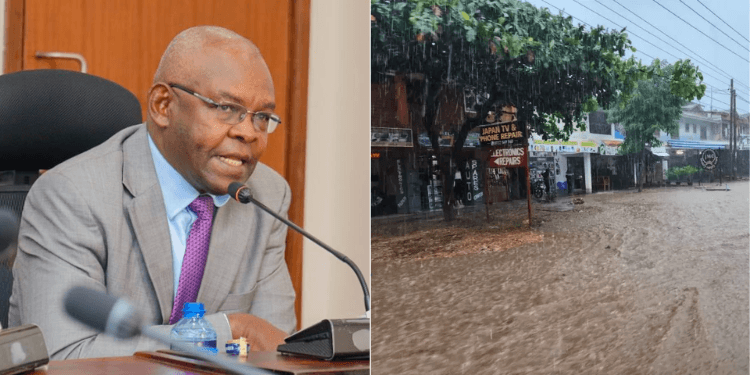
The Central Bank of Kenya (CBK) has said the impact of the anticipated El Niño rains could play a key role in determining Kenya’s economic growth, with favourable weather conditions potentially pushing growth above current projections.
Speaking during a Monetary Policy Committee (MPC) press briefing on the country’s economic outlook, CBK Governor Kamau Thugge said they had already factored the potential adverse effects of El Niño into its growth projections, particularly the possible impact on agriculture.
The Central Bank said its outlook for the final quarter of the year was deliberately conservative because of concerns that excessive rainfall could disrupt agricultural production and other economic activities.
The bank noted that the agricultural sector remains particularly vulnerable to weather shocks, having recorded negative growth during the fourth quarter of the previous year due to drought.
“We have already taken account of the potential adverse impact of the El Niño rains,” CBK said.
“Last year, we experienced negative growth in the value addition in the agricultural sector of minus, I believe, minus 1.4 per cent in the fourth quarter because of the drought.”
The sector is expected to record a rebound this year, partly due to the low base created by last year’s drought-affected performance.
However, CBK said it had taken a cautious approach in its projections, assuming that El Niño could have an adverse effect, especially between October and December.
CBK Says El Niño Rains Could Push Kenya’s Growth Above 4.9%
The central bank noted that the impact of El Niño on Kenya’s economic performance has not always been negative.
“Having looked at the previous impact of El Niño on growth prospects in the past, they are actually quite mixed,” the official said.
This means the rains could produce a different outcome depending on their intensity and their overall effect on key sectors of the economy.
If rainfall supports agricultural production and improves output without causing widespread flooding and disruptions, Kenya’s economic performance could turn out stronger than currently projected.
“So potentially, we could have a much higher growth than the 4.9 per cent if it turns out that the net impact of the El Niño rains will be positive,” the official said.
Agriculture remains one of the country’s key economic sectors, and weather conditions can significantly affect food production, inflation, rural incomes and overall economic activity.
While excessive rains could damage crops, disrupt transport and affect businesses, favourable rainfall could support agricultural output following the drought experienced last year.
Risk to Kenya’s External Position
El Niño has also been identified as one of the risks facing Kenya’s balance of payments outlook.
CBK said Kenya’s current account deficit is estimated at 3 per cent of GDP in the 12 months to June, compared with 1.9 per cent during a similar period last year.
For 2026, the deficit is projected at 3 per cent of GDP, up from 2.1 per cent last year.
The widening deficit has been linked to the conflict in the Middle East, which has contributed to higher international oil prices and increased spending on mineral fuel imports.] Lower remittances and a wider trade deficit have also contributed to the deterioration.
Despite this, CBK said financial inflows are expected to be sufficient to finance the current account deficit and support a balance of payments surplus of $2.485 billion.
The surplus is expected to strengthen Kenya’s reserve position, with foreign exchange reserves projected to reach about $14.9 billion by the end of 2026.
However, CBK listed El Niño and other climate-related shocks among the downside risks that could affect the balance of payments outlook.
Eighteen counties are now at risk of El Niño, with an 81 per cent likelihood that its impact could be severe and extend into early 2027.
Follow our and X Account for real-time news updates.




Comments
No comments yet. Be the first to share your thoughts.