
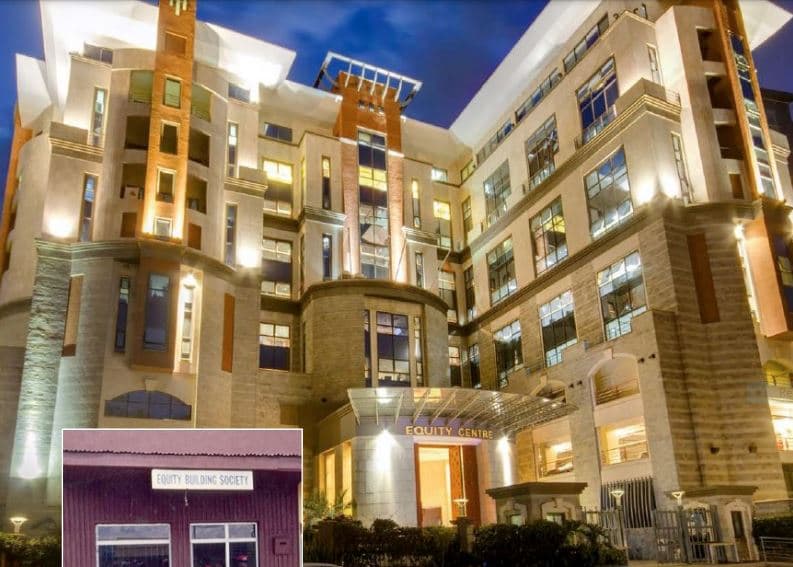
Equity Group has received worldwide recognition from Forbes, which placed the East African lender at 71st globally in its 2026 ranking of lower mid-sized banks. The lender was also the highest-ranked Kenyan bank, ahead of KCB, Cooperative Bank and Stanbic
The lender has received this global recognition, that looks beyond the size of the bank. Factors such as profitability, growth, capital resilience, asset quality and efficiency, were considered.
Available data shows that Kenya’s banking sector loan book crossed the KSh 4.5 trillion mark, for the first time in the second quarter of this year, reaching KSh 4.65 trillion. This is a growth of 4.3% quarter to quarter and 12% growth year-to-date.
Growth of the banking industry loan book was concentrated in Trade, Personal& Household and Transport& Communication.
Equity Group financials
Equity Group is among the major lenders, with net loans of KSh 447.3 billion, compared to KSh 887.3 billion by KCB and KSh 430.1 billion for Co-operative Bank of Kenya. The lender, previously a building society, recorded the strongest quarter on quarter growth at 11.4%, followed by Co-operative Bank of Kenya at 5.8% and KCB at 1.2%.
According to Central Bank of Kenya(CBK) Q2 2026 Credit Officer Survey alongside the latest banking sector data, credit Demand is showing stronger momentum, which is important for banks like Equity Group because sustained loan growth creates room for higher interest income. This is provided that the asset quality remains under control.
The Forbes recognition as now put Equity Group under the investors watch list. A strong Equity Group can still be an expensive investment if its share price already reflects much of that strength.
Investors will now be watching the Group earnings, dividends, book value. P/E ratio and more importantly, the current share price relative to the bank’s underlying value. This valuation will determine whether investors buy the stock or not.
In H1 2026, the Group’s net profit increased 32% to KSh 45.5 billion while the Group’s net loans grew 19% year-on-year. Its regional businesses, especially Tanzania and DRC contributed significantly to the lender’s earnings growth.
The Forbes 2026 ranking also placed KCB at number 79 globally, while the Upper Hill bank was ranked 71st. Both were placed in the same lower mid-sized bank category.
The distinction is that Equity is currently combining strong profitability with strong balance sheet growth and regional expansion.
KCB remains a close competitor to Equity, with its Q1 2026 pre-tax profit rising 15.3% to KSh 24.4 billion while its 2025 Return on Equity increased 12.2% to KSh 12.4 billion.
So which bank gives the best combination of earnings growth, asset quality, capital strength, dividends and valuation at the price investors are paying? This is where Equity is way ahead of KCB is the Forbes rankings.

Comments
No comments yet. Be the first to share your thoughts.