
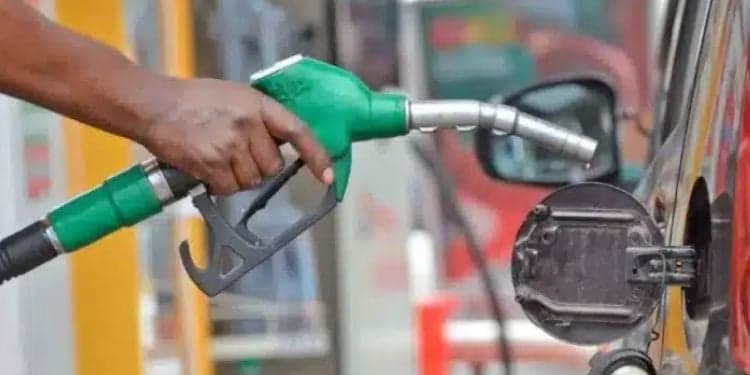
Global oil prices have fallen sharply ahead of Kenya’s next fuel price review by the Energy and Petroleum Regulatory Authority (EPRA), raising the possibility of lower petroleum prices if the decline is sustained and other pricing factors remain favourable.
According to the Central Bank of Kenya (CBK) weekly bulletin, the price of Murban crude oil fell to $72.54 (about KSh9,386) per barrel on August 6, 2026, from $78.24 (about KSh10,123) on July 30.
The decline comes as Kenya approaches the next monthly fuel price review, where EPRA is expected to announce new prices for Petrol, Diesel and Kerosene based on movements in international petroleum prices, the exchange rate and other applicable costs.
“Commodity prices recorded mixed movements, with Murban crude oil prices declining to USD 72.54 per barrel on August 6, from USD 78.24 per barrel on July 30, amid heightened Middle East tensions, while spot gold prices increased to USD 4,240.41 per ounce over the same period from USD 4,102.40 per ounce,” CBK said.
The fall in crude oil prices could ease pressure on the landed cost of petroleum products if international prices remain at lower levels during the period used in EPRA’s calculations.
Global Oil Prices Fall Despite Global Tensions
CBK attributed the drop in crude prices to global market movements even as inflation risks remained elevated in advanced economies in the week ending August 6, 2026.
Inflation in the Euro Area rose to 2.9 percent in July from 2.8 percent in June, largely driven by higher energy prices, while core inflation increased to 2.5 percent.
The high-frequency Purchasing Managers’ Index (PMI) showed that the global economy remained resilient in July, with the J.P. Morgan Global Composite PMI Output Index improving marginally to 52.6. The US Dollar Index strengthened by 0.07 percent during the week.
The bulletin comes weeks after EPRA retained fuel prices last month for the period between July 15 and August 14, offering motorists temporary relief despite fluctuations in global oil markets.
Under the current prices, a litre of super petrol retails at KSh214.03 in Nairobi, while diesel costs KSh222.86 and kerosene KSh191.38.
At the time, EPRA said the government had maintained the pump prices through continued intervention to cushion consumers from global price shocks.
The regulator also disclosed that the government had extended the 8 percent VAT on petroleum products for another three months, through October 2026, and used KSh945 million from the Petroleum Development Levy (PDL) Fund to stabilize fuel prices.
What it could mean for fuel prices
If international oil prices remain low, the cost of importing petroleum products could fall, giving EPRA room to lower pump prices in its next review.
However, the movement in crude prices alone does not determine the final pump price.
EPRA’s monthly calculations also take into account the exchange rate and other components of the petroleum pricing formula.
This means motorists may not receive the full benefit of a fall in global crude prices if other costs rise during the review period.
Shilling remains stable
The movement in global oil prices comes against a relatively stable Kenya Shilling, another factor that could influence the direction of fuel prices.
CBK said the Shilling exchanged at KSh129.41 against the US dollar on August 6, compared with KSh129.40 on July 30.
The currency averaged KSh129.41 to the dollar during the week, indicating limited movement against the US currency.
A stable Shilling is significant for fuel importers because petroleum products are purchased in US dollars. A weaker local currency would increase the cost of imports even when international oil prices decline.
At the same time, a stable or stronger Shilling can help pass on some of the benefit of lower crude prices to consumers.
Current market position
The CBK bulletin showed that other major financial indicators remained relatively stable during the week ending August 6.
Foreign exchange reserves stood at $15.248 billion, equivalent to 6.3 months of import cover, above the statutory minimum of four months.
The stable currency and lower international crude prices could therefore provide a more favourable backdrop for Kenya’s next fuel price review.
Follow our and X Account for real-time news updates.




Comments
No comments yet. Be the first to share your thoughts.