

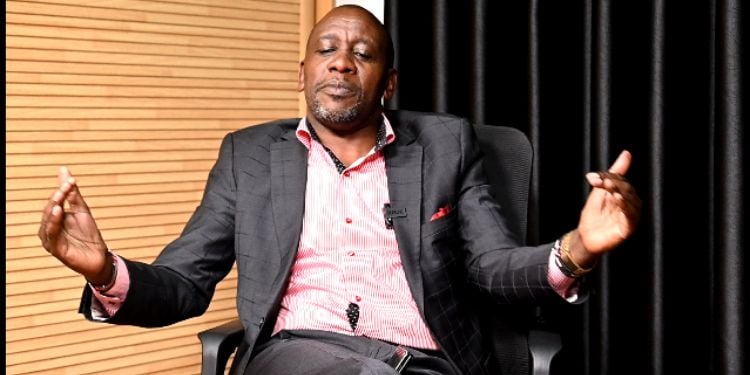
Financial consultant Mwatha Njoroge has opened up about how a business he started as a young entrepreneur grew rapidly to roughly KSh1 billion in value before collapsing within about two years.
Speaking in an interview with The Kenya Times, Njoroge said the failure exposed several mistakes in business management, hiring, financial monitoring, and personal spending.
He said the business performed strongly in its early years and generated substantial wealth, but he failed to establish systems that could protect and grow the money.
“Even failure leaves clues.”
Mwatha Njoroge On Poor Hiring Decisions
Njoroge said one of the problems he faced was not knowing whom to employ and whom to keep out of the business.
He admitted that relatives were given employment opportunities because of family connections rather than the skills required for particular positions.
He said the approach eventually created problems in the running of the business, including cases involving alleged misuse of company resources and irregular staffing.
Mwatha Njoroge recalled employing a first cousin at a shop and later discovering that the relative was using a business card for personal spending at a club.
He also recalled employing another first cousin as a supervisor before discovering that the employee had 10 ghost workers under his watch.
The experiences changed Njoroge’s approach to recruitment, leading him to emphasize professional skills rather than family relationships when employing people.
“So if you’re employing someone, the first qualification should be the necessary skills required to manage that business. Not blood relation.”
Spending Instead of Growing the Money
Njoroge also linked the collapse to the way he handled the money generated by the business.
As income increased, he said he spent heavily on personal possessions and lifestyle expenses instead of directing the money toward investments or other activities that could generate additional income.
He described a pattern in which money earned one day would quickly be used to buy expensive items rather than being retained in the business or invested.
“I have made one million today; tomorrow I will buy a car. The day after, I will buy a house.”
Mwatha Njoroge said the spending continued until the wealth he had accumulated was eventually depleted. He said the experience taught him that making large amounts of money does not automatically create lasting wealth when the funds are not put to productive use.
Njoroge’s New Approach to Money
The experience changed how Mwatha Njoroge manages his income.
He said he no longer wants money to enter his financial life without having a clear purpose, stressing the importance of budgeting and planning.
“I cannot allow a coin to come into my circle without me commanding it where to go through a budget.”
Njoroge also urged young people to manage their money deliberately from the moment they begin earning, even small amounts.
He discouraged simply accumulating savings without considering how the funds could generate additional income, arguing that money should be put to productive use.
“Money should be working. Stop just saving money.”
Njoroge said his experience also taught him to pay closer attention to money leakage, referring to expenses that gradually erode financial resources.
He said the lessons from the failed business reinforced the importance of financial discipline, proper recruitment, regular account monitoring, and using money to create further value.
Follow our WhatsApp Channel and X Account for real-time news updates.


Comments
No comments yet. Be the first to share your thoughts.