
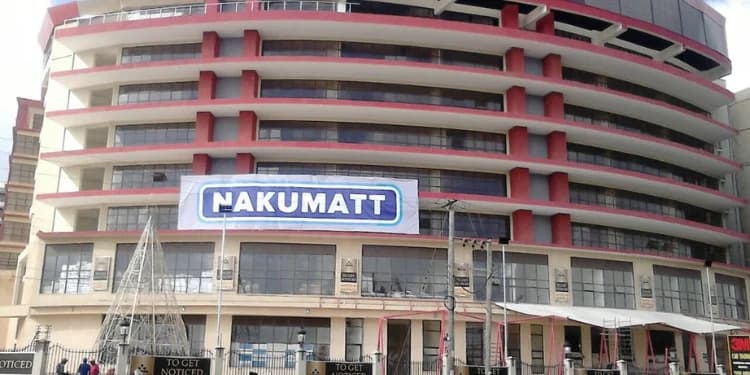
For years, Nakumatt was one of the biggest names in Kenya’s retail industry.
The supermarket chain grew from a Nakuru business into a regional retail giant with stores across East Africa. At its peak, Nakumatt had 62 branches — 45 in Kenya, nine in Uganda, five in Tanzania and three in Rwanda — with a gross turnover of KSh52.2 billion.
From Nakuru Mattress to Nakumatt
The company’s story began in Nakuru as Nakuru Mattresses, before the business adopted the Nakumatt name as it expanded its retail operations. Its growth eventually turned it into a major supermarket operator in the East African region.
By February 2017, the retailer had about 60 outlets, according to contemporary reporting. Academic research puts the figure at 65 stores across the region at around the same period, with operations in Kenya, Uganda, Tanzania, Rwanda and Burundi.
The expansion made Nakumatt one of the region’s largest retailers.
But behind the large store network, the company faced increasing financial pressure.
Its rapid expansion, however, came with a growing dependence on borrowed money.
Nakumatt financed its growth through short-term borrowings, bank loans and letters of credit extended by numerous suppliers. As the retailer expanded its footprint, its financial obligations also increased.
The pressure became increasingly visible in 2016 when Nakumatt began experiencing serious cash-flow difficulties and struggled to meet obligations to landlords, suppliers and employees.
The situation eventually pushed the retailer into administration in January 2018 after an application by unsecured creditors and a court order.
PKF Consulting Limited was appointed administrator to assess whether the business could be rescued and to allow creditors to register their claims.
Nakumatt’s first store closed in May 2017, and by January 2020, its remaining six stores had also shut down. At the time of its exit, the company had accumulated Ksh38 billion in debt.
The scale of Nakumatt’s financial crisis
The administration process revealed the extent of the financial hole facing the retailer.
Based on Nakumatt’s last audited accounts as at February 2016 and management accounts for December 31, 2017, creditors had lodged claims totalling KSh35.83 billion.
Trade creditors accounted for the largest share at KSh18.58 billion, representing 51.9% of all claims. These were mainly suppliers who had provided goods to Nakumatt on credit.
Banks were owed another KSh6.90 billion, representing 19.3% of the claims, while commercial paper and short-term note holders were owed KSh4.80 billion, or 13.4%.
The Kenya Revenue Authority was owed KSh1.82 billion, while staff-related liabilities stood at KSh1.37 billion. Private placement loans accounted for KSh1.14 billion, with other creditors owed a further KSh1.22 billion.
Against these obligations, the assets securing Nakumatt’s debts were valued at only about KSh5.2 billion.
That left a gap of approximately KSh30.6 billion between the company’s liabilities and the available assets.
The administrator determined that liquidation could leave about KSh30.6 billion of the KSh35.8 billion creditor claims unpaid, translating into a potential loss of about 85% of the total claims.
Unsecured creditors faced an even greater risk because secured creditors would be paid first. Trade creditors, commercial paper and short-term note holders and private placement loan providers could potentially suffer losses of up to 100%.
The administrator therefore pursued a restructuring approach aimed at keeping Nakumatt operating as a going concern, arguing that this could provide creditors with a better outcome than an immediate liquidation.
But the rescue effort ultimately failed.
As Nakumatt’s financial difficulties deepened, its once extensive store network contracted sharply. The company was eventually unable to secure a sustainable turnaround, and creditors later voted overwhelmingly in favour of dissolving the retailer.
The decision marked the end of Nakumatt as one of Kenya’s dominant supermarket chains.
The debts did not disappear
The collapse of Nakumatt’s retail operations, however, did not end the financial obligations created during its expansion.
Years later, creditors are still pursuing assets linked to the retailer’s borrowing.
In 2026, Standard Chartered Bank Kenya moved to enforce securities linked to Nakumatt Holdings as it seeks to recover more than KSh967 million and US$7.3 million in unpaid credit facilities.
As of June 22, 2026, the bank said US$335,525.83 was outstanding under an overdraft facility, US$6,993,052.49 under a term loan and KSh967,173,402.60 under an import invoice finance facility.
The combined exposure exceeded KSh1.9 billion at prevailing exchange rates.
The facilities were secured against five properties charged by Nakumatt Investments Limited and Creative Enterprises Limited.
Nakumatt Investments charged four of the properties, while Creative Enterprises charged another property in Nairobi.
The properties include parcels in Nairobi, Mombasa and Nakuru.
Some of the securities date back to the period when Nakumatt was rapidly expanding across East Africa.
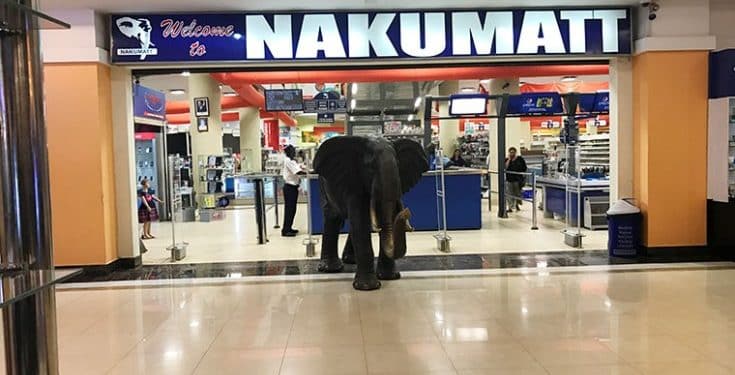
Creative Enterprises charged a Nairobi property in February 2011 to secure up to KSh26.5 million, while Nakumatt Investments charged four properties for a combined original principal of KSh92.55 million, before interest, costs and other charges.
Follow our and X Account for real-time news updates.

Comments
No comments yet. Be the first to share your thoughts.