
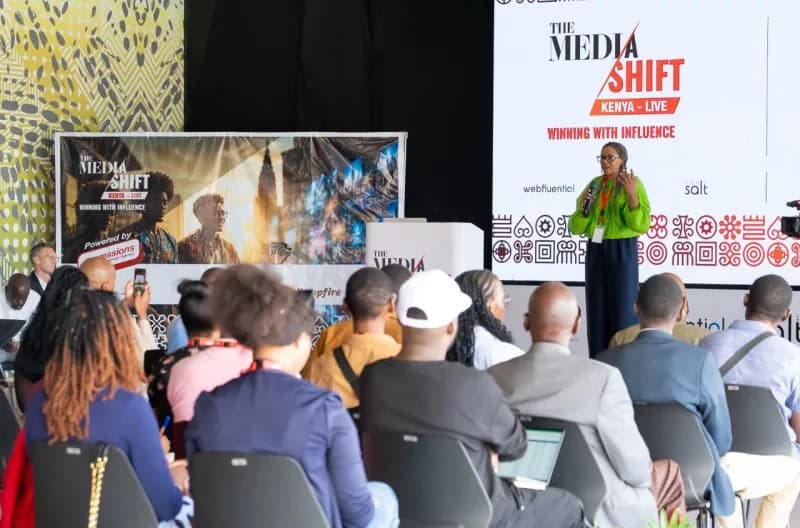
The discussions included the role of artificial intelligence in marketing, with Mr Boone arguing that technology would not eliminate the value of human creators. /HANDOUT

Kenyan digital content creators could earn more from their work by formalising their businesses as companies increasingly shift advertising budgets towards influencer marketing to reach consumers online.
EXP Group chief executive Carole Abade said Kenya’s youthful population and growing internet penetration were creating opportunities for creators to build businesses around their audiences as brands increasingly turn to digital platforms to market their products.
“There's money shifting to them. And they need to be responsible. They need to be responsible for the business and they need to be responsible for the brands that are trusting them to be able to leverage influence,” Abade said at The Media Shift Summit in Nairobi.
She said creators needed to move beyond treating content creation as an informal activity and adopt professional practices that would help them attract commercial partnerships and earn from their work.
The shift comes as the global influencer marketing industry expands, with data from Grand View Research indicating that the market could reach $45 billion in 2026, up from $34 billion in 2025.
David Boone, chief executive of Expressions Influencer Agency, said companies worldwide were directing more advertising spending towards digital platforms and content creators as they sought better returns on their marketing investments.
“We've seen across the world, actually, big clients are starting to actually shift their budget more towards the digital and the creative economy,” Boone said.
He cautioned, however, that the shift did not mean traditional media had lost its relevance, arguing that businesses needed to find the right mix of advertising channels to achieve their objectives.
The growing investment in influencer marketing is also changing how brands assess campaigns, with businesses increasingly looking beyond follower numbers, likes and video views to determine whether their spending translates into sales and other commercial results.
Boone said creators needed to understand the business objectives behind the campaigns they promote instead of focusing solely on online engagement.
“It's about trying to push it further now to really drive attribution for the brand. So what are the business outcomes that the brand can get as opposed to just awareness?” he said.
For creators, this means developing content that reaches the right audiences while demonstrating how their work contributes to a brand's marketing goals.
Abade said creators also needed to become more reliable in delivering services to clients, including meeting deadlines and fulfilling agreed content commitments.
She likened content creation to running a conventional business, where customers expect products and services to be delivered as promised.
“If you open a store and you say I'm selling the following items but you're always out of stock you're not in business,” she said, adding that creators needed to deliver agreed content at the time specified in their contracts.
She said creators who treated themselves as businesses would be better placed to build relationships with brands and take advantage of the money flowing into the industry.
Beyond individual creators, the sector supports a wider network of professionals, including photographers, videographers, editors, talent managers, digital marketers and campaign strategists.
The growth of this ecosystem presents opportunities for entrepreneurship and employment, although creators must also understand their contractual obligations and the commercial value of the audiences they reach.
Abade said Expressions Influencer Agency was being established partly to bring greater discipline to the industry by helping both brands and creators understand the opportunities available.
The agency, launched under EXP Group, aims to connect brands with creators and improve how influencer campaigns are planned, executed and measured.
“We're trying to figure out how do we fix that thing that's broken and how do we make brands actually be able to say this is the amount of money I spent. This is what the return was. That's the equation that we need to solve,” she said.
The agency is also seeking to help creators understand how their work can deliver measurable value to clients, while enabling brands to evaluate the effectiveness of their marketing spending.
The summit brought together brand executives, content creators and industry players to discuss how creativity, audience data and technology can improve the commercial performance of influencer campaigns.
Organisers also announced a new tool for Kenyan marketers, although details of its features were not immediately available.
“AI will simply help us to do things better but AI will not replace trust and credibility. That's what the creators have,” he said.
The noted that trust and authenticity remain important to influencer marketing because creators communicate with audiences from a personal perspective, potentially helping brands establish stronger connections with consumers.



Comments
No comments yet. Be the first to share your thoughts.