

Milk prices and availability have become a growing concern for Kenyan households as temporary supply constraints continue to affect the market, driving up costs and reducing supplies in some areas.
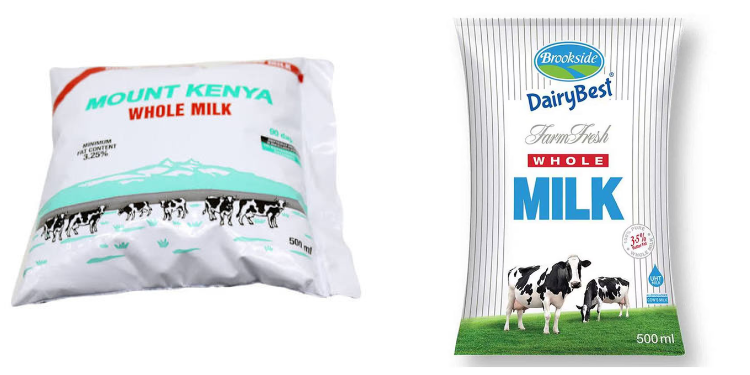
In parts of Nairobi and other areas, supermarkets have reported reduced stocks and fewer milk brands, while the price of some 500ml packets has risen from around KSh60 to as much as KSh75–80 in some outlets.
The Kenya Dairy Board (KDB) said the disruption is mainly due to seasonal production patterns, with milk deliveries to processors dropping from 84.4 million litres in June to 81.3 million litres in July.
For entrepreneurs, the price gap creates an opportunity to sell pasteurised milk through milk ATMs, which let customers buy the quantity they need while avoiding some of the packaging costs associated with packet milk.
Milk ATM Milk Can Cost Less Than Packet Milk
Milk ATMs allow consumers to buy pasteurised milk directly from a refrigerated dispensing machine, usually using their own containers.
The model can reduce packaging costs because the milk does not have to be individually packed before reaching the consumer.
Neema Technologies, a Kenyan manufacturer of milk-dispensing equipment, says its 2026 machines include a 50-litre model listed at KSh60,000, a 100-litre model at KSh75,000, a 150-litre model at KSh120,000 and a 300-litre model at KSh250,000.
Tassmatt, another supplier of milk ATM equipment, lists a 100-litre machine at prices that vary depending on the model and specifications, with one current listing showing KSh75,000.
Its business guide also gives a higher range of KSh120,000 to KSh165,000 for a fully compliant 100-litre machine including installation and initial training.
This means the initial cost of entering the milk ATM business can vary considerably depending on the machine’s capacity, construction, refrigeration system and additional features.
How Much Can a Milk ATM Seller Make Per Litre?
The amount a milk ATM operator can make depends on the price paid to the supplier and the final retail price.
Tassmatt estimates that a vendor buying pasteurised milk at approximately KSh65 per litre and selling it at between KSh90 and KSh100 can have a gross margin of about KSh25 to KSh35 per litre before other business expenses are deducted.
Another estimate from BeyondForest puts the potential margin at about KSh15 to KSh30 per litre, depending on the location, selling price and supply costs.
For example, if a vendor buys one litre of pasteurised milk at KSh65 and sells it at KSh90, the difference is KSh25 per litre.
At 100 litres sold in a day, that would translate to a gross margin of KSh2,500 per day, before expenses.
If the same vendor sells 200 litres at a KSh25 margin, the gross margin will rise to KSh5,000 per day.
These calculations should not, however, be treated as guaranteed income. The margin is not the same as net profit.
Packet Milk Prices Have Also Been Rising
Consumers in Nairobi and other parts of the country are experiencing limited milk supplies, with price increases of between KSh3 and KSh5 on 500ml packets.
The Kenya Dairy Board attributed the shortage to seasonal factors and described it as temporary.
A more recent market check shows further increases, with some 500ml packets selling for approximately KSh75 to KSh80 in some markets, although prices vary by brand, retailer and location.
For example, a 500ml packet selling at KSh75 would cost the equivalent of KSh150 per litre, while a KSh80 packet would translate to KSh160 per litre.
This does not mean all packet milk costs that much, since prices differ by brand and shop.
Why Milk ATMs Can Offer Lower Retail Prices
The main advantage of the milk ATM model is that milk is sold in bulk rather than in individual consumer packages.
Customers can bring their own containers and purchase quantities based on their needs, including relatively small amounts.
Neema Technologies says its automatic dispensers dispense pasteurised milk in flexible quantities, reducing the need for individual plastic packaging.
For consumers, this can make ATM milk attractive, particularly in neighbourhoods where households buy milk daily.
For retailers, however, the absence of packaging does not eliminate all costs.
Operators still must account for electricity used to keep the milk refrigerated, premises and rent, county permits, public-health requirements, cleaning, transport, machine maintenance and possible milk spoilage.
The Real Profit Is Lower Than the Gross Margin
The KSh15 to KSh35 per litre figures should be viewed as indicative gross margins, not guaranteed profits.
If a seller makes KSh25 per litre before expenses, part of that amount must cover the cost of running the business.
For instance, a retailer selling 100 litres a day at a KSh25 gross margin would generate KSh2,500 in gross margin.
From this amount, the operator may still need to pay for electricity, rent, labour, transport, cleaning and other operating expenses.
The actual amount left after these costs will therefore depend on the individual business.
How Much Does It Cost to Start a Milk ATM Business?
Tassmatt estimates that a small 100-litre milk ATM setup could require about KSh165,000, including the machine, premises preparation, permits, initial milk stock, a counter, handwashing facilities, and signage. This is the supplier’s illustrative startup estimate, not a standard industry-wide cost.
BeyondForest similarly notes that operators need to budget for milk stock, refrigeration and electricity, county business permits, public-health certification, branding, installation, cleaning supplies and maintenance.
The cost can therefore be significantly higher or lower depending on the location, size of the outlet and type of machine purchased.
Milk ATM vs Packet Milk: What Is Cheaper?
For consumers, milk from an ATM can be cheaper because the customer is generally paying for the milk rather than individual packaging and some of the costs associated with packaged distribution.
For business owners, the attraction is the potential difference between the wholesale purchase price and the retail price.
However, the actual advantage depends on sourcing costs and sales volume.
A vendor who buys milk cheaply and operates in a busy location may achieve a healthy gross margin, while an operator facing high rent, electricity costs, transport expenses or low daily sales could see much smaller returns.
Even a business with a good retail margin can struggle if it cannot consistently obtain enough milk.
Follow our WhatsApp Channel and X Account for real-time news updates.


Comments
No comments yet. Be the first to share your thoughts.