
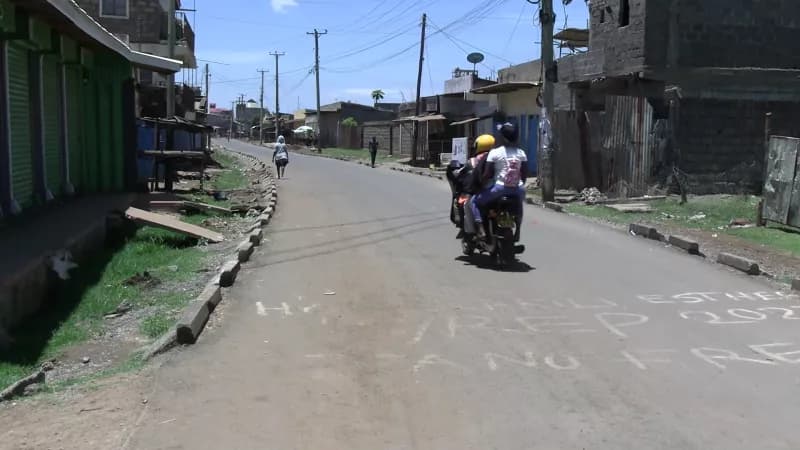
A street in Mwea town that has been recently tarmacked/ ALICE WAITHERA

Improved roads and drainage systems are boosting businesses and property values in Mwea, raising hopes the area will grow into a stronger commercial centre as it pursues municipality status.
Residents and traders say road rehabilitation has eased movement, reduced flooding and attracted tenants to houses that had remained vacant.
The projects, funded jointly by national and county governments, seek to address long-standing infrastructure problems that disrupted businesses and affected residential estates, especially during the rainy season.
The national government has tarmacked several roads in Mwea constituency, including Kutus–Kimbimbi Road at a cost of Sh2.3 billion, the four-kilometre Kutus–Kithiriti–Karie Road and the Kutus–Kiorugari–Kimbimbi–Kanjinji–Togonye–Piai Road, which is part of a wider Sh2.49 billion road package.
The improvements are expected to ease transport and help farmers and traders move rice and other goods to markets.
“The government has done something good by tarmacking these roads. Ngurubani town has benefited greatly, and businesses are beginning to pick up,” Joseph Kinyua, a resident of Maisha Kamili estate, said.
Kinyua said roads and drainage had previously been a challenge during heavy rains, when flooding disrupted movement and business. Better drainage, he added, could reduce stagnant water, improve sanitation and lower the risk of water-related illnesses.
The county has also carried out a 25,000-square-metre urban paving project, installing stone-lined drainage channels and covered storm drains alongside newly tarmacked streets in Wang’uru. The project includes 600 new parking spaces.
Tebere MCA Peter Karinga said the infrastructure improvements, together with plans to elevate Mwea town to municipality status, could help address longstanding urban challenges.
Ngurubani has struggled with poor drainage, waste management and unplanned development, limiting its ability to keep pace with growing commercial activity in the rice-producing region.
Karinga said municipality status could open the door to more government funding and support from development partners. He said residents could benefit from improved street lighting, better drainage and a fire station.
“We have started the process of elevating this town to a municipality, which is important because it will help improve infrastructure in Ngurubani,” he said, urging those handling the approval process to complete the remaining requirements.
Traders say better roads have also improved access to shops and increased demand for rental properties.
Rice trader Judy Wamae said poor roads and muddy conditions had made movement difficult, particularly during the rainy season.
She said the improvements had increased the value of plots in Maisha Kamili and attracted tenants to houses that had stood empty. More rice traders and buyers were also visiting the area, creating new business opportunities.
Residents hope municipality status will help improve sanitation, sewerage, waste collection and street lighting, while supporting further commercial growth.
Mwea is one of Kenya’s major rice-producing areas, with Ngurubani serving as a key trading centre for farmers, millers and buyers. As infrastructure improves, residents say the next challenge is ensuring that better roads are matched by reliable urban services and orderly development.


Comments
No comments yet. Be the first to share your thoughts.