
Farmers who sold coffee through the Nairobi Coffee Exchange during the 2025/2026 coffee year earned KSh 41.63 billion, about KSh 6 billion more than the KSh 35.6 billion recorded in the previous season.
The earnings came from 770,034 bags, or roughly 47 million kilogrammes of coffee, traded between October 1, 2025 and September 30, 2026, according to the exchange’s report on the year. In the 2024/2025 season, 673,844 bags were sold.
The exchange linked the stronger result to better prices and firmer demand through much of the trading period.
By May, cumulative sales had reached KSh 32.25 billion on 36.93 million kilogrammes, at an average of KSh 43,780 per 50-kilogramme bag.
The season closed with Sale 42 on September 29, 2026, in which 17,765 bags fetched KSh 841.3 million. The average price in that final auction was KSh 38,140 per 50-kilogramme bag, or about KSh 762 per kilogramme of clean coffee.
Eighteen brokers marketed coffee during the year, according to NCE Chief Executive Officer Lisper Ndung’u. Alliance Berries Limited handled the largest share, 222,329 bags or about 29 percent of the coffee traded.
The New Kenya Planters’ Cooperative Union followed with 137,284 bags, about 18 percent. Between them, the two brokers accounted for roughly 61 percent of the season’s volume.
Kipkelion marketed 58,356 bags, CEBBA 40,789 bags and Minnesota 30,405 bags. Meru sold 21,786 bags worth KSh 23.8 million, Mt Elgon 15,334 bags worth KSh 17.9 million, and Murang’a growers 12,476 bags valued at KSh 13.3 million.
National statistics point to higher auction prices over the past two years. Kenya’s average coffee auction price rose to USD7.21 per kilogramme in 2025 from USD4.90 in 2024, according to Kenya National Bureau of Statistics data cited in the report.
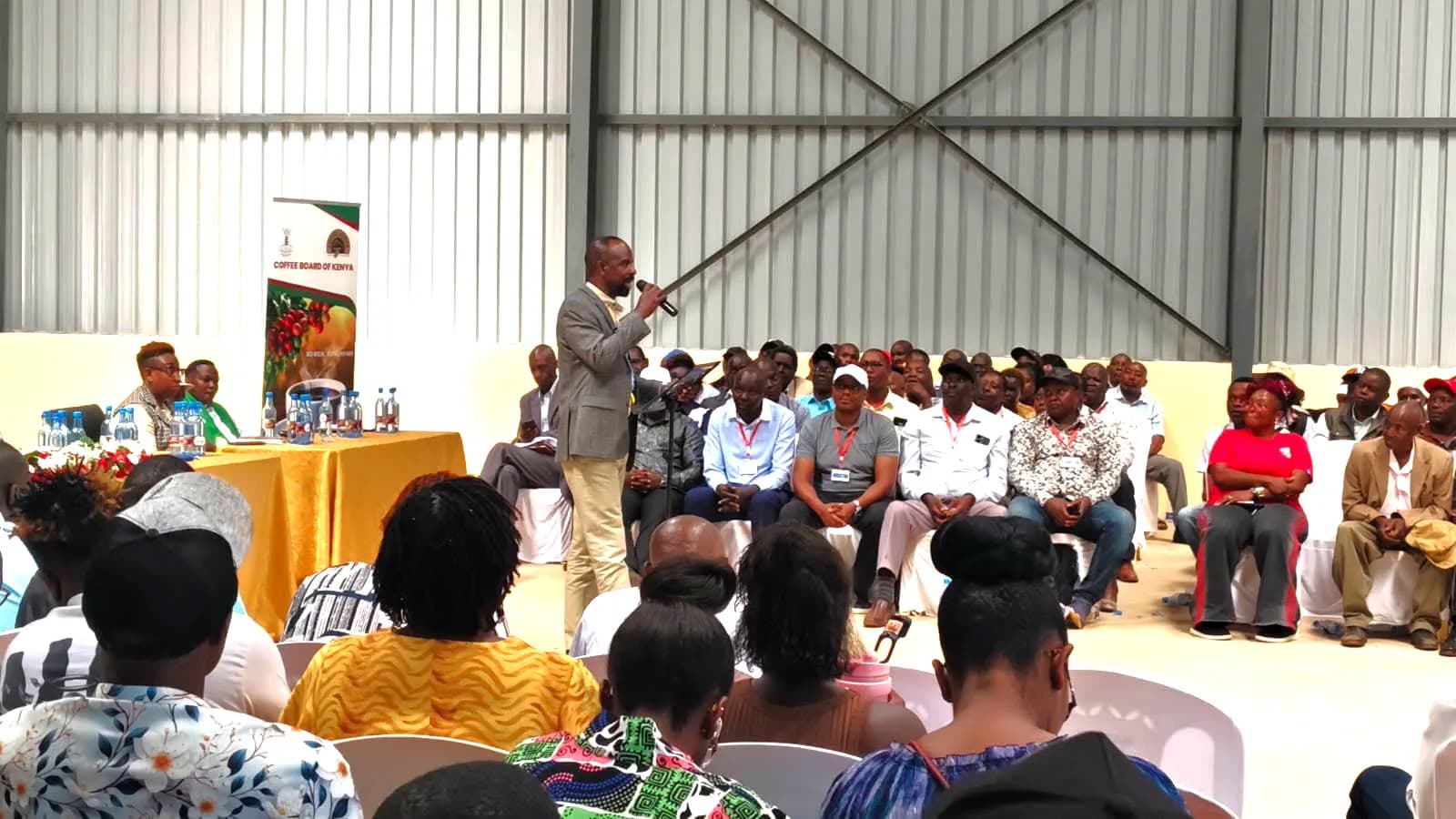
Coffee Board of Kenya Chairman Henry Kinyua said the industry expects prices to hold up in the 2026/2027 coffee year, which began on October 1.
“Adherence to recommended farming practices will be critical in ensuring that farmers continue producing high-quality beans capable of attracting premium prices in the international market,” he said, urging growers to keep up good agricultural practices to protect the quality of Kenyan coffee.
The auction remains a central channel for marketing coffee from cooperative societies and estates, with quality, origin and grading among the factors that determine the prices farmers receive.
The NCE report did not give a breakdown of how the KSh 41.63 billion was shared among farmers, brokers and other players in the value chain, nor did it detail the volume and price fluctuations recorded during the season.



Comments
No comments yet. Be the first to share your thoughts.