

Safaricom Chief Executive Officer(CEO) Peter Ndegwa has revealed how he turned to a military general to help employees understand a major change in the way the telecommunications company was being run.
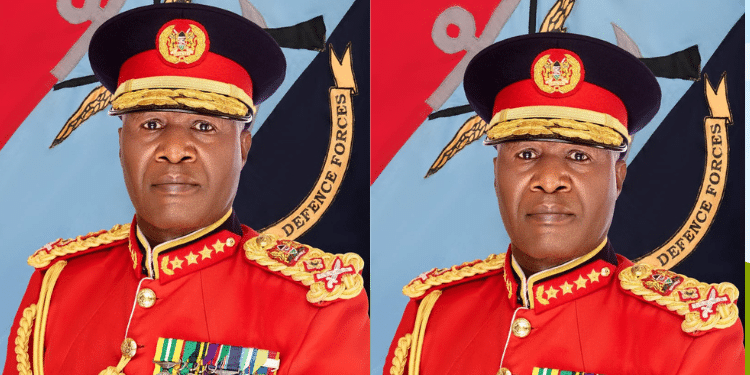
Ndegwa brought then Chief of Defence Forces General Robert Kibochi to Safaricom as he sought to explain the thinking behind the company’s new five-year strategy and how it would be implemented.
According to Peter Ndegwa, the decision was influenced by the military approach to breaking down a broad strategy into specific missions and tasks.
Safaricom’s board approved the company’s new strategy in October 2020, with the firm targeting a purpose-led technology company by 2025.
Peter Ndegwa Reveals How Former CDF Robert Kibochi Explained Safaricom’s Five-Year Plan
Ndegwa said getting the board to approve the strategy was only the first step. The bigger challenge was ensuring that employees understood their role in delivering it.
“If a strategy is not owned, it’s just a pipe dream at the senior level, and you will never get it done,” Ndegwa said.
He therefore looked outside the telecommunications industry for a way of making the strategy easier for employees to understand.
He said Kibochi explained the military approach simply, allowing Safaricom employees to see how the same concept could apply to the company.
“We brought the then Chief of Defence Forces General Robert Kibochi – the head of the military – to talk about how they use ‘mission’ in the military,” Ndegwa recalled.
“And he brought it to life in such a simple way. People then started to realise; you mean this can be so powerful?”
Safaricom’s Five-Year Strategy Breakdown
The approach involved breaking the wider strategy into missions, with each mission divided into annual targets and individual responsibilities.
Safaricom had identified three major areas under the strategy.
The first was to strengthen its existing business, including voice, SMS, connectivity and M-Pesa.
The second was to move beyond the traditional core business by expanding its payments offering and developing products around M-Pesa, including savings, investments, insurance and services for businesses.
The third was to expand beyond Kenya, a plan that eventually led to the establishment of Safaricom Ethiopia.
The strategy also coincided with a major change in the way Safaricom organized its workforce.
Peter Ndegwa introduced an Agile approach that moved away from the traditional hierarchical structure based around departments.
Instead, teams known as tribes were created around specific business priorities, bringing together employees with different areas of expertise.
The first four teams focused on mobile data, payments, fixed broadband and digital channels.
How Peter Ndegwa Faced Resistance to Safaricom’s Agile Transformation
The change initially faced resistance from some employees and members of the board.
Ndegwa said the company selected some of its most highly regarded leaders to head the new teams, helping demonstrate that the new structure was being taken seriously.
The changes also affected Safaricom’s customer service operations.
At the time, the company’s customer care centre was receiving about 120,000 calls a day.
Jannet Atika, who was heading Customer Care, said the Agile approach helped the company use data to understand when customer service agents were most needed and organise shifts accordingly.
The system also allowed Safaricom to bring together people from different departments to make decisions without relying on traditional hierarchies.
Peter Ndegwa faced questions from both employees and board members over the changes.
He also came under scrutiny after concerns about the new approach made their way to the media.
Despite the resistance, Ndegwa made clear that he intended to continue with the transformation.
“Unless Peter leaves, Agile is here to stay,” he told Safaricom employees.
Ndegwa later acknowledged that pushing through the changes carried significant personal risk.
“There was a lot of opposition from the board, but many times, as long as you are delivering performance, the board will give you the benefit of the doubt, but you had better succeed. I knew from a personal perspective, it was high risk,” he said.
Peter Ndegwa joined Safaricom in April 2020, taking over as the company’s chief executive at the height of the Covid-19 pandemic.
The company’s five-year strategy was part of Ndegwa’s wider effort to reposition Safaricom as a purpose-led technology company, while its expansion into Ethiopia became one of the major projects undertaken during his tenure.
General Kibochi, whom Ndegwa brought into Safaricom to explain the military concept of a mission, served as Kenya’s Chief of Defence Forces from May 2020 until his retirement in April 2023.
The military approach used in Safaricom’s strategy was therefore not about military operations but about borrowing a method used to turn broad objectives into defined missions, annual targets and individual responsibilities.
Follow our WhatsApp Channel and X Account for real-time news updates.



Comments
No comments yet. Be the first to share your thoughts.