

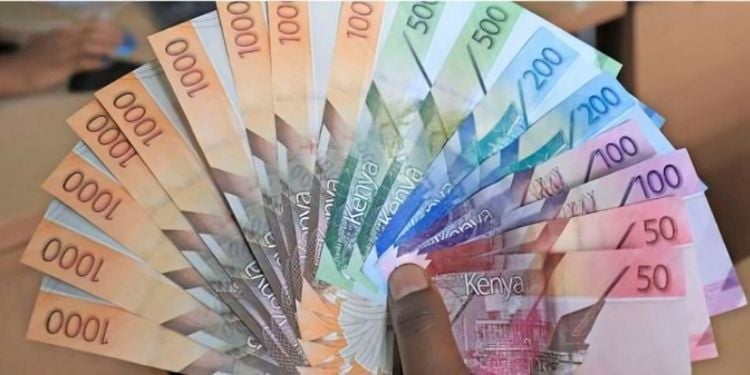
Kenya’s shilling remained stable against the US dollar in the week ending August 20, despite mounting global inflation concerns and a sharp rise in oil prices, supported by strong foreign exchange reserves held by the Central Bank of Kenya (CBK).
The local currency traded at KSh129.49 to the dollar on August 20, compared to KSh129.40 a week earlier.
The stability comes as many countries face pressure from rising energy costs and uncertainty in global financial markets.
CBK said Kenya’s foreign exchange reserves stood at USD 15.16 billion, equivalent to 6.3 months of import cover, providing a strong buffer against external shocks.
The reserves remain well above the statutory requirement of four months of import cover.
The reserve position has helped cushion the shilling from pressures that would ordinarily arise from higher import costs, particularly fuel, which Kenya buys using dollars.
Global oil prices rose significantly during the week, increasing concerns about inflation and the cost of doing business.
Shilling Weathers Inflation and Oil Price Pressures
According to the CBK bulletin, Murban crude oil prices increased to USD 84.76 per barrel on August 20 from USD 79.29 a week earlier.
The increase was linked to heightened tensions between the United States and Iran as well as concerns about possible disruptions to global oil supplies.
At the same time, inflation concerns persisted in major economies.
In the United Kingdom, headline inflation rose to 2.9 percent in July from 2.6 percent in June, marking the first increase since March.
China’s economy also showed signs of slowing, with industrial production and retail sales growth easing during July.
Despite these developments, Kenya’s currency market remained largely calm, helped by strong reserves and adequate liquidity in the banking sector.
CBK noted that the money market remained liquid during the week, with commercial banks holding excess reserves averaging KSh45.9 billion above the required cash reserve ratio. The Kenya Shilling Overnight Interbank Average Rate (KESONIA) remained unchanged at 8.75 percent.
Activity at the Nairobi Securities Exchange strengthened during the week, further reflecting positive market sentiment.
The NSE All Share Index rose by 2.72 percent, while the NSE 25 and NSE 20 indices gained 2.90 percent and 2.24 percent, respectively.
Market capitalization also increased by 2.72 percent.
Investors traded 229.9 percent more shares than the previous week, while equity turnover surged by 253.81 percent.
Bond market turnover also jumped by 128.9 percent in the domestic secondary market.
Why This Matters to Kenyans
Kenya’s ability to hold the shilling steady amid rising oil prices tests how well the economy can absorb imported inflation.
The country does not control international crude prices or geopolitical events that disrupt supply.
Its main defense is ensuring that importers, banks, and investors can obtain foreign currency without triggering panic demand for dollars.
That is why the reserve position is significant. It gives the central bank room to manage short-term pressure in the foreign-exchange market and reduces the likelihood that normal demand for fuel and other imports turns into a disorderly currency sell-off.
For businesses, this makes it easier to cost shipments, negotiate supply contracts and plan working capital.
For households, the benefit is mainly protection against an abrupt exchange-rate-driven jump in the cost of transport and essential goods.
However, stability should not be confused with immunity.
If oil prices remain elevated, fuel import costs will still rise and could feed into inflation.
A stable shilling only limits the additional damage that would occur if Kenya had to pay both a higher global oil price and a weaker currency.
Follow our WhatsApp Channel and X Account for real-time news updates.



Comments
No comments yet. Be the first to share your thoughts.