
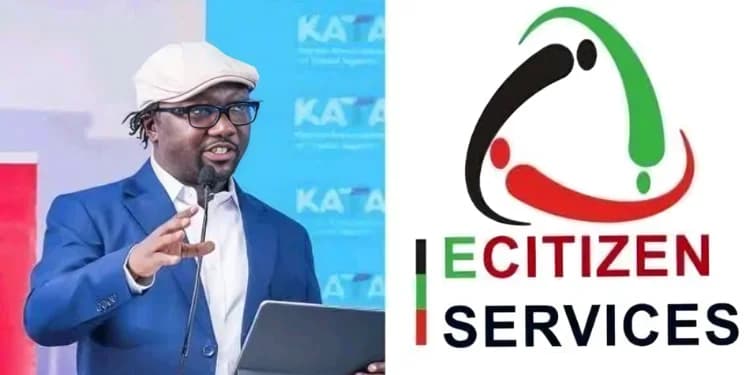
The World Bank has barred Webmasters Kenya Ltd, the firm behind the eCitizen platform, and its director, James Ayugi, from participating in World Bank-financed projects for at least five years.
The World Bank Sanctions Board, in Case No. 790, found the firm and Ayugi liable for fraudulent and obstructive practices after they allegedly falsely represented that two key experts were available for a World Bank Group-financed project.
According to the lender, the company and its director were also accused of obstructing the Bank’s investigation by failing to provide requested documents during an audit.
“The Respondents were found liable for fraudulent and obstructive practices. Specifically, the Respondents misrepresented the availability of two key experts for a contract under a World Bank Group-financed Project.
The Respondents also materially impeded the exercise of the Bank’s inspection and audit rights by failing to meaningfully comply with the Bank’s documentary requests in the context of an audit,” World bank notes.
The five-year ban is conditional, meaning Webmasters Kenya Ltd. and Ayugi can only be cleared after serving the minimum period if they meet the requirements set by the Sanctions Board.
Events Leading to the World Bank Sanctioning Webmasters Kenya
The Sanctions Board reviewed the case on February 25, 2026, based on written submissions after neither side requested a hearing.
Proceedings began with a temporary suspension issued on July 31, 2025, barring the firm, Ayugi, and entities directly or indirectly controlled by them from participating in World Bank-financed projects.
At the first stage, the World Bank’s Suspension and Debarment Officer recommended a minimum six-year ban for both the firm and Ayugi.
Under the proposed sanctions, the company and its director would have been required to take corrective measures and comply with integrity requirements before being released from the ban.
In response, the firm and Ayugi challenged the findings in an explanation submitted on August 29, 2025, but the Suspension and Debarment Officer maintained the recommendations after reviewing their submission.
Ultimately, the Sanctions Board imposed a minimum five-year debarment with conditional release.
Background to the Case
The case involved two World Bank-financed projects in Somalia, namely the Somali Core Economic Institutions and Opportunities Project (Score Project) and the Somalia Capacity Advancement, Livelihoods and Entrepreneurship through Digital Uplift Project (Scaled-Up Project).
The Score Project aimed to strengthen Somalia’s private and financial sectors, attract private investment, and create jobs. Somalia received US$3.3 million from the International Development Association (IDA) to support the project, which ran from May 2016 to September 2020.
In April 2018, the project invited companies to submit proposals for a contract to automate business activities in Somalia. A group of three companies, with Webmasters Kenya Ltd. as a subcontractor, won the contract.
James Ayugi signed the contract on behalf of the group on November 20, 2018. The contract was worth US$330,000.
The second project, known as the Scaled-Up Project, aimed to increase access to digital financial and government services, particularly to support women’s entrepreneurship and employment.
Somalia received SDR12.9 million, equivalent to about US$13 million, from IDA for the project. The project started in August 2019 and is scheduled to close on June 30, 2026.
On September 16, 2020, Webmasters Kenya Ltd., represented by Ayugi, secured a separate contract under the project through direct contracting, meaning the company was selected without a competitive bidding process.
The contract involved the second phase of a business registration automation programme.
During the bidding process, Ayugi submitted financial and technical proposals that listed key staff members for the project.
The proposals included the staff members’ CVs and signed declarations stating that they were available to work on the assignment if the company won the contract.
“INT alleges that the Respondents engaged in a fraudulent practice by making misrepresentations related to key experts for the Scaled-Up Contract,” World Bank notes.
“INT further alleges that the Respondents engaged in an obstructive practice in connection with the Score Contract and Scaled-Up Contract by failing to produce the majority of documents requested in INT’s audit letter to the Respondents.”
During contract negotiations, the project implementation team asked Ayugi to confirm that all the proposed experts were available.
The World Bank said Ayugi confirmed that the experts were available. The final contract later included the same CVs and availability declarations.
However, the World Bank’s Integrity Vice Presidency alleged that two key staff members were not actually available to work on the project and that their CVs had been used without authorizations.
“The Respondents misrepresented the availability of two key staff members to work on the Scaled-Up Contract and used their CVs without authorization.”
Follow our and X Account for real-time news updates.



Comments
No comments yet. Be the first to share your thoughts.