
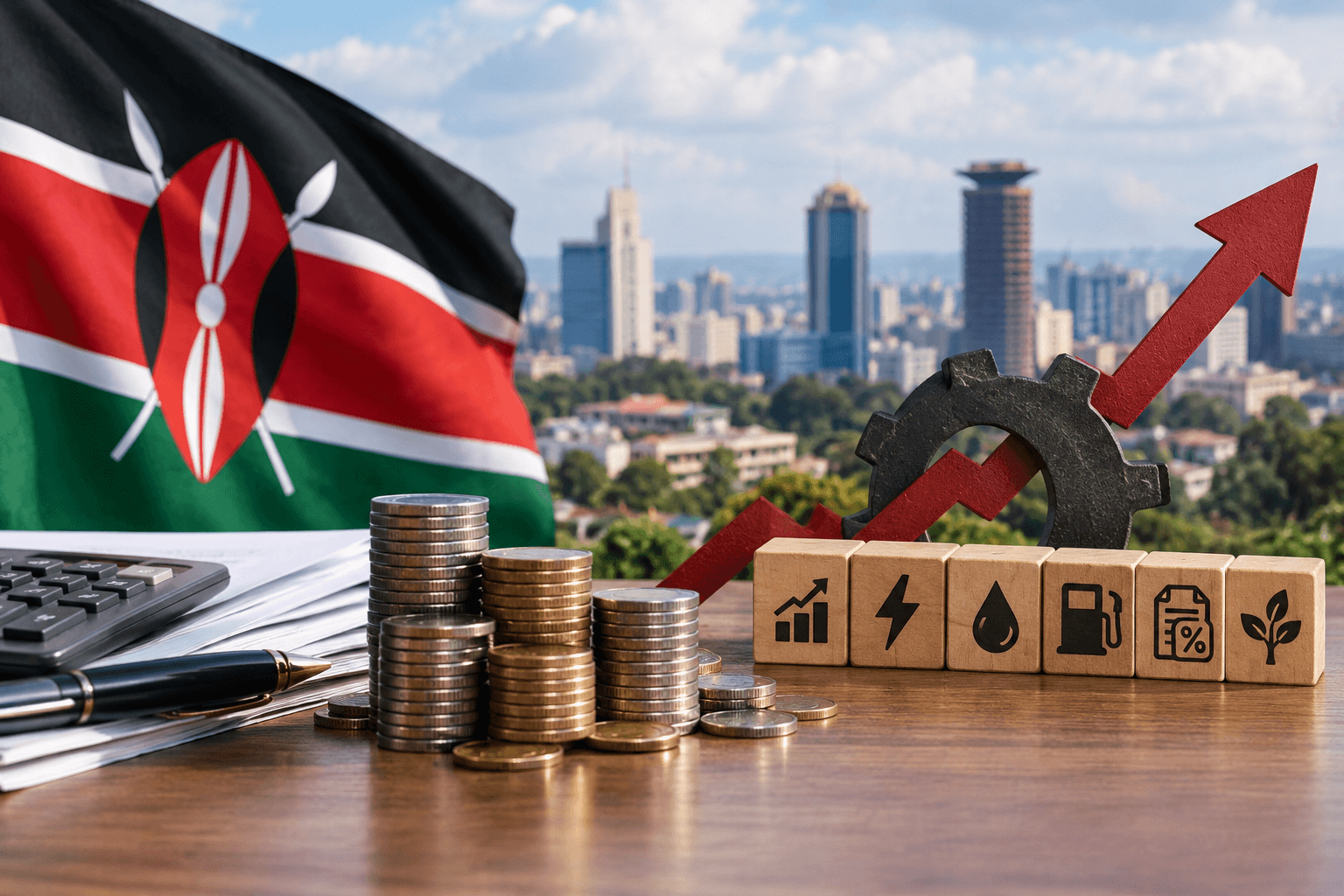
A new World Bank Country Private Sector Diagnostic has warned that high taxes, expensive credit, unreliable utilities, regulatory uncertainty and governance challenges are making it harder for Kenya to attract private investment and create jobs.
The report, published in September 2026, says Kenya has strong foundations for private-sector growth but has not converted these advantages into enough investment, productivity, exports and formal employment.
Governance and corruption remain major concerns for investors. The report says red tape and corruption increase the cost of running businesses, with one-third of surveyed firms reporting at least one request for a bribe.
Business licensing and permits are another challenge, with 25.3 per cent of firms identifying them as a major or very severe constraint.
Taxation also continues to weigh on businesses. In the 2025 World Bank Enterprise Survey, 64 per cent of firms cited tax rates as a major or very severe constraint, while 38.6 per cent pointed to tax administration.
The World Bank says Kenya’s corporate income tax rates are broadly comparable with those of regional peers. However, businesses face uncertainty from multiple levies, frequent changes to tax rules and complex administrative requirements.
The report describes “uncertainty and frequent changes in the tax system” as a major constraint to private investment.
Devolution has added another layer of complexity, particularly for companies operating across several counties. Businesses face different permits, property rates, market fees and other charges depending on their location.
These requirements, the report says, “can be applied inconsistently and vary widely across counties”, increasing compliance costs for firms.
While the County Licensing (Uniform Procedures) Act of 2024 and regulations issued in 2025 seek to standardise licensing and reduce duplication, the World Bank says implementation remains slow.
Infrastructure problems are also raising operating costs. Electricity prices of about $0.26 per kilowatt-hour are among the highest in the region, while about 75 per cent of firms reported frequent power outages.
The unreliable electricity supply has forced many businesses to invest in alternative power. About 60 per cent of firms own or share a generator, adding to their operating expenses.
Water supply is another concern, with more than 37 per cent of firms reporting insufficient water, compared with 17.2 per cent among lower-middle-income countries.
The report also highlights expensive credit, land-related challenges and climate shocks as additional pressures on investors.
The World Bank says addressing these constraints will require more predictable regulations, stronger governance and better public services if Kenya is to attract the private capital needed to expand businesses, improve productivity and create formal jobs.


Comments
No comments yet. Be the first to share your thoughts.