
Sixty-four Jehovah’s Witnesses remain imprisoned in Eritrea over their religious beliefs, 32 years after a government decree stripped members of the religious group of citizenship rights, according to the Association of Jehovah’s Witnesses in East Africa (AJWEA).
The association says October 25, 2026, marks the anniversary of the 1994 decree, which revoked the group’s citizenship and other civil rights. The action subjected members to prolonged restrictions on their religious freedom.
Since the decree was issued, more than 321 Jehovah’s Witnesses have been imprisoned. Seven have died as a result of harsh incarceration conditions, according to a press statement from AJWEA.
The statement says the 64 people currently in prison are being held without formal charges.
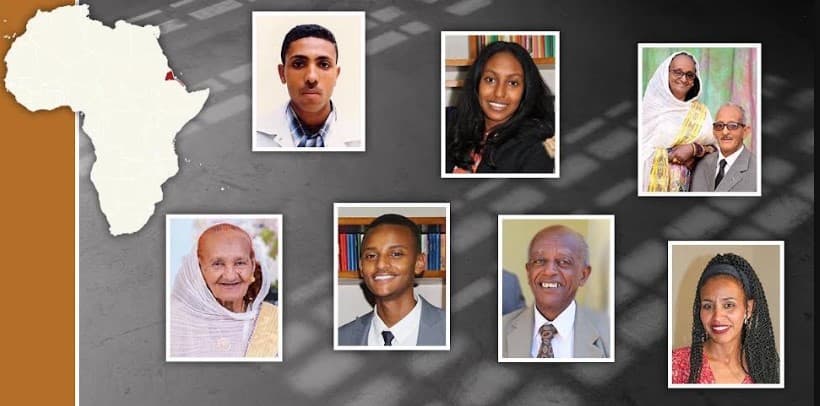
Those detained include elderly people in their 80s, as well as younger men and women whose education, careers and family lives have been disrupted.
The United Nations has also raised concerns over the continued imprisonment of Jehovah’s Witnesses and other Christians in Eritrea.
Addressing the UN General Assembly’s Third Committee on October 29, 2025, the UN Special Rapporteur on the situation of human rights in Eritrea, Dr. Mohamed Abdelsalam Babiker, said 64 Jehovah’s Witnesses remained arbitrarily imprisoned without charges or trial.
“I urge the Government to release all individuals and to establish effective due process safeguards. The policy of imprisoning individuals for their religious beliefs, activities or conscientious objection constitute a violation of their right to manifest their religion or belief,” Babiker said.
Nearly a year after the appeal, the 64 Jehovah’s Witnesses remain imprisoned, according to AJWEA.
An image provided by the Office of Public Information (OPI), the official media, public relations and communications department for Jehovah’s Witnesses, features eight individuals who remain imprisoned in Eritrea.
Some detainees have spent years separated from their families, missing educational opportunities and important milestones while their relatives grapple with uncertainty over their fate.
“The impact of these policies extends far beyond prison walls and continues to affect generations of Eritrean families,” said Victor Karoki, a Jehovah’s Witnesses spokesman in East Africa.
Karoki said the decades-long restrictions had resulted in families being separated, personal ambitions being interrupted and children growing up without imprisoned parents.
“Three decades is a lifetime,” he said, adding that behind the figures were individual stories of families separated and futures interrupted.
The association said the prolonged detentions had also affected parents who had grown old without seeing their imprisoned children, as well as spouses and siblings who had endured years of uncertainty.
It called on policymakers, international organisations, civil society groups and human rights defenders to sustain efforts to secure the release of those imprisoned because of their faith.
“Freedom of religion is not a privilege granted to a few but a fundamental human right,” Karoki said.
“We respectfully urge that those imprisoned for their faith be released and that Jehovah’s Witnesses be able to practice their religion freely and peacefully,” he added.
The anniversary highlights continuing concerns over religious freedom in Eritrea, where the association says members of the group continue to face imprisonment and restrictions on their civil rights.
AJWEA is a charitable, not-for-profit religious organisation that supports the religious activities of Jehovah’s Witnesses in Kenya, Tanzania, Sudan and South Sudan.
by William Inganga

Comments
No comments yet. Be the first to share your thoughts.