
Bandari Maritime Academy (BMA) is expanding seafarer training, professional certification and practical onboard experience in a bid to build a competitive maritime workforce.
The BMA has in recent months secured training commitments from global shipping lines and launched a recruitment drive to bring the next generation of youth to the sea.
BMA Chief Executive Officer (CEO) Dr. Eric Katana described skilled manpower development as critical to strengthening the country’s blue economy sector.
The blue economy sector also known as the sustainable ocean-based economy encompasses fisheries, maritime biotechnology, aquaculture, coastal tourism, port infrastructure, marine transport and logistics.
Dr. Katana said the institution is expanding seafarer training, certification and practical sea-time opportunities in line with international maritime standards through strategic partnerships.
The BMA CEO said the institution is taking significant steps in strengthening maritime education, professional training and shipping capacity.
Strategically located on a scenic oceanfront, in the vibrant port city of Mombasa the institution is Kenya’s premier center for maritime education and training.
BMA was officially established in 2018 after transforming from Bandari College which was originally founded and commissioned in1980, by the Kenya Ports Authority (KPA).
Dr. Katana says the maritime education training centre offers marine engineering, nautical science, seafarers, standards of training, certification, and watchkeeping safety and auxiliary training courses required for working aboard marine vessels.
He said through strategic partnerships with industry stakeholders, BMA continues to champion quality maritime education and training, equipping learners and industry professionals with the knowledge and practical skills required to contribute to the growth of the maritime and blue economy sectors.
“We are determined to bridge the maritime skills shortages, strengthen training standards and shipping capacity in the country,” he said.
Dr. Katana was speaking after holding separate talks with chairman of the Dock Workers Union (DWU) Gunda Kaneno and Kenya’s High Commissioner to the United Kingdom Maurice Makoloo.
The discussions touched on matters of mutual interest, with a focus on dock workers’ training and professional development.
The engagements provided an opportunity to explore areas of common interest in advancing relevant skills, strengthening workforce capacity and supporting the development of a competent workforce to meet the needs of the maritime sector.
He said the meeting with the envoy comes as BMA seeks to build a globally competitive seafarer workforce and strengthen international maritime diplomacy.
“Our engagement underscores the importance of collaboration between training institutions and industry players in building a skilled, competitive and future-ready maritime workforce,” he said.
Meanwhile, Dr. Katana said BMA is investing in advanced technologies, modernizing its maritime education and vocational training facilities to address the growing demand for qualified young talent in the shipping industry.
The centre hopes the modern training tools will expand the maritime sector and spur young people to work in the blue economy sector and boost the country’s economy.
Dr. Katana says the institution is committed to building a ‘highly skilled and competitive maritime workforce’ by making a long-term investment in maritime education.
“To ensure hands-on training we are collaborating with KPA and Kenya Maritime Authority to promote maritime careers through internships and cadet sponsorships,” he said
He contends that simulation training is emerging as an indispensable tool for developing the skills needed to navigate modern maritime challenges.
The BMA CEO says the maritime centre is upgrading its training facilities in a bid to equip trainees with ‘skills which meet global maritime standards and labour market demands’.
“We are out to play a key role in skills development as the maritime industry undergoes digitalization, automation and an increasing focus on sustainability through our pre-sea training programmes,” he said during an interview.
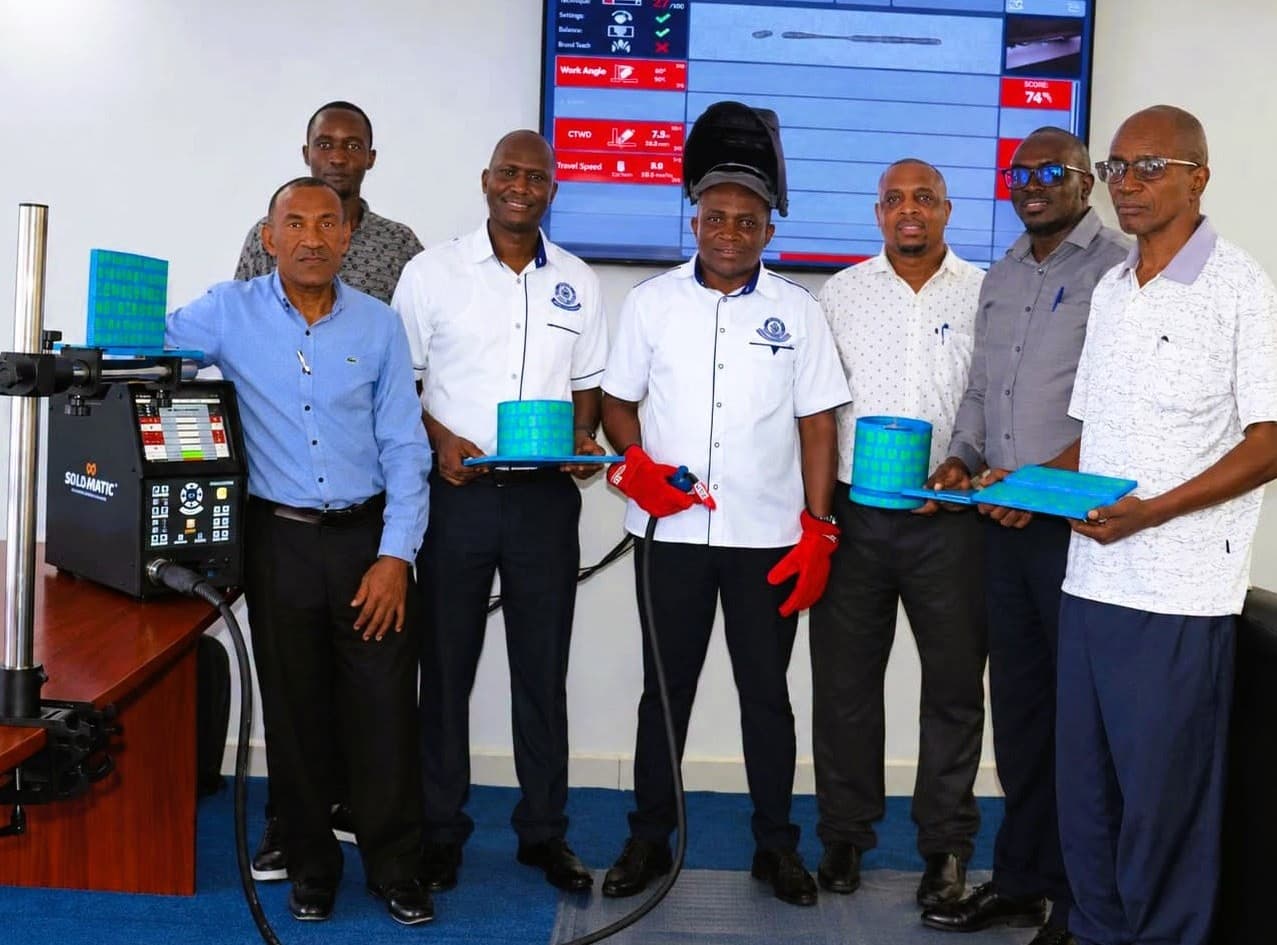
He says the institution has commissioned a state-of-the-art ‘Soldamatic Welding Simulator’, leveraging Augmented Reality (AR) technology to enhance hands-on learning, strengthen technical skills and prepare cadets for the demands of the maritime industry.
The simulator uses Augmented Reality (AR) technology to create a realistic welding environment, allowing trainees to practice welding techniques using specialized tools without actual metal, welding gas or other consumables.
He said the new modern equipment allows trainees to immerse in simulation environments in which they can practice in the most realistic way without limitations, risk-free, and without additional costs, until they acquire the abilities and skills necessary to move to a real work environment.
“The investment reinforces our commitment to modern training technologies that promote safety, improve skills development and equip our graduates to seize maritime career opportunities,” he said.
He stressed that quality training was an essential tool in preparing maritime professionals in dealing with challenges faced in the sector which spans environmental, security, technological, and operational sectors.
Soldamatic is the world’s first augmented reality welding simulator which allows industrial trainees to practice welding safely using real welding tools-such as actual torches, helmets, and workpieces-while overlaying computer-generated graphics to simulate real weld pools, sparks, and effects.
It provides a safe, controlled and interactive learning environment where cadets develop essential skills before handling actual welding equipment in a real work environment.
“The Soldamatic Welding Simulator marks an important step in strengthening practical training at Bandari Maritime Academy. It allows our cadets to practice welding techniques, understand the correct procedures and build confidence before undertaking actual welding tasks,’’ he said.
Dr. Katana added that the academy has continued to invest in modern training technologies to enhance the quality of training and align its programmes with relevant international maritime standards.
He said as simulators become ‘training game-changers’ to meet industry manpower needs, the maritime college is also opening a state-of-the-art full mission bridge and gantry cargo crane simulators to improve sailor’s navigation, safety and decision making.
The advanced full bridge mission simulator is a core facility for training deck officers, nautical science students, and maritime professionals fostering security, economic growth and opportunities within the maritime domain.
“With the acquisition of contemporary simulators our cadets will be exposed to the quality of training obtainable in advanced maritime institutions of learning,” he said.
According to him the state-of-the-art simulators possess remarkable capacities to launch the country’s local maritime sector into new frontiers of possibilities.
“We remain committed to investing in technology that enhances the quality of training and equips our cadets with the skills required in the maritime industry. By embracing modern training solutions, we prepare our graduates for emerging opportunities in the blue economy sector locally and internationally,” he said.
The simulator allows cadets to practice welding techniques repeatedly without consuming metal, gas or other welding materials. It reduces training costs and exposure to welding hazards while improving hand-eye coordination, accuracy and confidence.
by Hussein Abdullahi



Comments
No comments yet. Be the first to share your thoughts.