
As artificial intelligence rapidly transforms global workplaces, Sweden’s Deputy Head of Mission to Kenya, Sophie Kilburn, has called on government and policy leaders to protect entry level jobs for young people in an evolving employment landscape.
Addressing faculty, students and guests during an AI and Future of Work summit at Jomo Kenyatta University of Agriculture and Technology (JKUAT) on Friday, the envoy emphasized the need for stronger ties between academia and industry to help graduates showcase their skills in a tech-driven economy.
“We are seeing real anxiety across major sectors that AI will shrink the entry level job market which is the precise starting point where young professionals learn on the job and establish themselves in the workforce,” noted Kilburn.
“Our educational programs are also being outpaced by the speed of technology with technical skills no longer sufficient on their own, therefore tomorrow’s workforce will depend on graduates who can think critically, exercise good judgment, and tackle real-world challenges from day one,” stated Ms. Kilburn.
She emphasized that partnership between Kenya and Sweden could bridge the gap for local talent to access global markets while fostering a two-way exchange of expertise and institutional knowledge.
On her part, JKUAT Vice-Chancellor Prof. Victoria Ngumi stressed that universities must prepare graduates to adapt to rapid technological changes while tackling Kenya’s core development challenges.
She highlighted JKUAT’s effort in strengthening the nation’s role across the AI value chain from identifying local needs to building solutions that serve public interest emphasizing that technology gained purpose when it addressed real production challenges.
“We are strengthening practical hands-on learning through key initiatives like JHUB Africa, the Samsung Innovation Campus, and the Inuka Tech Fellowship. By partnering directly with industries, we ensure our students are exposed to real-world workplace applications before they graduate,” said the VC.
“It is essential that we give students space to learn and practice under mentorship to prove what they can do and this way they will gradually take ownership of bigger workplace challenges,” said Prof. Ngumi.
Prof. Ngumi further urged AI developers to include African languages and local contexts into training datasets warning that systems built without local input will fail African populations.
She noted that excluding local languages and cultural contexts from AI training data would ultimately lead to solutions that fail to serve African communities.
Echoing Prof. Ngumi’s sentiments, Joseph Murad, co-founder and CEO of Bionate, a Swedish AI healthcare firm that has its regional hub in Kenya noted a sharp shift in employer priorities toward work evaluation over basic execution.
He explained that while businesses hired staff strictly for coding four years ago, artificial intelligence can now produce basic code in seconds, shifting employer demand toward candidates who can assess AI output rather than write code from scratch.
“It is critical for professionals to challenge AI-generated results and verify that we are addressing the correct underlying issues. Especially in healthcare, human oversight remains vital because a mistake in AI-assisted diagnosis carries severe risks for patient outcomes,” he said.
The manufacturing sector is also undergoing a similar transformation as companies integrate AI across production, daily operations, and quality management. Demonstrating this trend, Roam Electric co-founder and CEO Filip Lovstrom shared that the firm is actively testing its systems to refine quality control in its manufacturing facilities.
“AI is a powerful tool in driving productivity but it cannot replace a fundamental understanding of how manufacturing works. We need team members who can question AI data, apply sound judgement and adapt it into their work. As recruitment shifts globally, showing that level of adaptability is how young professionals will stand out to employers everywhere,” stated Mr. Lovstrom.
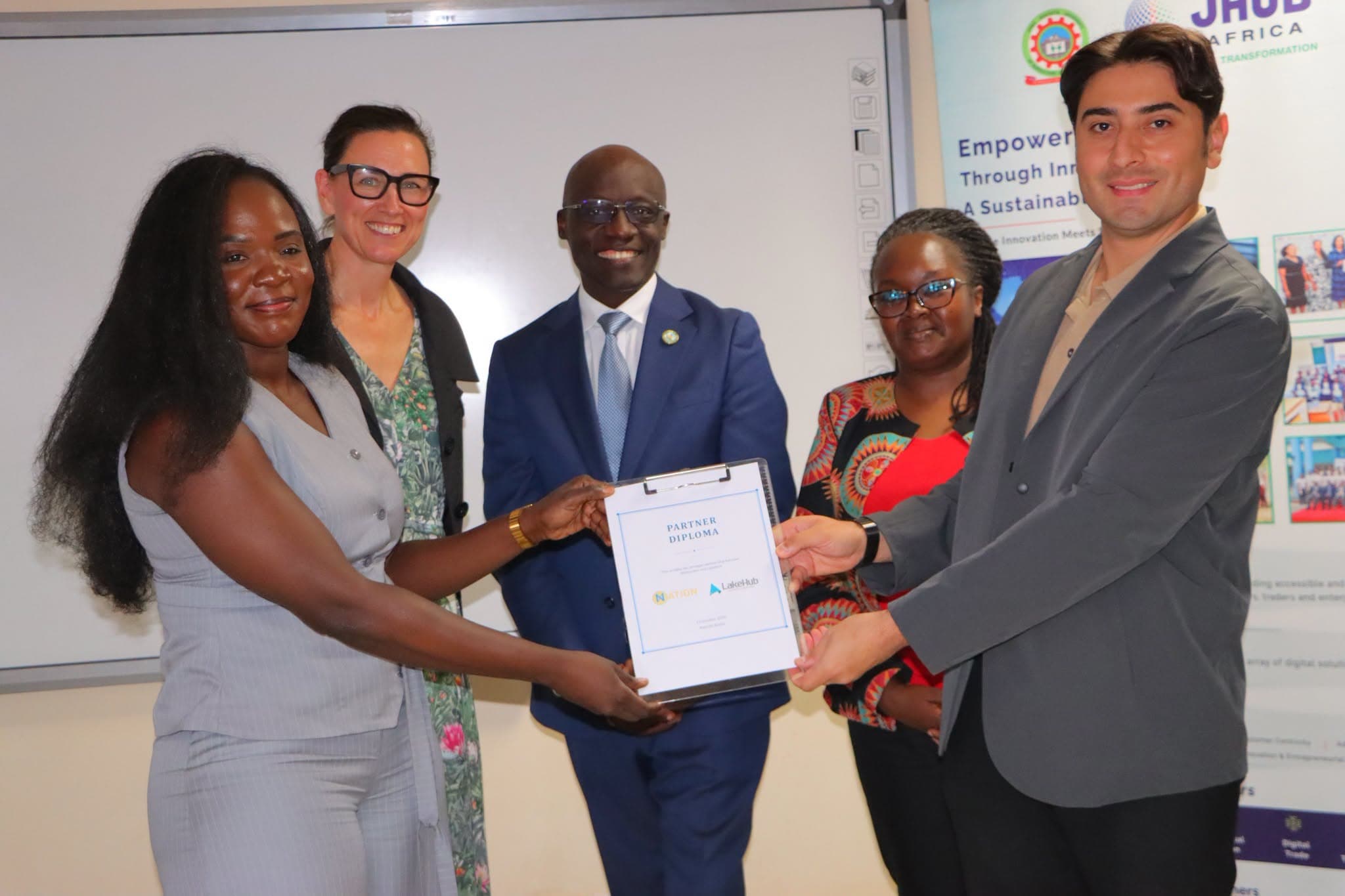
Turning these discussions into action, NationDev, a Swedish Technology Company that has recently expanded its workforce into Kenya is now developing a workforce platform in partnership with JKUAT and key stakeholders to align training directly with market needs.
The platform will guide job seekers through required competencies while providing employers with professional talent, thereby offering a practical framework to ensure Kenya’s youth remain competitive and visible in an AI-driven economy.
By Hellen Lunalo



Comments
No comments yet. Be the first to share your thoughts.