

Homa Bay County has launched a comprehensive action plan aimed at reducing food losses and wastage across the supply chain, as the county seeks to improve food security and ensure farmers and consumers get greater value from agricultural produce.
The Homa Bay County Action Plan for Food Loss and Waste Reduction (2026-2031) was developed in partnership with the World Resources Institute (WRI), Busara Centre for Behavioural Economics, Jomo Kenyatta University of Agriculture and Technology and financial institutions including KCB.
It provides a roadmap for addressing food losses at different stages of the food system, including production, transportation, storage, marketing and consumption.
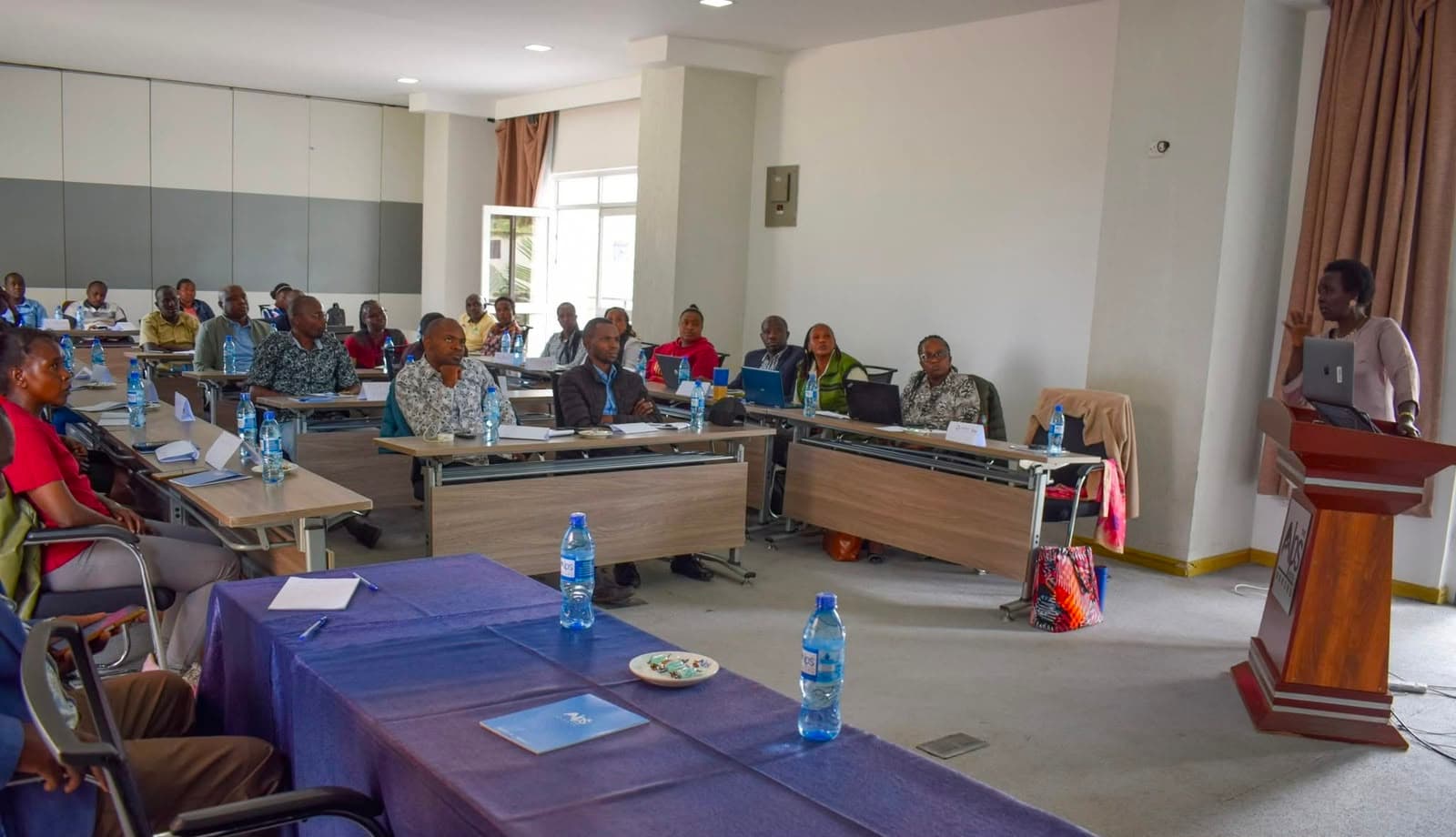
Speaking during the launch, County Executive Committee Member for Agriculture Joash Oloo said significant quantities of food are lost both at farms before reaching consumers and at household level, denying farmers and consumers the full benefit of agricultural production.
“We do realise that a lot of food is wasted either from the farm or at the table. This deprives farmers of income and households of food, and so this action plan should help our people to see how to reduce wastage,” Oloo said.
The county executive said the county would explore approaches such as circular economy initiatives, improved transportation, better storage and post-harvest management to reduce losses before food reaches consumers.
Over 74 per cent of Homa Bay’s population depend on agriculture. The action plan highlights significant food loss and waste across priority value chains including fisheries, poultry, edible oils, cereals and pulses, vegetable and fruits and roots and tubers.
These losses reduce food availability, incomes and value addition opportunities, undermining the resilience of the county’s food system, said the CEC.
The action plan further provides a coordinated framework to reduce these losses while strengthening food and nutrition security, livelihoods and food system resilience.
Oloo informed that WRI had provided technical support in the development of the action plan, and that the partnership would help the county promote the prudent utilisation of food produced by farmers, beyond simply increasing production.
WRI Africa Food Programme Director Robert Mbeche said reducing food losses was particularly important because food production consumes significant amounts of resources.
He said losing a substantial proportion of food after production also meant wasting the water, fertiliser, money and other resources used to produce it.
“We need to produce more food, but even as we produce more food, if we lose 30 to 40 per cent of that food, then we are losing all the resources, all the money, the water, the fertilizer, everything that we used to produce that food,” Mbeche said.
He said county governments were critical in addressing food loss and waste because many of the interventions had to be implemented locally.
Mbeche said WRI would continue working with Homa Bay County and called on other partners to support specific actions contained in the plan.
Busara’s Food Systems, Agriculture and Climate Resilience Team lead, Juhi Jain, said addressing food loss and waste required an understanding of the people and behaviours involved throughout the food system.
Jain said as an organization, their input was to incorporate behavioural science into the action plan.
She emphasized that behavioural considerations should be incorporated into the design and implementation of policies and programmes targeting food loss and waste.
The director identified farmers, traders and consumers as three key groups whose actions and circumstances needed to be considered.
According to Jain, farmers play a critical role in preventing post-harvest losses, but interventions should take into account their realities rather than treating them simply as beneficiaries of government programmes.
“As behavioural scientists, we aspire to ensure that farmers and their context is taken into consideration for any single policy that is rolled out for them,” she said, stressing the importance of making farmers participatory actors in the process.
She said farmers could help reduce losses by adopting practices that preserve produce after harvest and improve the amount of food that eventually reaches the market and consumers.
Jain also highlighted the role of vendors and traders, particularly those operating in traditional markets.
She said traders experience losses through spoilage, spillage and other forms of wastage, including losses occurring while produce is being transported from farms to markets.
The challenge, she said, was to find ways of ensuring that better-quality produce reaches traders while enabling them to sell more of what they purchase instead of throwing away food that has spoiled during transportation.
Consumers, she added, were the third critical group because they ultimately receive the food produced by farmers.
Jain said household practices could determine how much food is eventually consumed and how much ends up being discarded. She said interventions should therefore also consider nutrition, household practices and cultural norms.
She emphasised that solutions should not simply be imposed on communities by outside organisations, adding, “We truly believe that it should be coming from the communities and from the people themselves.”
Deputy County Governor Danish Onyango said Homa Bay had become the second county in Kenya, after Nyandarua, to launch a food loss and waste reduction action plan.
Onyango linked the initiative to the country’s constitutional commitment to ensuring that people are free from hunger.
He said reducing losses and waste from farms and households would be important in increasing the amount of food available for consumption.
Among the interventions highlighted in the county plan include cold storage, value addition and circular economy approaches aiming to address food loss while increasing the value derived from agricultural produce.
By Sitna Omar


Comments
No comments yet. Be the first to share your thoughts.