
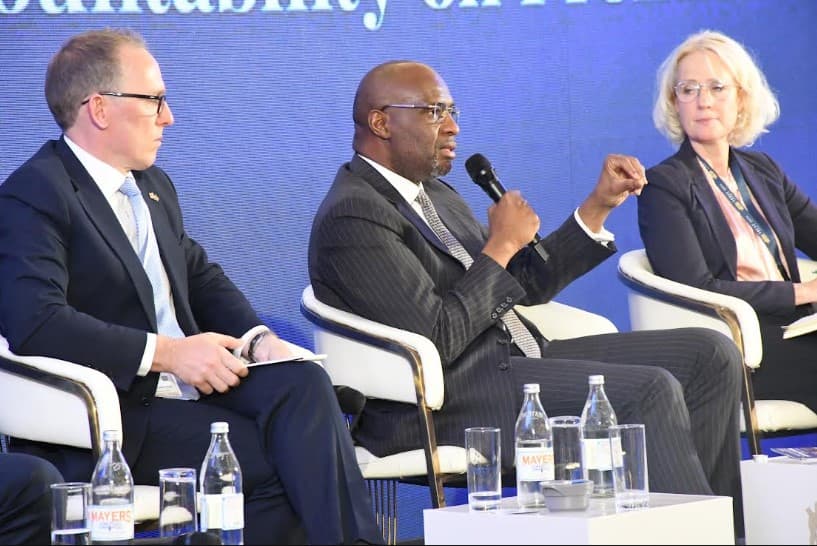
Kenya has called for renewed global commitment to the Principles of the United Nations Charter and reforms to strengthen international institutions, saying the changing global order requires greater accountability, inclusivity and collective action.
Principal Secretary (PS) for Foreign Affairs, Dr. Korir Sing’Oei, said countries should consider convening a diplomatic conference under Article 109 of the UN Charter, to reaffirm their commitment to the founding principles of the international body and give it renewed relevance in addressing contemporary global challenges.
Speaking, Friday, during a panel discussion on the third day of ‘The Global Trust Summit’ in Nairobi, Sing’oei said the proposed conference, could provide an opportunity for countries to collectively renew their commitment to the Charter, while examining how international institutions could adapt to changing global realities.
He observed that although the Principles underpinning the UN Charter remained relevant, institutions needed to transform to respond effectively to emerging challenges and restore public confidence in the international system.
Sing’Oei said countries should look beyond narrow national interests and recognise the need for collective action to safeguard global stability, cooperation and human well-being.
He added that the international community should consider a renewed commitment to the UN Charter, similar to the consensus-building process, that led to the establishment of the United Nations in San Francisco in 1945.
Former Mali Prime Minister Moussa Mara, however, cautioned that institutional reforms alone would not deliver meaningful change without sustained political action and stronger African unity.
Mara urged African countries to speak with one voice on reforms to the international order, arguing that a common position would strengthen the continent’s influence in negotiations and enable it to advance its interests more effectively.
He said African countries had for years agreed on the need to reform global institutions, but the challenge remained translating that consensus into concrete action capable of influencing key decision-makers.
Mara also called for governments to rebuild trust from the grassroots by involving communities directly in decision-making and strengthening the social contract between citizens and the state.
Drawing on Mali’s experience with community-managed health facilities, he said giving local communities ownership and responsibility for public services, could improve accountability, governance and service delivery.
He argued that trust should be built from the bottom-up, noting that citizens were more likely to support institutions when they had a meaningful role in shaping decisions affecting their lives.
British High Commissioner to Kenya, Matt Baugh, said efforts to reform the international system should proceed alongside practical measures to make global institutions fairer, more transparent and responsive to people’s needs.
Baugh observed that the crisis of trust affecting democracies around the world shared common drivers, making international cooperation and reform increasingly necessary.
He said the international community should pursue changes in global representation while addressing pressing economic challenges, including reforming the global financial architecture and unlocking private-sector investment to support sustainable development.
Baugh called for stronger partnerships extending beyond governments to include financial institutions and the private sector, particularly in mobilising capital for productive investment in developing countries.
He said expanding the capacity of multilateral development banks and improving mechanisms for assessing investment risks could help mobilise private capital, ease fiscal pressures on governments and support more inclusive and sustainable economic growth.
During the discussion, other panelists stressed that Africa’s quest for greater representation in global institutions should go beyond securing seats at decision-making tables to ensuring the continent can influence outcomes.
They said African countries needed to prioritise the interests of their people over national rivalries when determining who represents the continent in international forums, including the United Nations Security Council.
A former Cabinet Secretary for Defence, Rachel Omamo, said Africa’s representation should be measured by its ability to articulate ordinary people’s needs and influence decisions rather than simply by the number of seats it occupies in global institutions.
She cautioned that competition among African countries could undermine the continent’s collective interests, urging leaders to embrace humility and place the needs of their populations above national ambitions.
The panelists further emphasised the importance of ensuring that women, young people and persons with disabilities are included in global governance and decision-making processes.
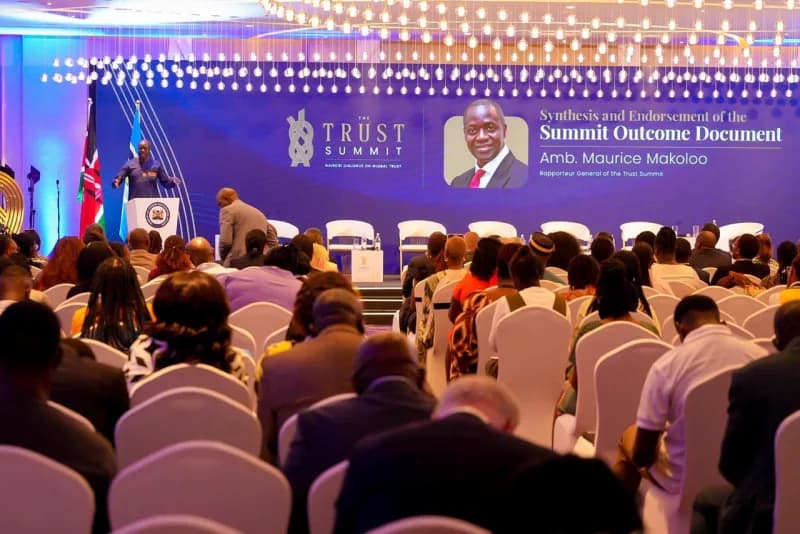
Discussions at the summit centred on the need to bridge the gap between commitments made by governments and their implementation, with participants calling for greater accountability, meaningful partnerships and practical reforms to restore trust in national and international institutions.
The Global Trust Summit brings together policymakers, diplomats and other stakeholders to examine the challenges facing public trust and explore ways of building a more accountable, inclusive and effective global order.
by Aron Kinyamasyo

Comments
No comments yet. Be the first to share your thoughts.