
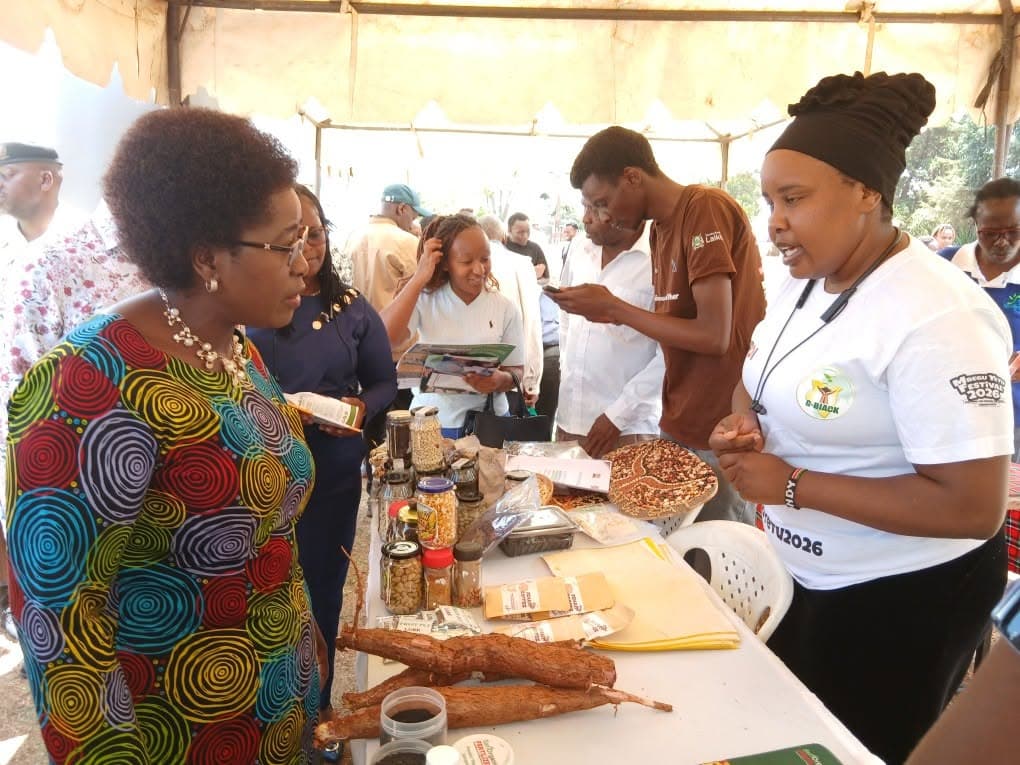
In a milestone step toward modernizing local agriculture and safeguarding environmental resources, the County Government of Kiambu, has officially launched its landmark Kiambu County Agroecology Policy, during a high-profile ceremony held at Ndumberi Stadium in Kiambu Sub-county.
The historic event held, Saturday, was spearheaded by the Deputy Governor, Rosemary Kirika, alongside the County Executive Committee Member (CECM) for Agriculture, Livestock, and Irrigation, Wilfred Mwenda Kiara.
Addressing hundreds of local farmers, agricultural specialists, civil society leaders and community stakeholders gathered at the Stadium, county officials emphasized that the newly adopted framework represents far more than a simple strategic document, but instead embodies a firm commitment by the government in transforming regional food systems, into those that are climate resilient, economically achievable and ecologically sound.
The policy outlines a strategic roadmap to drive regional adoption of agroforestry, permaculture, organic farming and soil conservation, that will be achieved through harnessing of natural ecological processes, rather than heavy chemical inputs that will revive soil fertility, secure water catchments and preserve Kiambu’s rich biodiversity.
Deputy Governor Kirika emphasized the urgent need to cushion smallholder farmers against unpredictable weather, rising input costs and soil degradation.
She noted that adopting climate-smart strategies was critical to building resilience, safeguarding food sovereignty and boosting farm productivity across the County.
“Agroecology provides a proven pathway toward achieving true food sovereignty for Kiambu. By adopting these sustainable practices, we are not only protecting our environment, but also elevating household incomes and securing better livelihoods for our farming communities across the county.” Noted the Deputy Governor.
CECM Mwenda Kiara expressed deep appreciation to all development partners, non-governmental organizations and community leaders who walked alongside the administration to draft and refine the policy.
“Transitioning to agroecology requires strong local support which the Department of Agriculture is ready to deliver, be it technical guidance, capacity building workshops or comprehensive extension services.”
“We are committed to giving our farming community the resources they need to thrive. Through specialized, our technical teams will support farmers every step of the way as we adopt these eco-friendly practices to make this vision a reality.” Said the CECM.
The milestone celebration concluded on an energetic note with the rallying call, “Roho Ndiyo Hiyo” underscoring Kiambu’s commitment to healthy soils, thriving communities and a resilient food system.
Agroecology is simply farming in harmony with nature rather than fighting against it. By replacing costly synthetic fertilizers and chemical pesticides with natural ecological processes, this transformative policy ensures that Kiambu can produce healthy, abundant food, while regenerating its land, protecting vital natural resources, and securing a sustainable agricultural legacy for generations to come.
By Hellen Lunalo



Comments
No comments yet. Be the first to share your thoughts.