
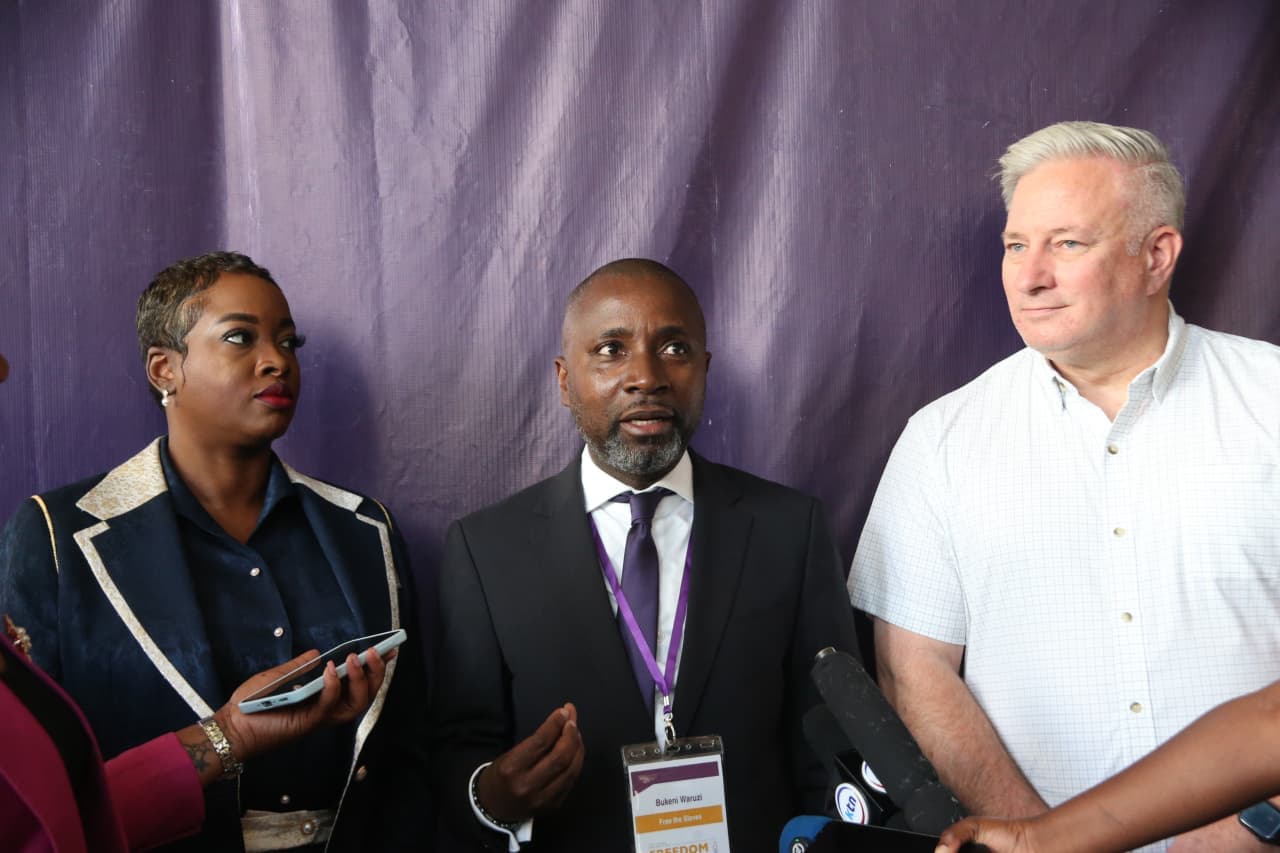
Voices of survivors of modern slavery took centre stage in Nairobi on Monday as global leaders, policymakers and experts began a two-day forum seeking stronger action to protect vulnerable people, hold perpetrators accountable and dismantle systems that allow exploitation to thrive.
The 2026 Freedom from Slavery Global Forum, convened by Free the Slaves group, has brought together government representatives, survivor leaders, civil society organisations, business leaders, academics and international experts under the theme, “Freedom in a Changing World: Strengthening Protection, Accountability and Transforming the Systems Behind Modern Slavery.”
The forum is seeking to shift the global response from discussions to practical commitments and action against forced labour, human trafficking, child labour and other forms of exploitation.
An estimated 50 million people were living in modern slavery on any given day in 2021, according to the Global Estimates of Modern Slavery produced by the International Labour Organization, Walk Free and the International Organization for Migration.
In Kenya, the 2023 Global Slavery Index estimates that 269,000 people were living in modern slavery, equivalent to five in every 1,000 people. The National Council on Children’s Services has separately estimated that about 17,500 Kenyans are trafficked annually, with half of them likely to be children.
Assistant Labour Commissioner in the Child Labour Division at the Ministry of Labour and Social Protection Artlibert Makori said Kenya was committed to accelerating action against forced labour, modern slavery, human trafficking and child labour.
“As an Alliance 8.7 Pathfinder Country, Kenya remains committed to accelerating action towards eliminating forced labour, modern slavery, human trafficking and child labour through stronger labour inspection, social protection, responsible business conduct, access to justice and meaningful engagement of survivors and communities,” Makori said.
He said emerging threats, including poverty, conflict, climate change, irregular migration, unethical recruitment and misuse of technology, required coordinated responses at national, regional and international levels.
Makori added that Kenya was strengthening Bilateral Labour Agreements and cooperation with destination countries to improve recruitment procedures, protect wages and contracts, enhance access to grievance redress mechanisms and strengthen safeguards against trafficking and forced labour.
“Ethical recruitment and accountability must remain at the heart of the labour migration journey,” he said.
Kenya was accepted as an Alliance 8.7 Pathfinder Country in 2024, with survivors of modern slavery involved in developing its roadmap and expected to participate in its implementation and evaluation.
Free the Slaves Executive Director Bukeni Waruzi said the forum had brought together stakeholders from Africa and other parts of the world to identify practical approaches for strengthening the global response.
“The 2026 global forum convened key stakeholders from across Africa and the world. Collectively, we have identified promising approaches, strengthened frameworks for collaboration, and developed an agenda toward more effective action against modern slavery,” Waruzi said.
He said the adoption of the Declaration of Principles for Aligned Action against modern slavery would provide a shared commitment to strengthening systemic responses and ensuring the movement was guided by people with lived experience.
Survivor leaders are contributing to discussions on protection, recovery, livelihoods, dignity and accountability, with organisers emphasising that survivors should have a meaningful role in shaping policies and solutions.
CEO of Sun Gate Foundation, Shamere McKenzie, and a survivor leader, said lived experience should be recognised as expertise in efforts to combat modern slavery.
“As a survivor leader, I know what it feels like to have decisions made about your life without your voice ever being part of the conversation,” McKenzie said.
She said the forum had strengthened commitments to share power with survivors and created opportunities for them to influence policies and decisions shaping the future of the movement.
The two-day forum is also examining responsible business and supply-chain regulation, ethical recruitment, forced marriage, child domestic work, refugee trafficking risks and technology-facilitated trafficking.
On Tuesday, participants will focus on building a roadmap for system transformation and consider the adoption of the Principles for Aligned Action to End Modern Slavery.
The organisers hope the Nairobi meeting will result in stronger collaboration and sustained action to address the conditions that enable exploitation while placing survivor leadership at the heart of the global response.
by Nancy Omondi
Comments
No comments yet. Be the first to share your thoughts.