
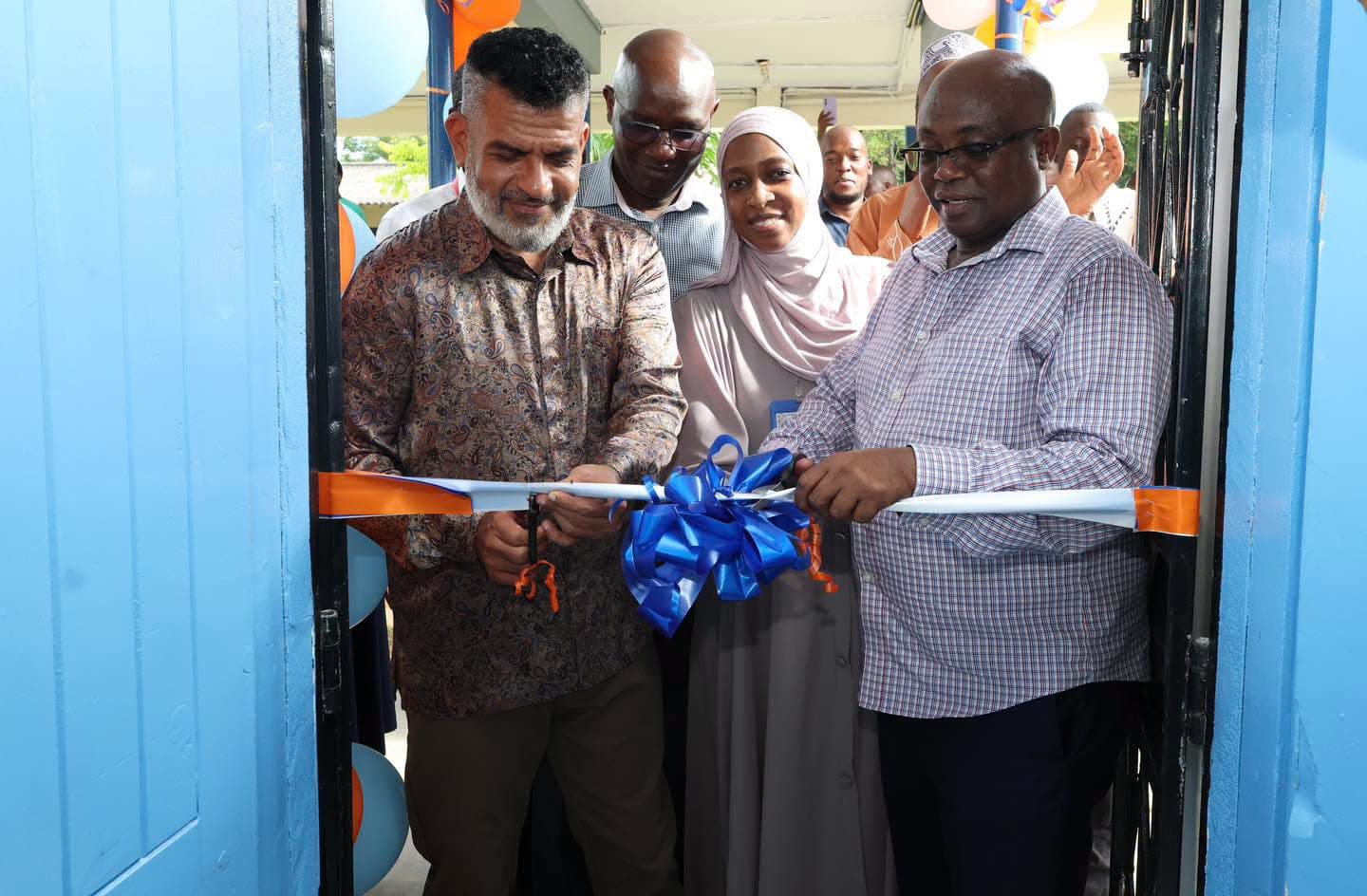
Mombasa governor Abdulswamad Nassir and Kemsa CEO Waqo Ejersa at Port Reitz subcounty hospital in Mombasa on Tuesday / BRIAN OTIENO

Mombasa governor Abdulswamad Nassir at Port Reitz subcounty hospital’s refurbished drugs store in Mombasa on Tuesday / BRIAN OTIENO

The Port Reitz subcounty hospital’s refurbished drugs store in Mombasa on Tuesday / BRIAN OTIENO

The surge in patients seeking free treatment under Mombasa Governor Abdulswamad Nassir’s BabaCare initiative has heightened the need for medicines, medical personnel and expanded hospital capacity, with more than 100,000 patients treated since the programme began.
The Kenya Medical Supplies Authority (Kemsa) has pledged to support the county with medical supplies as public health facilities grapple with increased demand following the introduction of Mwezi wa Baba, also known as BabaCare.
The initiative was launched on October 1 to honour the legacy of former Prime Minister Raila Odinga on the first anniversary of his death. It initially covered October but was later extended to the end of November.
On Tuesday, Nassir said he will make further announcements on the programme.
Speaking at Port Reitz Subcounty Hospital, where Kemsa handed over a refurbished medicine store, chief executive Waqo Ejersa said the authority was committed to strengthening its partnership with the county to ensure a steady supply of quality medicines.
“Protecting the quality of medicines does not end with procurement or delivery. Appropriate storage conditions are equally important in preserving product integrity before medicines reach patients,” Ejersa said.
He said the refurbishment followed a needs assessment conducted in April 2025 by Kemsa, the county government and hospital management, which identified inadequate storage capacity, deteriorating infrastructure and other challenges affecting the management of medicines.
The improved storage facilities are expected to strengthen commodity management, reduce the risk of medicines deteriorating and minimise losses.
Kemsa is already processing an order from the county government that will soon be delivered to support facilities experiencing increased demand.
Nassir said the growing number of patients had exposed the need for additional medical personnel and measures to ease pressure on existing hospitals.
He said the county was constructing new facilities in Changamwe, Junda, Jomvu, Mjambere, Kisauni and Likoni to bring services closer to residents and reduce congestion at major hospitals.
“We are constructing another hospital right here (in Changamwe), another one is coming up in Junda (Kisauni sub-county), in Jomvu we are constructing two hospitals, another one in Mjambere (Kisauni), and many more,” he said.
Nassir said the facility in Changamwe will be a state-of-the-art Level Four hospital, allowing patients to receive treatment closer to home and reducing unnecessary referrals to Coast General Teaching and Referral Hospital.
“The facility that we will be building here will be a state-of-the-art Level Four to ensure that if anyone wants to cross to Coast General, it is only for matters that are extreme. But those who are on this side, let them be treated this side,” he said.
Ejersa praised Mombasa’s relationship with Kemsa, describing the county as one of the authority’s best clients because of its prompt payments, which support the consistent supply of medicines.
He also said Mombasa was among the counties leading in registration with the Social Health Authority (SHA).
He urged the governor, in his capacity as chairman of the Council of Governors’ health committee, to rally other counties behind an agreement that will allow verified payments for medical supplies to be deducted directly from SHA.
He said the arrangement will help address persistent drug shortages in public hospitals by ensuring Kemsa receives payment promptly and can, in turn, pay suppliers.
“That problem will easily be solved if there is goodwill like the one we have in Mombasa, in all the 47 counties. If we sign an agreement so that all verified Kemsa claims on drugs are paid directly from SHA, there will be no lack of drugs in public hospitals in Kenya,” Ejersa said.
Kemsa has already signed a similar agreement with seven national referral hospitals, including Kenyatta National Hospital, Kenyatta University Teaching, Referral and Research Hospital, Moi Teaching and Referral Hospital in Eldoret, Mwai Kibaki Teaching and Referral Hospital in Nyeri, Mathari National Teaching and Referral Hospital and the National Spinal Injury Hospital.
Ejersa said the arrangement had helped ensure consistent supplies by enabling Kemsa to receive payment upon delivery and settle suppliers’ bills promptly.
“We have seen the benefits. These hospitals have no drug supply problems. The automatic deduction ensures steady supply because as soon as delivery is done, Kemsa is paid and Kemsa pays the suppliers who are happy to do more business,” he said.
Comments
No comments yet. Be the first to share your thoughts.