
Forests and agroforestry systems are under growing pressure from climate change, biodiversity loss, changing land use and wider socio-economic changes.
In response to these pressures, researchers from Africa and Europe are seeking ways to protect forests and biodiversity without undermining the livelihoods of communities that depend on the same landscapes for food, livestock and income.
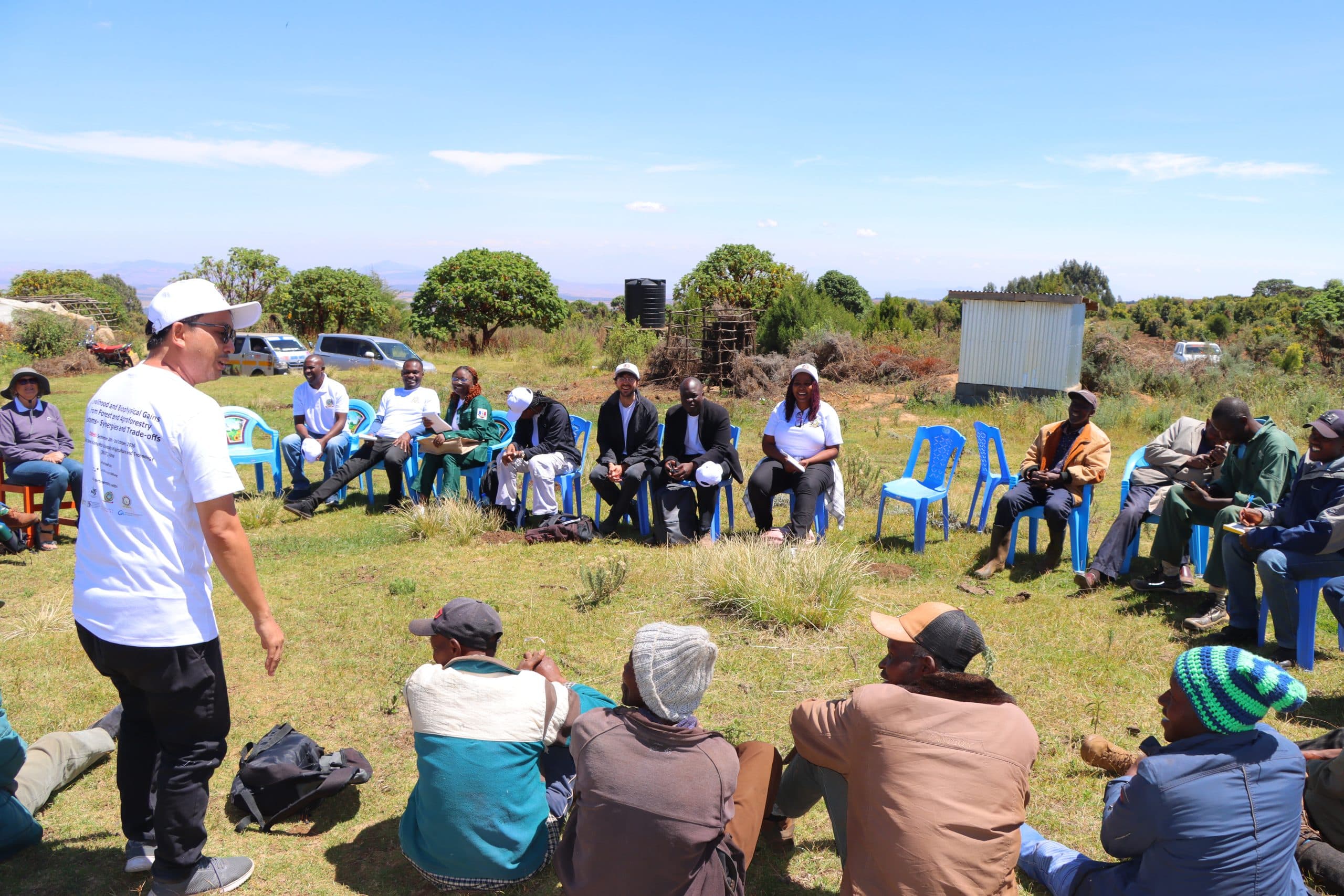
The research is at the heart of a five-day Summer School hosted by Jomo Kenyatta University of Agriculture and Technology (JKUAT) from September 28 to October 2, bringing together more than 20 doctoral and postdoctoral researchers from Africa, Germany and Asia.
The researchers are examining how forests and agroforestry systems can provide environmental and livelihood benefits at the same time, while addressing the competing demands that arise when communities, conservation and natural resources meet.
At the centre of the discussions is a question facing many communities across Africa: how can forests and other natural resources be protected without undermining the livelihoods of the farmers and livestock keepers who depend on natural resources to survive??
Dr Robert Mbeche, Principal Investigator of the project at JKUAT’s Department of Agricultural and Resource Economics, said conservation efforts must go hand in hand with protecting the livelihoods of communities that depend on forests and their resources.
“Conservation cannot be viewed only through the condition of the forest. We also have to understand the people who depend on that forest, how they use the resources and what happens to their livelihoods when management decisions change,” he said.
The summer school observes that, while there have been efforts to address these pressures through approaches such as participatory forest management and incentives for conservation, their outcomes have varied across communities and landscapes.
The participants are examining those outcomes together rather than treating environmental and social concerns as separate issues.
The researchers are drawing on evidence from communities and landscapes to assess how management decisions affect biodiversity, livelihoods and environmental justice. They are also developing indicators to measure whether different approaches to forest and agroforestry management are delivering sustainable outcomes.
Through fieldwork and data analysis, they are examining forest conditions, household dependence on natural resources, livestock–forest interactions, governance arrangements and the factors driving changes in land use.
Prof Dr Anja Faße of TUM Campus Straubing in Germany said efforts to protect forests must take account of the people who depend on them, particularly when conservation measures affect access to land and natural resources.
The question, she said, is not only how to conserve forests, but also how decisions are made, who takes part in them and how the benefits and costs are shared.
Prof Honorat Edja of the University of Parakou in Benin said understanding the different interests around natural resources is essential to designing interventions that respond to the causes of environmental pressure and improve the livelihoods of communities that depend on these landscapes.
The five-day Summer School is supported by Germany’s Volkswagen Foundation and brings together JKUAT, the University of Parakou, Joseph Ki-Zerbo University in Burkina Faso, Stellenbosch University in South Africa, and the Universities of Göttingen and Kassel in Germany.
The researchers will use the training and field experience to strengthen their own studies and develop research and policy outputs that can help inform decisions on forest and agroforestry management.
The broader aim is to generate evidence on where conservation and livelihoods can reinforce each other, while identifying the tensions that need to be addressed where competing demands on natural resources cannot easily be reconciled.


Comments
No comments yet. Be the first to share your thoughts.