
Suleiman Shahbal [4th R]with other trustees of the Africa Education Trust in Istanbul, Turkey on Friday / BRIAN OTIENO


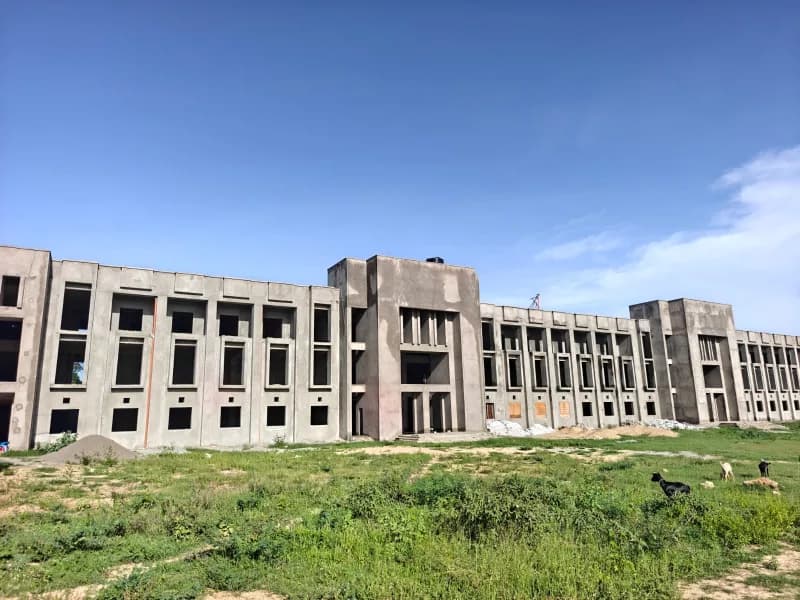
The stalled proposed Mombasa International University in Majaoni, Kisauni subcounty, Mombasa / BRIAN OTIENO


Mombasa residents have welcomed efforts to revive a Sh4 billion university project in Kisauni, saying it could expand access to higher education while creating jobs and business opportunities.
Construction of the proposed Mombasa International University has stalled for more than a decade. The establishment was being spearheaded by the Africa Education Trust, with local and Turkish investors seeking to get the project back on track.
Francis Auma, a Changamwe resident and human rights defender, said the initiative is a positive development for a region that needs more institutions of higher learning.
“What they are doing is positive. The Coast region needs more universities, especially because it is known for their lackadaisical attitude towards education,” Auma told the Star on Tuesday.
Christabel Owino, a Likoni resident and social sciences graduate of Jomo Kenyatta University of Agriculture and Technology, said the institution would open up opportunities for residents who would otherwise have to travel long distances to pursue university education.
She said the project will also stimulate development in Majaoni, where the university is located.
Owino dsaid education is an equaliser and a key driver of individual and societal development.
The university project was initiated in 2012 by Turkish donors and sits on an 84-acre parcel of land in Majaoni, next to Shimo la Tewa Prison farm.
The land was acquired by the Africa Education Trust from the Sheikh Zayed Trust, an Abu Dhabi-based organisation.
Groundbreaking and construction began in 2015 but stalled following disputes over land ownership, objections from squatters and prolonged court battles.
A local family claimed ownership of the land, while the county government also issued orders stopping the project.
The legal disputes discouraged the Turkish donors, who eventually handed the project to a local investor. The investor later approached Mombasa businessman and politician Suleiman Shahbal, whose long-standing ambition has been to establish a university in the Coast region.
About two years ago, the two invested money towards reviving the project, a move that encouraged the Turkish partners to return and support its completion.
However, the project encountered further legal challenges.
In June 2025, the Environment and Land Court ruled in favour of the local family, finding that it had established continuous occupation of the land for about 40 years and qualified for ownership through adverse possession.
An appeal is pending in court, leaving the project stalled once again.
But efforts to revive it gained fresh momentum last Friday when trustees of the Africa Education Trust met in Istanbul, Turkey, to discuss its future.
Shahbal, who is among the trustees, said he remained committed to seeing the project completed despite the setbacks.
“I have personally invested significant resources and energy towards reviving the project. When our Turkish partners saw our commitment and determination, they returned to support its completion,” he said in a statement on Facebook.
He also announced that another Mombasa investor had joined the initiative.
Shahbal said the university will operate as a non-profit institution under the Africa Education Trust, with the aim of making higher education accessible rather than generating commercial returns.
“This is a community investment, not a commercial business venture. Our objective is to give back to Mombasa by making quality higher education accessible and creating opportunities for generations to come,” he said.
The institution is expected to accommodate more than 10,000 students and offer programmes in Islamic studies, economics, information and communication technology, marine sciences, medicine, engineering and law.
Beyond education, Shahbal said the university would create hundreds of jobs for lecturers, administrators and support staff, with local residents expected to benefit.
“Our vijana wa mtaa (youth) will have opportunities to apply for these jobs and benefit directly from the project,” he said.
Student population will create business opportunities for landlords, food vendors, shopkeepers, transport operators and boda boda riders.
Shahbal, who is eyeing the Mombasa governorship, said establishing a university had been a lifelong dream. He pledged to make education affordable, with 20 per cent of students expected to receive full scholarships.
This would translate to at least 2,000 beneficiaries once the institution becomes operational.
“I want deserving young people to have an opportunity to pursue higher education regardless of their family's financial circumstances,” he said.
Auma, however, cautioned against politicising the project, saying its completion would benefit the wider community.
“I sincerely hope this will not be turned into a political circus. If the university in Majaoni is revived to completion, it will be one of the best gifts for Mombasa, Coast and Kenya as a whole,” he said.
Both Auma and Owino urged the national and county governments to support the initiative to expand access to tertiary education.


Comments
No comments yet. Be the first to share your thoughts.