
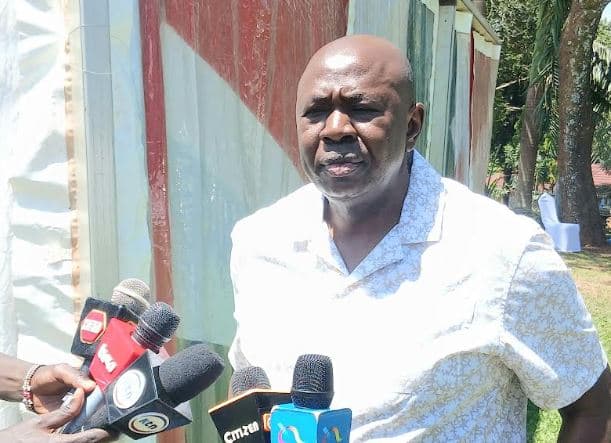
The government has launched investigations into alleged fraudulent titles issued on land earmarked for the Lamu refinery.
Government Spokesperson Charles Owino said the land was acquired by the Kenya Ports Authority (KPA) and that families who were living on the site were compensated before the property was consolidated under a mother title.
Speaking to journalists in Kakamega Saturday, Owino claimed about 90 families who were occupying the area when the port was being established received Sh1.4 billion in compensation.
He said the land was subsequently transferred to KPA and a mother title issued, making it impossible for fresh titles to be legitimately created on the same parcel without subdivision.
“There’s a team that is investigating the matter and in a very short time you will see people getting charged for fraud,” he said.
Owino insisted that records on the acquisition and compensation were available and showed that affected families had been compensated.
He said the government was confident in proceeding with the refinery project on the strength of its position that the land was legally acquired.
“If there are Kenyans who genuinely would have not been compensated, the government cannot even think twice not to compensate such people,” he said.
Owino defended the project, arguing it should not be overshadowed by the land dispute, citing the huge economic benefits from the investment.
He said the Sh2.2 investment which broke ground on September 30, 2026 would significantly increase Foreign Direct Investment (FDI).
The spokesperson said Kenya’s current FDI stands at about Sh3.1 billion and that the refinery is expected to generate more than Sh4 billion annually, pushing the country’s FDI to over Sh7 billion.
Owino further said that the refinery would generate about 1,000 megawatts of electricity, which he described as significant given the country’s current installed capacity.
He said part of the power would be used to run the refinery, while the surplus could be supplied to the national grid.
He added that the refinery would produce by-products that could serve as raw materials for local industries, including tyre and plastics manufacturing.
Owino said Kenya previously had local tyre manufacturing plant, but now solely relies on imports, arguing the refinery could help revive such industries.
By Chris Mahandara

Comments
No comments yet. Be the first to share your thoughts.