
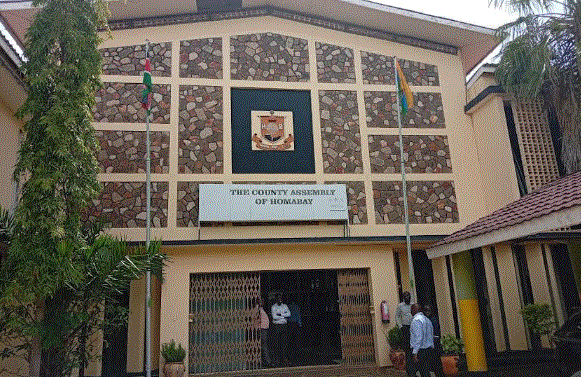
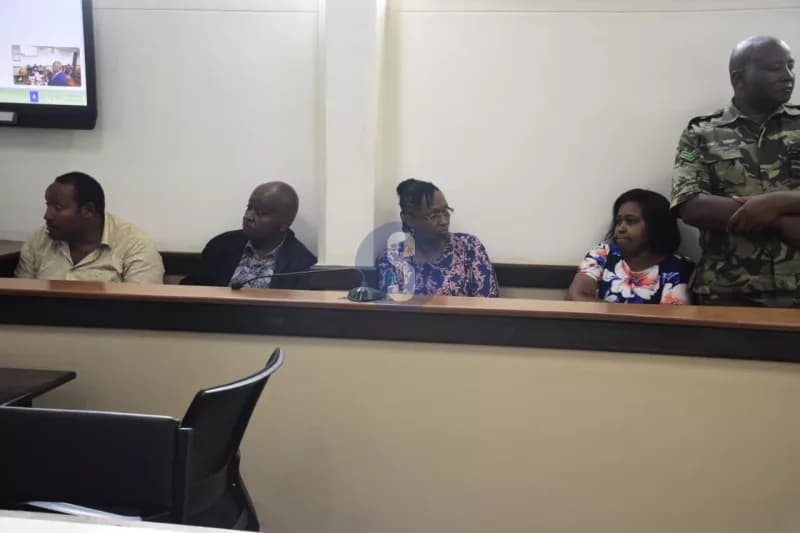
The High Court has ordered former Homa Bay County Assembly Clerk Bob Kephas Otieno and two others to refund Sh12.57 million in public funds found to have been fraudulently and unlawfully transferred from the assembly into their joint bank account.
In a judgement delivered on October 16, 2026, Justice Benjamin Musyoki ordered Otieno, Lillian Achieng Aloo and David Obonyo to pay the Government Sh12,571,166.50, together with interest at court rates from the date the suit was filed until full payment.
The court also awarded costs of the suit to the Ethics and Anti-Corruption Commission (EACC), which instituted the recovery proceedings.
The case centred on irregular transfers made between December 24, 2015, and December 22, 2017, from the Homa Bay County Assembly’s salary suspense account into a joint bank account held by Achieng and Obonyo, who are husband and wife.
According to the EACC, Otieno, who was the Assembly clerk and accounting officer during the period, authorised the transfers, which were presented as salary payments, despite Achieng not being an employee of the Assembly.
Court records showed that Achieng was a teacher employed by the Teachers Service Commission, while Obonyo worked as a business growth and development manager at Equity Bank’s Homa Bay branch during the period under investigations. Neither of the two was a supplier nor a contractor of the county government or the county assembly.
The Commission argued that the payments lacked sufficient documentation to justify the disbursement of public funds.
In their defence, the three argued that some of the payments were for services provided to the Assembly through Damila Enterprises, a business owned by the couple.
They maintained that the money was not paid as a salary but for services, including catering during the funerals of three Assembly members.
However, Justice Musyoki found that the defendants had failed to provide adequate evidence to account for the money or demonstrate that the alleged works and services had been properly procured and delivered.
The judge noted that documents presented in support of the alleged catering services amounted to Sh7.1 million, leaving a substantial portion of the disputed payments unexplained.
The court further observed that the defendants had not produced the necessary procurement records, approvals and supporting documents to establish that the payments were lawful.
The Judge ruled that the payments totalling Sh12.57 million were fraudulent and unlawful, finding Otieno liable for causing the loss of public funds through corrupt and fraudulent conduct.
Achieng and Obonyo were also held liable for receiving public money for works not proved to have been completed or services not demonstrated to have been rendered.
The court rejected the defence that the payments were legitimate business transactions, stressing that the existence of contracts alone was insufficient proof that the contracted work had been carried out.
In its determination, the court emphasised the responsibility of public officers to ensure that public resources are managed lawfully and that payments are made only for properly authorised and verified goods or services.
The EACC had sought recovery of the funds in ACEC Suit No. E011 of 2022, arguing that the irregular payments had occasioned a loss to the public.
The judgement is part of the Commission’s efforts to recover public resources lost through corruption, fraud and irregular expenditure.
By Sitna Omar


Comments
No comments yet. Be the first to share your thoughts.