
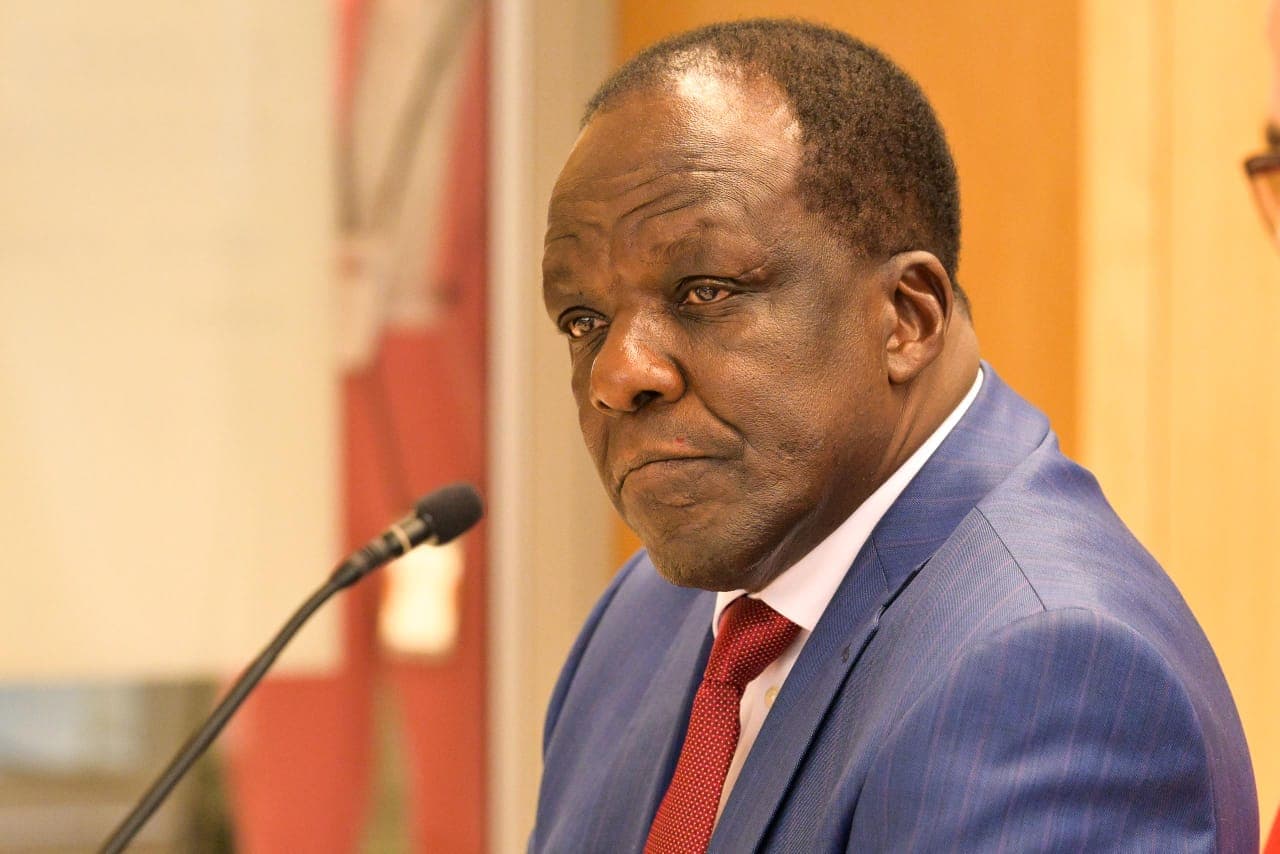
The High Court in Nairobi has quashed the Director of Public Prosecutions’ decision to withdraw corruption charges against former Kakamega Governor and Cabinet Secretary for Co-operatives and MSMEs Development Wycliffe Oparanya.
Justice Benjamin Mwikya Musyoki declared the DPP’s decision contained in a July 8, 2024 letter irregular and unconstitutional, finding that the prosecution agency had unlawfully considered fresh evidence presented by Oparanya’s lawyers without referring it back to the Ethics and Anti-Corruption Commission (EACC) for further investigation.
“In view of the above, it is my finding and holding that whereas this court cannot term the decision contained in the 1st Respondent’s letter dated 8-07-2024 as irrational, the same was not done within the confines of the law and was in breach of the 1st Respondent’s duty to act transparently and with accountability,” ruled the court.
The judge further found that the DPP had usurped the EACC’s investigative mandate in reviewing its earlier decision to prosecute Oparanya.
The case arose from investigations into allegations that Oparanya received Sh56.7 million from directors of Sabema International Limited and Sesela Resources Limited, in connection with tenders awarded by the Kakamega County Government and the purchase of property in Karen, Nairobi.
The EACC had recommended that Oparanya be prosecuted for offences including conflict of interest, abuse of office, money laundering and conspiracy to commit corruption.
The commission had earlier obtained search warrants and conducted searches at properties associated with Oparanya in Butere, Muthaiga and Karen in August 2023.
On December 18, 2023, the DPP concurred with the EACC’s recommendation to prosecute Oparanya.
However, on July 3, 2024, Oparanya’s lawyers wrote to the DPP seeking a review of the decision to charge him. Five days later, the DPP reversed its position and directed that the inquiry file be closed, citing insufficient evidence.
It was this decision that public interest litigant Fredrick Mulaa challenged before the High Court.
In his judgment, Justice Musyoki said the DPP had the constitutional authority under Article 157 of the Constitution to review decisions to prosecute but had exercised that power outside the legal framework.
The judge said the process through which the DPP arrived at the July 8, 2024 decision was not transparent or accountable.
“It was shrouded in mystery and therefore worked against the public interest,” Justice Musyoki ruled.
The court held that once the DPP received what was described as fresh evidence from Oparanya’s lawyers, the proper course would have been to refer the material to the EACC for investigation before making a fresh decision on whether to prosecute.
“The correct, legal, lawful and constitutional procedure it should have adopted was to direct the 2nd Interested Party pursuant to Section 5(2)(b) of the ODPP Act to investigate the fresh evidence and reconsider its recommendations,” the judge held.
The EACC had supported the petition and told the court it was not involved in the process that resulted in the DPP’s decision to terminate the prosecution.
According to an affidavit sworn by EACC official Wako Jattani, the commission reiterated its recommendation to prosecute Oparanya after receiving the DPP’s July 8, 2024 letter.
The commission had also notified the National Assembly on July 29, 2024, of the intended criminal proceedings and pending civil proceedings in which it had obtained orders preserving Sh28.9 million suspected to be proceeds of corruption.
Oparanya had opposed the petition, arguing that he had acquired a legitimate expectation that he would not be prosecuted after the DPP reversed the earlier decision to charge him.
Justice Musyoki rejected the argument, holding that legitimate expectation cannot arise contrary to the Constitution or clear provisions of the law.
The judge also dismissed a cross-petition by the DPP seeking to have several letters relied upon in the case removed from the court record.
The DPP had argued that the documents, including the July 8, 2024 decision and the December 18, 2023 decision to prosecute, had been obtained illegally and in breach of the Access to Information Act.
Justice Musyoki found that the documents had been exchanged between public bodies, referred to in the EACC’s court filings and were already in the public domain through media reports and an EACC quarterly report published in the Kenya Gazette.
The court, however, declined to interfere with Oparanya’s nomination and appointment to the Cabinet.
Justice Musyoki said the National Assembly had vetted and approved Oparanya and that the court had not been provided with the relevant vetting proceedings or report.
The judge therefore invoked judicial restraint and deferred to Parliament on the matter.
In the final orders, the court declared the DPP’s July 8, 2024 decision to review and withdraw the earlier decision to charge Oparanya irregular and unconstitutional and issued an order of certiorari quashing it.
The court also declared that the DPP had usurped the EACC’s investigative mandate by considering fresh evidence without subjecting it to further investigation by the commission.
The court declined to issue orders compelling the EACC to publish cases in which consent to prosecute had previously been withdrawn, or prohibiting the DPP from withdrawing consent based on representations by suspects.
It also declined to declare Oparanya’s nomination to Cabinet unlawful.
“The merits of the issues raised by the Petitioner on the suitability of the 2nd Interested Party are better tackled by the said institution, the National Assembly being one of them,” ruled the court.
Each party was ordered to bear its own costs.


Comments
No comments yet. Be the first to share your thoughts.