
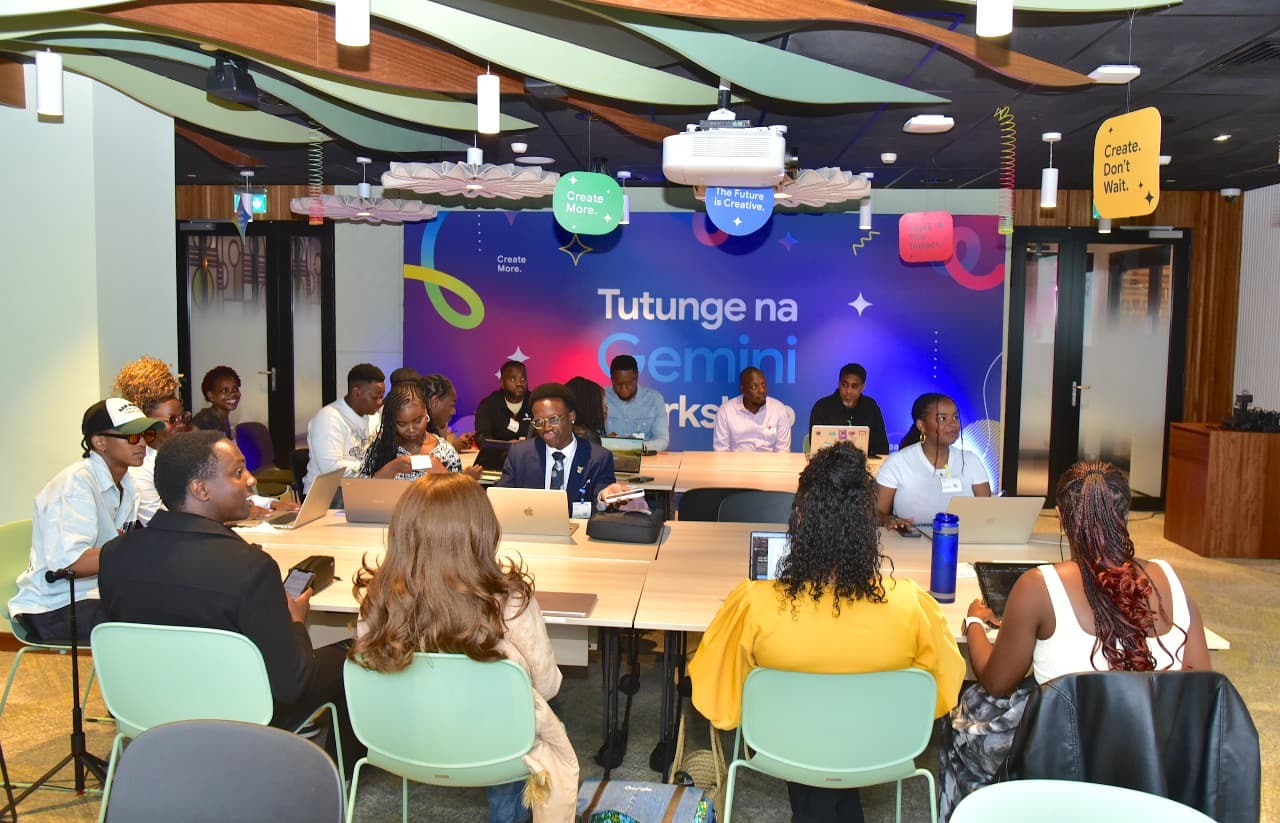
Google brought together young creators, media professionals and university students in Nairobi for a hands-on workshop exploring how artificial intelligence can be incorporated into creative and learning workflows.
The workshop, dubbed “Tutunge na Gemini”, was held at the company’s Nairobi office and focused on practical uses of AI in research, brainstorming, writing, editing and content planning.
Participants used Gemini through demonstrations and interactive exercises to develop ideas, refine content and experiment with different approaches to digital storytelling.
Speaking about the session, Janet Kemboi, Google Head of Communications Africa said the workshop was intended to give participants practical experience using AI from the initial stages of developing an idea through research, production and refinement.
“AI is most useful when it helps people turn their ideas into meaningful work,” Ms Kemboi said. “Through Tutunge na Gemini, we are giving Kenya’s creators media professionals and university students the opportunity to explore how Gemini can become part of their everyday creative and learning process, from developing an idea and conducting research to creating, refining and sharing a story. We want participants to leave with practical skills they can apply to their day-to-day workflows.”
The session also featured Nano Banana 2 and Gemini Omni, tools that Google says can be used to create visual assets, develop prototypes, produce product photography and generate promotional materials.
Participants were also introduced to Gemini Live, which allows users to interact with the AI through conversation, and Gems, which can be customised for specific tasks and used to develop and refine ideas.
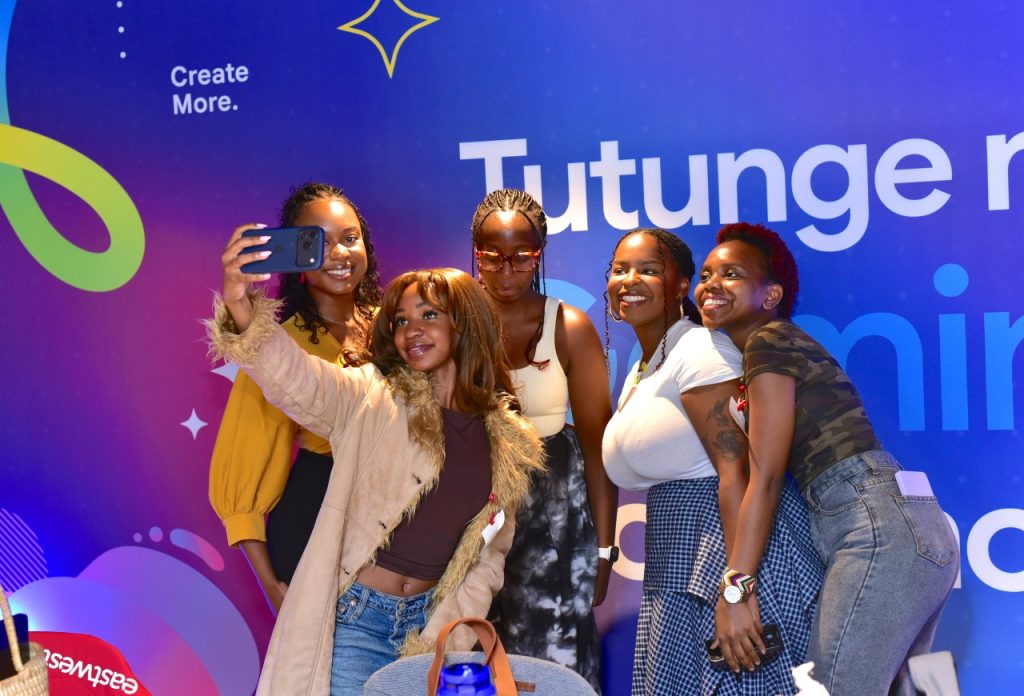
For university students, the workshop highlighted the potential use of AI in research and learning. Google also promoted its Gemini Google AI Plus Student Offer, which gives eligible university students in Kenya access to advanced AI features.
The offer includes Gemini Omni, higher usage limits for Gemini and 400GB of cloud storage across Google Drive, Gmail and Google Photos, as well as other AI-powered learning tools.
Charles Murito, Google Regional Director of Government Affairs and Public Policy, Middle East & Africa, said expanding access to AI tools could help address differences in resources available to students across African institutions.
“This workshop demonstrates our commitment to upskill African youth with the digital tools they need to succeed beyond the continent. Our Google AI Plus student offer removes a major cost barrier to AI Tools for African university students,” he said. “We are bridging the institutional resource gap by enabling students at smaller public universities and technical colleges to gain access to the same research and synthesis tools used by global peers, mitigating campus-level library and computational deficits.”


Comments
No comments yet. Be the first to share your thoughts.