

The government wants to strengthen grassroots data management to ensure that information gathered through the National Government Administrative Officers (NGAOs) remains authentic for shaping planning, resource allocation and delivery of public services.
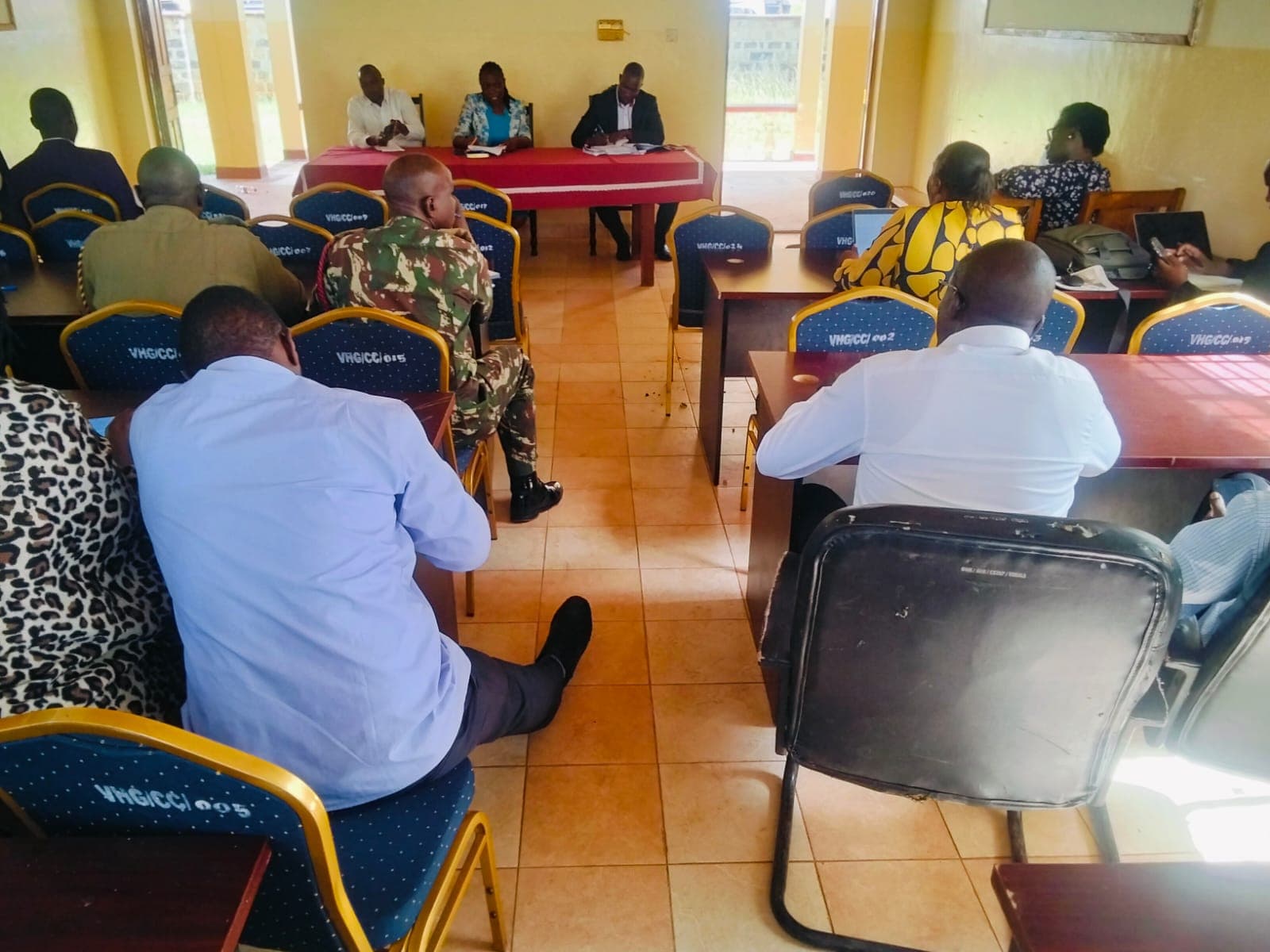
This revelation was made during the closing ceremony of Phase II of three-day Grassroots Data Management Training at a Kericho hotel that brought together Deputy County Commissioners, Assistant County Commissioners, chiefs and assistant chiefs drawn from 25 counties, as well as trainers and technical teams from the State Department for Economic Planning, including the Kenya National Bureau of Statistics.
Speaking during the closing ceremony, Economic Planning PS Dr Bonface Makokha, in a speech read on his behalf by Evelyne Bengal, Chief Economist at the State Department for Economic Planning, said effective planning depends on the government having a clear understanding of conditions and priorities at the community level.
Dr. Makokha said the government could not effectively plan from Nairobi alone, noting that information from villages, wards and counties must be systematically gathered and transmitted through the appropriate government structures to inform decisions.
The PS said the Grassroots Data Management Programme was intended to strengthen the link between the realities faced by citizens and decisions made by government, rather than simply increasing the volume of information collected.
He urged officers to ensure that information gathered from communities moves beyond the point of collection and contributes to county and sectoral planning, resource allocation, monitoring and evaluation of government programmes and national development planning.
Dr. Makokha also called on NGAOs to use information from their respective areas of jurisdiction to identify gaps in service delivery, emerging socio-economic challenges and opportunities within communities and ensure such issues reach the relevant planning and administrative structures.
The PS said the officers have a particularly important role to play because of their direct interaction with communities and their presence across the country, placing them in a key position to connect citizens with government.
He urged them to work closely with county government officials, economists, statisticians, planners and other stakeholders to ensure grassroots information is collected, managed and utilised in a coordinated manner.
The PS also encouraged participants to share the knowledge acquired during the training with their colleagues and incorporate the practices into their day-to-day work.
Dr. Makokha said the long-term success of the programme would largely depend on institutionalising grassroots data management within government systems rather than treating the training as a one-off exercise.
The State Department for Economic Planning, he said, would continue providing technical guidance and working with relevant government institutions to strengthen the management, analysis and use of grassroots information.
The training covered key areas of grassroots data management, including data collection, validation, quality assurance, reporting and the use of information in evidence-based planning and decision-making.
Phase II follows the implementation of the first phase and expands the programme to an additional 25 counties, with the broader objective of establishing a sustainable system for capturing information from the community level and linking it to government planning structures.
Dr. Makokha said the initiative would help the government better understand developments within communities, identify emerging issues and make more informed decisions on development priorities and the allocation of public resources.
He urged participants to remain committed to the programme and apply the knowledge gained in their respective areas, saying the strength of government planning ultimately depends on how effectively information from communities is transformed into action.
By Fidel Ochieng

Comments
No comments yet. Be the first to share your thoughts.