
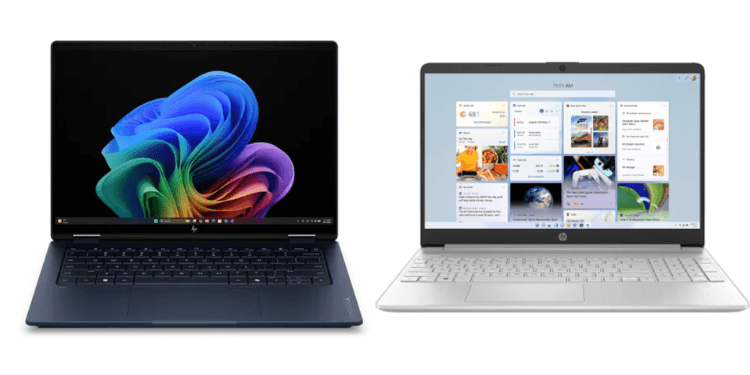
University students in Kenya looking to buy laptops for the 2026 academic year have a range of options depending on their budget and academic needs.
In 2020, several universities in Kenya introduced laptop requirements for students as institutions increasingly shifted to digital and blended learning.
Some include:
- Kenyatta University (KU)
- Jomo Kenyatta University of Agriculture and Technology (JKUAT)
- University of Nairobi (UoN)
- Masinde Muliro University of Science and Technology (MUST)
According to Itey Store, a tech shop, students should consider factors such as battery life, weight, memory, storage capacity, and build quality when choosing a laptop for university.
A laptop with at least 8GB of RAM and 256GB SSD storage is recommended for general academic work, while students using demanding software may benefit from 16GB of RAM and 512GB of storage.
What to Look for When Buying
According to Value Hub Kenya, students should consider more than just the price when choosing a laptop for university. Key factors include the processor, RAM, storage, portability, battery life and overall durability.
The publication recommends choosing a laptop with an SSD for faster performance and at least 8GB of RAM for regular academic tasks. Students taking courses that require demanding software may benefit from 16GB of RAM, while an Intel Core i5 or AMD Ryzen 5 processor offers a balance between performance and affordability.
Portability is also important for students who regularly move between classes or commute to campus. Value Hub Kenya advises students to consider battery life, build quality and the availability of useful ports such as USB-A, USB-C and HDMI.
“A few essentials separate a laptop that lasts from one that frustrates. First and most important: an SSD, not an old mechanical hard drive. An SSD makes the laptop boot in seconds and feel fast for years; an HDD in 2026 is simply not acceptable,” Value Hub notes.
Here is a breakdown of laptops under Ksh80,000
How Your Course Influences Your Laptop Type
Further, Value Hub Kenya notes that laptop requirements vary depending on the course.
Students in business, law, arts and social sciences can generally rely on a laptop with 8GB of RAM and an entry-level or mid-range processor for assignments, research, presentations and online learning.
For IT, engineering and STEM courses, students may require more powerful machines capable of running software such as Python, MATLAB, SPSS, AutoCAD and Android Studio.
A laptop with 16GB of RAM and a stronger processor may therefore be more suitable.
Students pursuing creative and design-related courses should consider devices with better displays, stronger processors, more RAM and, where required, dedicated graphics.
Those whose work mainly involves basic browsing, documents and online learning can opt for less powerful and more affordable models.
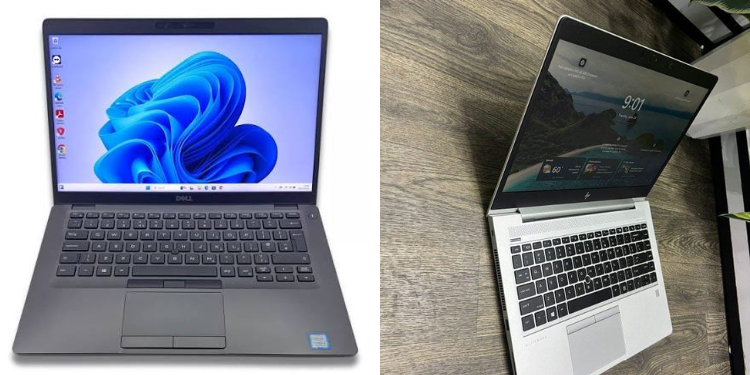
According to Value Hub Kenya, students can consider either new or ex-UK/refurbished laptops, depending on their budgets and needs.
Ex-UK business models from brands such as Dell, HP and Lenovo can provide durable builds and good specifications at relatively lower prices. New laptops offer the advantage of newer hardware and manufacturer warranties.
Follow our WhatsApp Channel and X Account for real-time news updates.



Comments
No comments yet. Be the first to share your thoughts.