
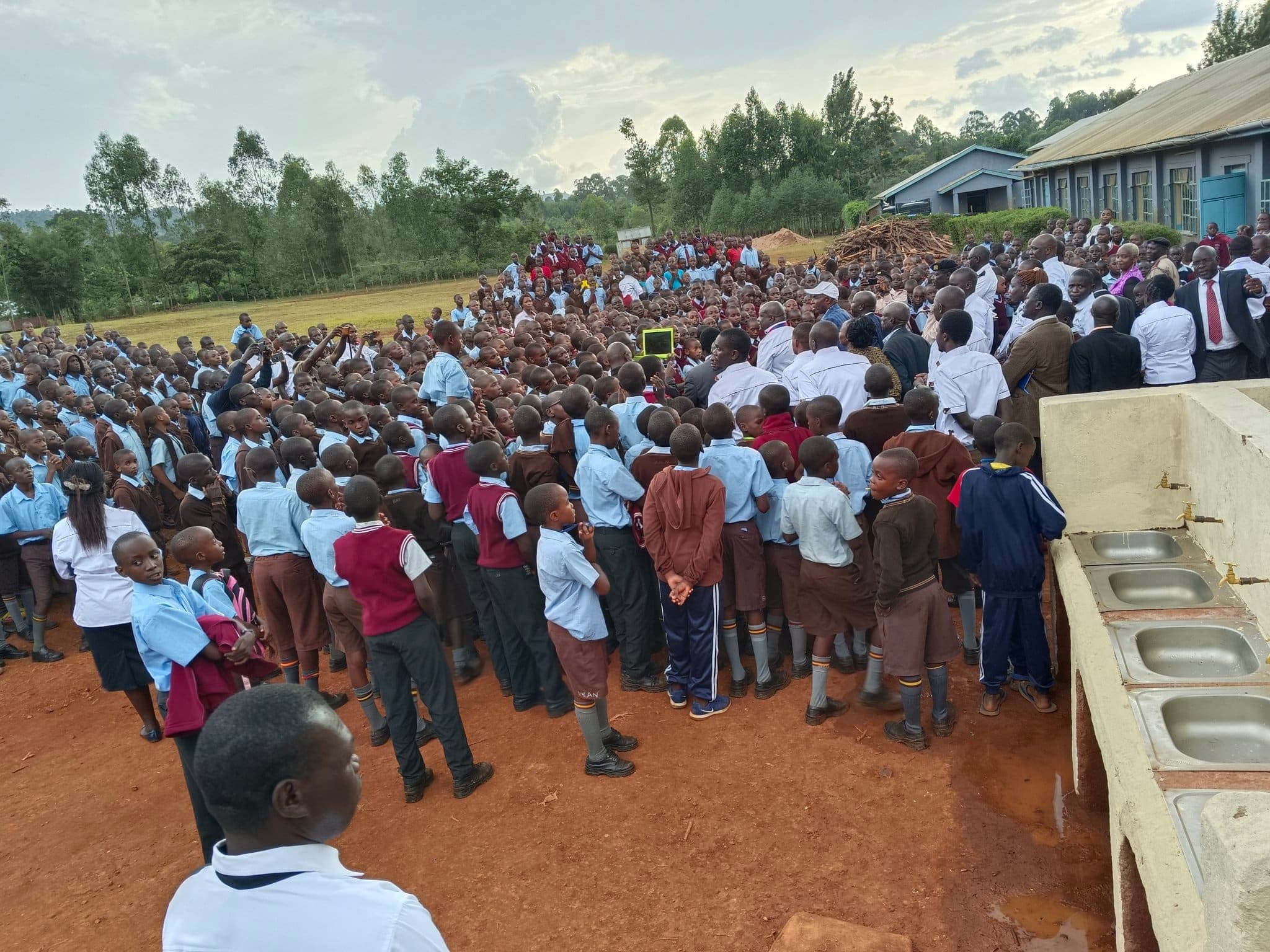
The Kenya Junior School Education Assessment (KJSEA) will account for 60 percent of the final assessment used to guide the placement of Grade 9 learners into senior schools as they prepare to join Grade 10 in January 2027.
The Kenya National Examinations Council (KNEC) completed the administration of the national written assessment on Friday, October 30, after five days of examinations.
Under the Competency-Based Education (CBE) system, KJSEA results are combined with learners’ previous assessment records to establish their performance and strengths in different learning areas.
The Ministry of Education will use the assessment outcomes, learners’ interests and pathway choices, among other considerations, to determine their senior school placement.
How KNEC Calculates the KJSEA Results
According to KNEC’s KJSEA regulations, the final assessment combines results from three stages of learning.
The Grade 9 KJSEA contributes 60 percent of the final score, while school-based assessments conducted in Grades 7 and 8 account for 20 percent.
The remaining 20 percent comes from the Kenya Primary School Education Assessment (KPSEA), which learners sat in Grade 6.
This means the Grade 9 assessment carries the largest share of the final score, but learners’ performance in earlier grades also contributes to the overall evaluation.
KNEC uses the combined results to provide a broader picture of learners’ abilities rather than relying on performance in one examination.
The Eight-Point KJSEA Grading System
KNEC will report learners’ performance using four achievement levels, each divided into two bands and assigned points ranging from one to eight and the grading system is structured as follows:
- Exceeding Expectation: EE1 attracts 8 points for scores between 90 and 100, while EE2 attracts 7 points for scores between 75 and 89.
- Meeting Expectation: ME1 attracts 6 points for scores between 58 and 74, while ME2 attracts 5 points for scores between 41 and 57.
- Approaching Expectation: AE1 attracts 4 points for scores between 31 and 40, while AE2 attracts 3 points for scores between 21 and 30.
- Below Expectation: BE1 attracts 2 points for scores between 11 and 20, while BE2 attracts 1 point for scores between zero and 10.
The same score ranges apply across the KJSEA learning areas.
However, KNEC will not combine the nine learning areas into one aggregate score. Instead, the Council will use a statistical formula to determine each learner’s strength in the three senior school pathways.
The resulting pathway strength indicator ranges from zero to 75. A higher score indicates a stronger potential in the respective pathway.
The Three Pathways Learners Will Pursue in Senior School
Learners transitioning to Grade 10 will be placed in one of three pathways under the CBE system. These are STEM, Social Sciences, and Arts and Sports Science.
Science, Technology, Engineering and Mathematics (STEM)
The STEM pathway covers science, technology, engineering, and mathematics-related subjects. It is designed for learners interested in areas that require scientific, technical and mathematical skills.
Social Sciences
The Social Sciences pathway covers learning areas related to humanities, languages and social studies. It caters for learners interested in understanding society, human relationships and social institutions.
Arts and Sports Science
This pathway caters for learners interested in creative and performing arts, visual arts and sports-related disciplines.
KNEC’s assessment is intended to help identify learners’ strengths and guide decisions on the pathways they can pursue in senior school.
How Learners Will Be Placed in Grade 10
While KNEC conducts the assessment and processes results, the Ministry of Education handles the placement of learners into senior schools.
The Ministry uses the learners’ assessment performance, selected pathways, subject combinations and preferred schools to guide the allocation process. The availability of spaces and the pathways offered by individual schools are also considered.
Learners selected their preferred pathways, subject combinations, and senior schools through the Ministry’s Grade 10 Selection and Placement System, hosted on the Kenya Education Management Information System (KEMIS).
In a statement issued on Friday, October 30, Education Cabinet Secretary Julius Ogamba said the placement exercise would consider learners’ performance, interests, pathway choices, and other applicable factors.
“The placement process will be undertaken in accordance with the established criteria, taking into account learners’ performance, interests, pathway choices and other applicable considerations,” Ogamba said.
The Cabinet Secretary also outlined provisions for top-performing learners to secure places in boarding senior schools based on their performance in different pathways.
Under the framework, the top six learners per gender in each STEM track in every sub-county will be considered for boarding schools of their choice.
For Social Sciences, the provision covers the top three learners per gender in each track, while the top two learners per gender in each Arts and Sports Science track will also qualify.
The framework further provides for learners who attain average achievement levels of seven and eight in each track to be placed in boarding schools of their choice.
What Happens After KJSEA Results are Released?
Once KNEC releases the 2026 results, the Ministry of Education will proceed with the senior school placement process.
Learners will be able to confirm the schools they have been assigned and access their admission information through the official placement system.
Ogamba said the Ministry would communicate the relevant timelines and procedures through official channels.
Parents and learners have been asked to remain patient as the Ministry undertakes the process ahead of the transition to Grade 10 in January 2027.
Follow our and X Account for real-time news updates, and subscribe to our YouTube Channel for in-depth interviews.



Comments
No comments yet. Be the first to share your thoughts.