
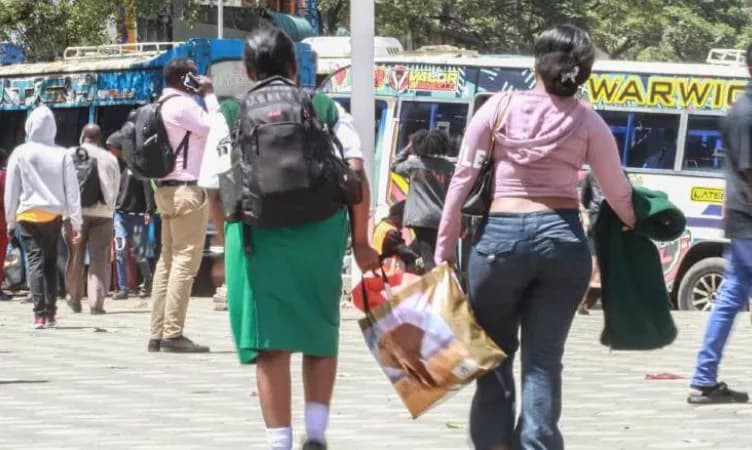
A schoolgirl accompanied by a guardian. /FILE

Most schools are expected to begin closing for the December holidays on Wednesday, leaving candidates to focus on preparations for national examinations starting next week.
Friday, October 23, is the official closing date, marking the end of the nine-week third term. However, some institutions have already started releasing learners for the prolonged holiday.
A number of primary and secondary schools wound up their Term Three schedules in mid-October, with some institutions serving as examination centres opting to close on Friday, October 16, to allow candidates to complete rehearsals and prepare for the national assessments and examinations.
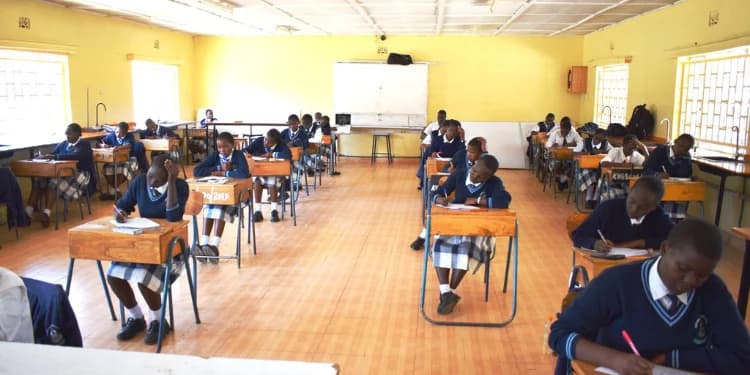
The Kenya Primary School Education Assessment (KPSEA) and the Kenya Junior School Education Assessment (KJSEA) will run from Monday, October 26, to Friday, October 30.
The Kenya Intermediate Level Education Assessment (KILEA) will run from Monday, October 26, to Wednesday, October 28 while the Kenya Pre-Vocational Level Education Assessment (KPLEA) will run from October 26 to October 29.
KPSEA is taken by Grade 6 learners at the end of primary school before they transition to junior school, while KJSEA is taken by Grade 9 learners to mark the completion of junior school and inform placement into senior school.
KPLEA, meanwhile, is administered to learners following the pre-vocational curriculum as they transition to vocational training while KILEA is administered to learners with special needs following the intermediate-level curriculum before they progress to pre-vocational levels.
Kenya Certificate of Secondary Education (KCSE) candidates, who are currently undertaking oral and practical examinations, will begin their written papers on Monday, November 2, with the examinations scheduled to end on Friday, November 20.
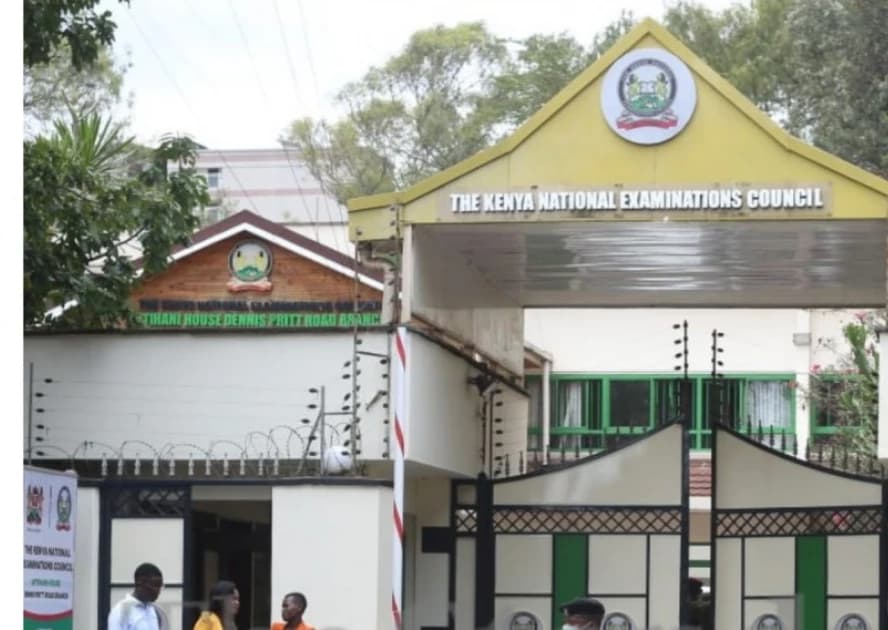
In total, the Kenya National Examination Council (KNEC) will administer examination and assessment tests to a record 3.6 million candidates in 2026.
The school closures come amid renewed calls for parents and guardians to take a more active role in guiding children during the prolonged 10-week holiday, which will run until January 3, 2027.
The concerns are informed by past experiences in which extended school breaks have left learners vulnerable to exploitation, teenage pregnancies and substance abuse, often compounded by peer pressure.
Data from the Kenya National Bureau of Statistics (KNBS) shows that Nairobi county has the highest number of teenage pregnancies among girls aged 10 to 19, with more than 14,000 cases, followed by Kakamega county, which has nearly 12,000.
In terms of prevalence among girls aged 15 to 19, Samburu county leads, with 50.1 per cent having been pregnant or given birth, followed by West Pokot at 36.3 per cent.
Ahead of the long break, parents have been urged to monitor their children closely and keep them engaged in constructive activities, including community service, to empower them to serve others and steer them away from harmful habits.
Meanwhile, the National Transport and Safety Authority (NTSA) has urged public service vehicle operators to exercise extra caution as schoolchildren travel home for the holidays.
The authority, which is conducting a four-day training programme for public transport operators from Machakos, Makueni, Kitui and Kajiado counties, called on drivers to observe traffic rules and ensure children reach their destinations safely.
"As children head home after closing school today, full compliance is non-negotiable. Ensure that vehicle speed limiters are fully functional and actively connected to the Intelligent Road Safety Management System (IRSMS) at all times," NTSA said.
Schools are scheduled to reopen on January 4, 2027, for the new academic year.

Comments
No comments yet. Be the first to share your thoughts.