

The government is planning to tap the capital markets to raise money for higher education, with investors expected to play a key role in financing students under the proposed Tertiary Education Placement and Funding Bill.
The proposed law provides for education bonds as one of the funding sources for a new higher education financing system aimed at meeting the country’s growing demand for student funding.
Under the proposal, the government would issue education bonds to raise money from investors, with the proceeds channeled towards financing higher education.
The plan is part of a broader funding strategy that also includes government grants, parents’ education savings, student loan recoveries and concessional financing from development partners.
Government to Tap Commercial Sector Under New University Funding Model
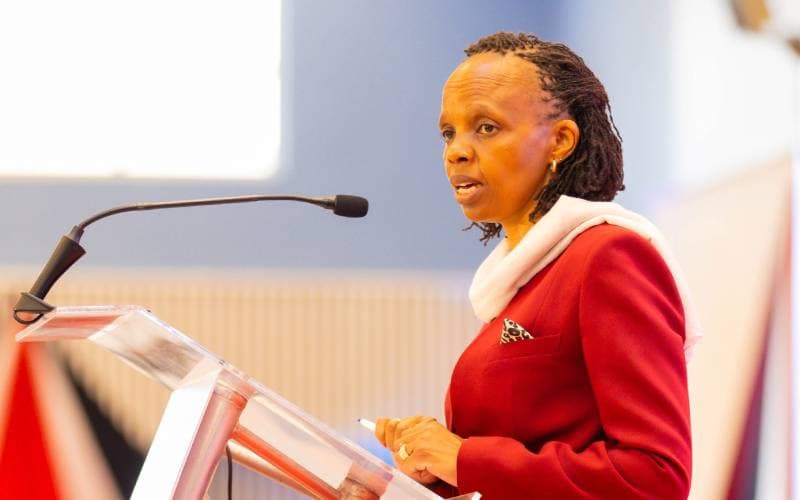
HELB Chief Executive Officer Geoffrey Monari said the proposed education bond programme will allow the government to raise money from the commercial sector and investors to finance higher education.
Under the arrangement, investors would buy the education bonds, effectively providing the government with funds upfront. In return, the government would pay investors coupons, or periodic interest payments, for holding the bonds.
Monari said the government had conducted simulations on the financing model to determine how much additional funding would be required and how the resulting interest payments could be managed.
“We will use the bond programme to go to the commercial sector, and we will be paying coupons every quarter. The first requirement and simulation we did was that we will require an additional KSh80 million, which then we’ll be paying coupons every six months of KSh5 billion, which makes it affordable from the government,” Monari said.
The arrangement means the government would raise the money upfront from investors, rather than relying entirely on money allocated through the annual national budget.
Investors who buy the education bonds would effectively lend money to the programme and earn returns through the scheduled coupon payments. The funds raised would then be channeled into higher education financing, including support for students.
Investors to Earn From Education Bonds
The proposed education bonds would create a link between the capital markets and higher education financing.
Investors would provide money by purchasing the bonds and would earn returns through coupon payments during the life of the securities.
The government, rather than individual students, would be responsible for meeting its obligations to bondholders.
Students would have a separate loan relationship with the higher education financing authority and would repay the funds they receive after completing their studies.
This means investors would not be lending directly to students. They would be investing in government securities whose proceeds would be used to support higher education.
The proposal comes as the Ministry of Education projects that funding requirements for higher education could rise to about KSh230 billion.
Monari Explains Long-Term Financing Plan
Geoffrey Monari said the government does not intend to depend on a single source of money to finance the programme.
He said the proposed education bond programme would initially help raise funds from investors, before the government shifts to cheaper concessional financing from development partners.
“After three years, we are now able to go to concessional loans at less interest, and we have calculated between 1-3 per cent,” Monari said.
Concessional loans are loans offered on more favourable terms than normal commercial borrowing, including lower interest rates and longer repayment periods.
Monari said the proposed financing would also have a 10-year grace period, meaning the government would not be required to begin repaying the principal immediately.
He said the loans could then be repaid over a period of up to 30 years.
“There is a grace period of 10 years because you can repay for 30 years, then you can be able to retire the bond programme and continue paying for students for a period of even up to 50 years as we continue going back to the bond market,” he said.
KSh100 Billion Funding Target
Monari also told MPs that the government has ring-fenced existing sources of funding as it prepares for the proposed financing changes.
He said KSh56 billion had been apportioned, including KSh30 billion for the Universities Fund as scholarships and an additional KSh9.6 billion for TVET scholarships.
The allocations amount to about KSh94 billion, with the government seeking additional resources to bring the total to about KSh100 billion.
“If you add these amounts, you come to about KSh94 billion. After discussions, we approximated that we can be able to get an additional amount to round it off to about KSh100 billion,” he said.
What Education Bonds Mean for Investors
If approved, the education bonds would allow investors to put money into government securities while their funds are used to finance higher education.
The attractiveness of the bonds to investors would depend on factors such as the coupon rate, maturity period, repayment structure and risk associated with the securities.
For the government, the bonds would provide access to funds without requiring the entire financing burden to be met through annual allocations from the Exchequer.
However, the government would still have to meet its obligations to bondholders, including coupon payments and repayment of the principal when the bonds mature.
Follow our and X Account for real-time news updates.


Comments
No comments yet. Be the first to share your thoughts.