

For Kenyan university students, the choice between eating at a campus mess and cooking in a hostel can make a difference to the monthly budget.
Choosing between eating at the institution and cooking depends on the university’s meal prices and the cost of food on the premises where the student lives.
Further, the choice can also be affected by whether cooking is permitted in the hostel and whether several students can share groceries, cooking equipment and fuel.
Unlike accommodation fees, Kenyan universities do not have a single nationwide catering charge.
Several public universities operate pay-as-you-eat cafeterias, while others provide subsidized student meals.
University of Nairobi
At the University of Nairobi (UoN), resident students are covered by the university’s pay-as-you-eat catering program, which provides 21 meals a week from Monday to Sunday.
The university operates dining kitchens across its campuses, with breakfast, lunch and dinner services, with the UoN catering department terming the meals as affordable.
Students pay for individual meals rather than being placed on a compulsory national-style meal plan.
However, the institution strictly forbids students from cooking in the hostels.
“Meals are available on a pay-as-you-eat basis for resident students at cafeterias conveniently located next to the halls of residence. One can choose to eat out in restaurants located in the vicinity of the respective University campuses. Students are not allowed to cook in the halls of residence,” UON Student Handbook directs.
UoN advises government-sponsored students to budget approximately KSh 18,000 per year for catering expenses.
Kenyatta University
Kenyatta University (KU) has a more extensive mess system with a catering directorate operating five student kitchens, commonly known as messes.
Three are located at the main campus, while Ruiru and Parklands satellite campuses also have student kitchens.
According to KU officials, the student kitchens serve students daily and provide meals at subsidized rates, with food served at specific hours.
The university also operates dedicated student dining halls, including Nyayo, Western and Eastern messes at the main campus.
Egerton University
Egerton University also operates a pay-as-you-eat cafeteria system introduced in 1996, allowing students to select individual dishes and pay before receiving their meals.
The university operates student cafeterias including Chui and Kiboko.
At the same time, its catering facilities serve students throughout the week, with food prices based on the cost of food quantities, preparation, and cooking.
Students at Co-operative University of Kenya who reside at Caveland Hostels should budget for KSh16,000. At the same time, Charles Hareey Hostels has monthly charges ranging between KSh12,000 and KSh19,500 per semester in these hostels that allow cooking.
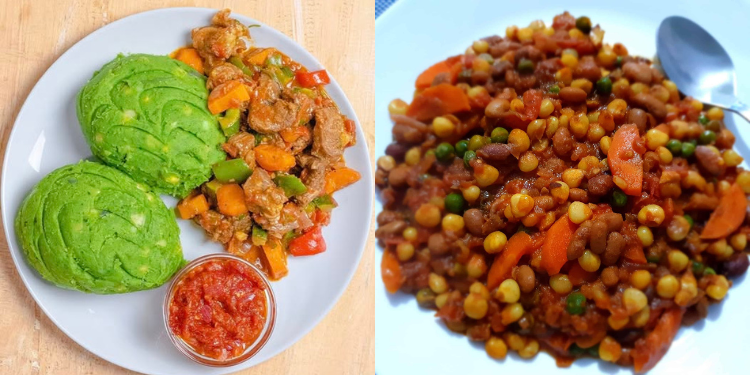
Individual Cooking
In 2026, the latest available Kenya National Bureau of Statistics (KNBS) data showed that the national average price of a 2kg packet of sifted maize flour was KSh157.15 in July.
The KNBS data also recorded the national average price of cooking oil at KSh358.63 per liter, cabbage at KSh73 per kilogram, and kale (sukuma wiki) at KSh114.44 per kilogram.
Additionally, data from the report shows beans cost an average of KSh181 per kilogram, eggs at KSh21, and milk retailing at approximately KSh73 per liter.
According to the KNBS report, the figures are national averages rather than university-specific prices, and actual costs vary between Nairobi, Kisumu, Eldoret, Nakuru, Mombasa and smaller university towns.
A student cooking at home must therefore add the cost of ingredients, cooking fuel, water, and transport to the market and food that may go to waste.
In addition to budgeting for the cost of the product, a student starting from scratch may need a cooker, sufuria, frying pan, plates, cups, cutlery, storage containers, and other kitchen items.
Depending on the cooking of a student under the current KNBS food prices, one should budget for approximately KSh 3,100 to 3,800 monthly for simple meals.
Which Option Should Students Choose?
For students who live alone, have a busy timetable, and have access to affordable campus meals, the university mess can be the more convenient and potentially cheaper option.
On the other hand, students who have an approved kitchen can buy groceries in bulk and share expenses with roommates to have greater control over the food budget.
Students need to compare the actual cost of groceries, fuel, equipment, hostel rules, food wastage, and their own eating habits before deciding whether the mess or cooking offers better value in 2026.
In 2026, a student at UoN, KU, Egerton, Maseno, or MMUST can spend up to KSh 4,000 per month on basic meals.
Follow our and X Account for real-time news updates.


Comments
No comments yet. Be the first to share your thoughts.