
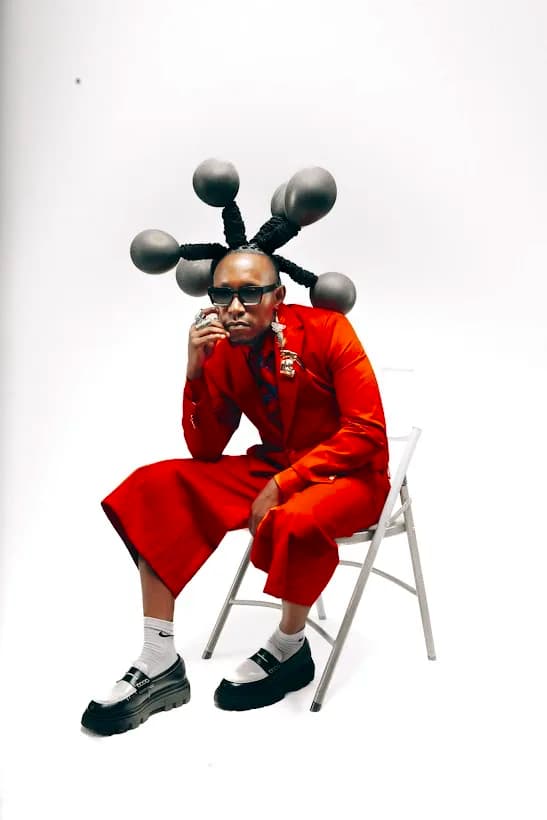
Kenyan singer-songwriter, producer and multi-instrumentalist Bensoul has released Flight 420, a 13-track album. Following a listening party held in Nairobi on 27 October, the project introduces a new chapter in his musical journey, bringing reggae-inspired sounds into conversation with the Afrosoul and Afropop influences that have shaped his identity.
For Bensoul, the album is an exercise in documenting life as it happens. Across 13 tracks, he draws from the experiences, relationships and changing emotions that have shaped his personal and creative journey, exploring what it means to grow, find joy in the present and pursue the things that make life meaningful. He approaches the project as a reflection of where he is now, acknowledging that growth is as much about appreciating the present as it is about working towards the future.

“I’m at a stage in my life where I’ve come to appreciate the simple things in life,” Bensoul says. “This album wasn’t about hits, or creating what is supposed to trend, it was about encapsulating the feelings I have on a day to day basis, knowing that I’m not the only one.”
Although reggae provides a central influence on the project, Bensoul is not interested in recreating a sound that already exists. His approach reflects a longstanding curiosity about music across genres and cultures, and a belief that those influences become most meaningful when filtered through an artist’s own experiences and identity.
“Kenyan music has a beautiful way of taking what we love and mixing it with who we are to make it ours,” he explains. “Over the years, I’ve experimented with music that inspires me and found that what works for me isn’t trying to copy others but fuse my style to what inspires me.”
That philosophy places Flight 420 within the wider evolution of contemporary Kenyan music, where artists continue to draw from global sounds while developing distinctive musical identities rooted in their own environments. For Bensoul, reggae-inspired rhythms offer another way to explore the emotional storytelling that has long defined his songwriting, while allowing him to move beyond the expectations attached to any one genre.
The album is built around three interconnected themes: life, joy and passion. Together, they form a framework through which Bensoul examines the contradictions of being human, from the uncertainty of personal growth to the exhilaration of love, friendship and pursuing a meaningful life.
Life, represented by the colour green in the project’s conceptual framework, explores the idea that growth is rarely linear. Bensoul draws a parallel between human development and the growth of a tree, which requires the right conditions but must also adapt to changes beyond its control. Through songs including “NYR,” “Robin Hood” and “Cassanova,” he reflects on the importance of allowing difficult experiences and perceived imperfections to become part of one’s story rather than reasons to stop moving forward.
Joy is approached not as a reward waiting at the end of a difficult journey, but as something to be experienced along the way. Time spent with friends, the satisfaction of achieving a long-held goal and the quiet pleasure of watching a sunset all become reminders that life is happening in the present. “NaEnjoy” speaks to this perspective, encouraging listeners to make room for enjoyment even while navigating the responsibilities and uncertainties of everyday life.
Passion explores the intensity that comes with pursuing what matters. For Bensoul, stepping beyond familiar boundaries can be uncomfortable, but it can also create experiences that reshape our understanding of ourselves and the world. The theme reflects his own willingness to keep experimenting as an artist, even when the direction is unfamiliar or difficult to predict.
“I want them to think of the songs as they do this thing we call life and know that even if they can’t always put their feelings down in words, the music is a reminder that as long as you’re breathing and got the chance to wake up today, it’s not over and you’re not alone,” Bensoul says. “Sudah Nation is a place where you can be you, come as you are.”
While Flight 420 is deeply personal in its subject matter, its creation reflects Bensoul’s belief that music is best developed through collaboration. His journey has taken him from his early work with H_art the Band to becoming the first artist signed to Sauti Sol’s Sol Generation Records, before establishing his independent creative direction through Sudah Nation. Throughout these chapters, working with other musicians has remained central to his process.
For this album, Bensoul brought together a group of trusted collaborators for a writing camp in February, using the sessions to translate his ideas and experiences into a cohesive musical project. Producers Hendrick Sam, Wuodomollo and Jaz Beatz helped shape the production, while longtime collaborator Trevor Magak recorded the instrumental elements. Backing vocalists Lisa Odour, Jojo Ocholla and Lexxie Waweru add depth to the arrangements, making particularly significant contributions to “Cassanova” and “Thank You.” Hornsphere, musicians Bensoul has known since the early stages of his career, bring horn arrangements to selected songs, while Ywaya Tajiri contributes to a creative partnership built on songwriting, harmonies and an easy exchange of ideas.
The process required a team capable of understanding Bensoul’s vision while bringing their own strengths to the music. Some of the arrangements presented challenges that other collaborators might have avoided, but the musicians embraced the opportunity to explore unfamiliar territory. For Bensoul, this balance between a clear artistic vision and collective creativity is essential. Independence has given him greater responsibility for his career, but it has not diminished the value he places on the people who help bring his ideas to life.
Bensoul’s career has been defined by a willingness to evolve. Born Benson Mutua Muia, he established himself as a distinctive voice in Kenya’s contemporary music scene through expressive vocals, melodic songwriting and an ability to move between Afrosoul, Afropop, R&B and other influences. His early work with H_art the Band helped introduce his sound to a wider audience, before his signing to Sol Generation in 2019 brought further recognition.
His songwriting has also reached beyond his own catalogue. Bensoul co-wrote “Time Flies,” featured on Burna Boy’s Grammy-winning album Twice as Tall, demonstrating the contribution Kenyan songwriters can make to projects with international reach.
Following his departure from Sol Generation, he began building his independent operation, a transition that brought new responsibilities alongside greater creative control. His earlier albums, The Lion of Sudah and The Party & The After Party, documented different stages of his development, from establishing his identity to exploring celebration and the emotions that follow it.
With Flight 420, the emphasis shifts towards perspective. Bensoul reflects on the lessons that have come with running his own label, navigating setbacks, celebrating successes and learning to recognise progress beyond the music itself.
“When I listen to the songs from earlier on in my career, I get transported back to that place and the place I was in during that time,” he says. “When I listen to this album, I can’t help but smile because we’ve grown, and not just production-wise. We’ve loved, we’ve lost people we care about, we’ve fought and we’ve enjoyed.”
One moment during the final stages of the project brought that sense of growth into focus. After receiving the final masters from Hendrick Sam, Bensoul drove to Ngong Hills to listen to the completed album. As the sun set, “Thank You” began playing. The uncertainty and stress he had carried throughout the process gave way to a sense of calm and conviction. It was then, he recalls, that he knew the album was ready to be released. That experience captures the perspective at the heart of Flight 420: the understanding that not every answer arrives through planning, and that sometimes the value of a journey becomes clear only when there is space to reflect on it.
Ultimately, Bensoul hopes the album will help listeners feel understood, whatever stage of life they find themselves in. He does not want to dictate what people should take from the songs, but to offer music they can return to as their own experiences change.
“I can’t be put in a box,” he says. “The only guiding force that can tell me what to do is God. But with everything I put out, I know that someone out there will listen to it and feel connected.”
With Flight 420, Bensoul continues to build a body of work that places emotional connection above expectation. It is an album about learning to live with uncertainty, making space for joy and continuing to grow without waiting for life to become perfect.


Comments
No comments yet. Be the first to share your thoughts.