
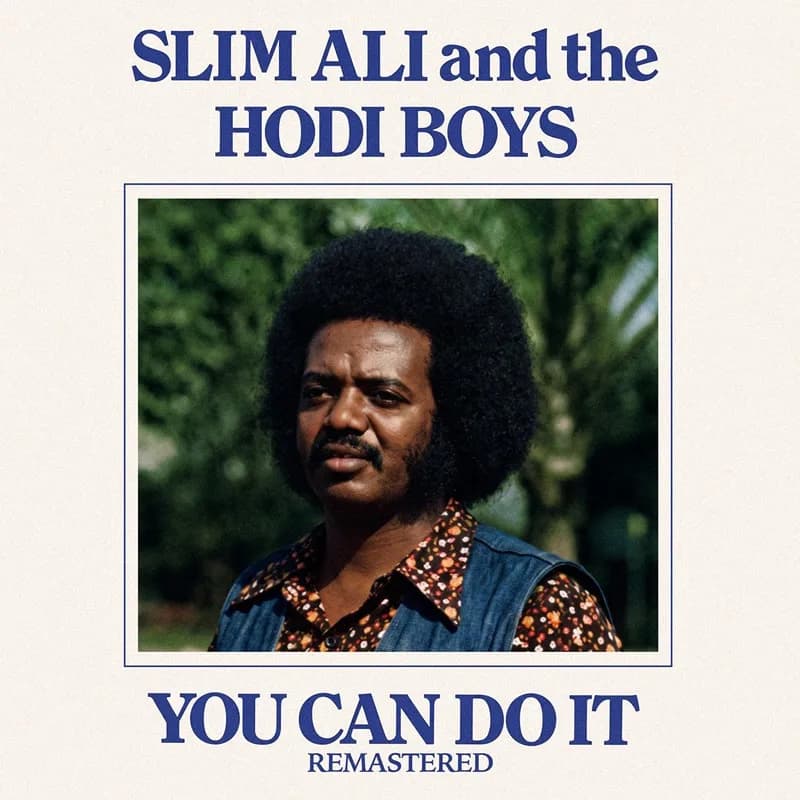
There is a distinct, almost ritualistic reverence attached to the weight of a vintage 7-inch or a dusty LP sleeve. For the crate-diggers, the sound system purists, and the vinyl collectors combing through Nairobi’s hidden basements, the crackle of needle meeting wax is more than a sound—it is time travel. It tells a physical story of heat, humidity, grooves carved decades ago, and the enduring survival of analog master tapes.
Yet, for a long time, experiencing the golden-age magic of East African soul-rock pioneers like Slim Ali & The Hodi Boys meant enduring the low-fidelity fuzz of YouTube rips or paying extortionate prices for rare-groove vinyl pressings buried in European collector markets.
Stream HERE
That digital divide is finally closing. With the official streaming rollout and meticulous digital remastering of their timeless anthem “You Can Do It” via A.I. Records Kenya, a bridge has officially been built. It connects the purists who guard the physical legacy of 1970s Nairobi with a new generation of digital-native listeners discovering that East Africa’s musical history didn’t just start with today’s Gengetone or Afropop waves—it was built on a deep, funk-infused rock foundation.
When Slim Ali returned to Kenya after touring across Africa and the Middle East, bringing together Geoffrey Ngao, Nick Kim, and Henry Mbagho to form the definitive iteration of The Hodi Boys, they were musical anomaly-makers. At a time when East African dancefloors were heavily immersed in the hypnotic rhythms of Congolese rumba and the infectious bounce of benga, Slim Ali and his band injected a heavy dose of Stax-era grit, bluesy vocal phrasing, and British rhythm-and-blues textures.
Their sound wasn’t background noise; it was an urgent sonic translation of a fast-evolving urban Nairobi. Tracks like “There Is A Hard Time (In Front Of Me)” and the ultimate title anthem “You Can Do It” weren’t just groovy compositions—they were manifestos of resilience. Driven by soaring organs, tight horn arrangements, and Slim Ali’s commanding, soulful rasp, they captured the heartbeat of a post-independence generation navigating the complexities of modern city life.
For decades, appreciating this ingenuity required physical proximity to a turntable or a lucky sweep through flea markets. The tracks lived as rare audio artifacts—holy grails traded among international crate-diggers who prized East African 70s funk for its raw, unpolished authenticity.
Bringing legacy tracks from analog tape to modern digital streaming platforms (DSPs) is always a delicate tightrope walk. Audiophiles and vinyl purists often fear the “loudness wars”—the over-compression and scrubbing away of natural warmth that can turn a living, breathing recording into a sterile digital file.
However, the modern remastering of “You Can Do It” treats the source material with archaeological care. Instead of erasing the analog character, the remaster lifts the veil. The low-end basslines hum with a renewed, chest-pounding clarity; the stinging blues guitar lines cut through the mix with razor-sharp definition; and Slim Ali’s vocals sit front and center, pulsing with the same raw urgency they held inside Nairobi clubs over forty years ago.
This technical restoration serves a vital cultural purpose. It validates the vinyl purist’s obsession by proving why these records mattered, while lowering the barrier to entry for a detail-oriented digital audience. When a Gen-Z listener encounters the track on a curated playlist with pristine high-definition audio, they aren’t listening to a “dated artifact”—they are engaging with a timeless piece of global contemporary soul.
Music preservation is ultimately about cultural continuity. In an era where algorithms dictate what trends and sounds dominate our feeds, rediscovering catalogs like Slim Ali & The Hodi Boys acts as an essential anchor.
The digital resurrection of “You Can Do It” does more than just populate a streaming library; it rewrites the narrative of African music history for global listeners who historically pigeonholed the continent’s vintage soundscape. It proves that East Africa was trading in world-class, psychedelic-tinged soul and rock-funk right alongside Detroit, London, and Lagos.
By bridging the gap between the dust-fingered vinyl purist safeguarding physical history and the listener streaming high-fidelity audio on a phone screen, the track transcends its 1970s origins. It reminds us that good music—and a message as universally potent as “You Can Do It”—never really ages. It simply waits for the technology to catch up to its soul.



Comments
No comments yet. Be the first to share your thoughts.