
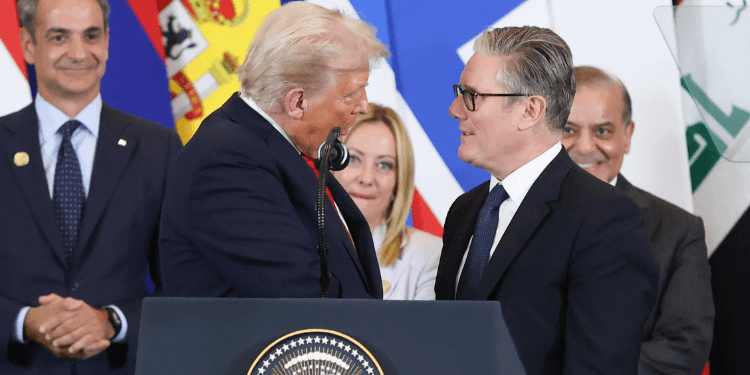
UK Prime Minister Keir Starmer has vowed that the United States will not drag Britain into the Iran war despite repeated attacks from U.S. President Donald Trump.
Starmer instead insisted that the UK’s national interest must come first. In a series of interviews this week, Starmer said he would not “waver” under pressure and rejected Trump’s attempts to push Britain toward deeper involvement in the conflict.
In an interview with ITV, the prime minister was asked whether the “special relationship” with Washington was effectively dead, given Trump’s repeated ridicule.
He responded by stressing the enduring importance of intelligence and defense cooperation, but made clear he would not alter policy under pressure.
“On defence, security and intelligence, we share that with the Americans 24-7, and it’s really important, and we must never lose sight of that,” Starmer said.
“Yes, of course, there have been some hard discussions with President Trump, but a lot of what he said is designed to put pressure on me to change my mind and to get dragged into this war, but I’m not going to do so. I act in the British national interest and always will.”
Trump’s nine rounds of criticism against PM Starmer
Speaking separately to Sky News’ political editor Beth Rigby, Starmer reiterated that he wants a good relationship with the U.S. president but maintained that he is not going to waver on the issue of getting more involved in the war in Iran.
He added, “That pressure isn’t going to make me waver. It’s not going to make me abandon my principles or values. I’m not going to back down, I’m not going to get dragged into the war, I’m not going to buckle under pressure.”
President Trump has criticized Starmer on at least nine separate occasions since January, often ridiculing him in interviews and on social media.
His attacks began before the war started, when he condemned the UK’s decision to hand sovereignty of the Chagos Islands to Mauritius, calling it “an act of great stupidity.” Trump argued the U.S. needed Diego Garcia, a joint UK-U.S. base on the island, to launch strikes on Iran.
Once the war began on February 28, Trump’s criticisms intensified. He accused Starmer of being slow to allow U.S. forces to use UK bases, described him as “not Winston Churchill,” and mocked Britain’s Royal Navy carriers as “toys.”
Earlier this week, on March 26, he repeated his claim that Starmer offered to send carriers too late, adding: “He’s a liberal, that’s the way they think.”
The public rift between Trump and Starmer has raised questions about the future of the UK-U.S. “special relationship.” Traditionally, British prime ministers have aligned closely with American presidents on major conflicts, from Iraq to Afghanistan.
Europe’s reluctance
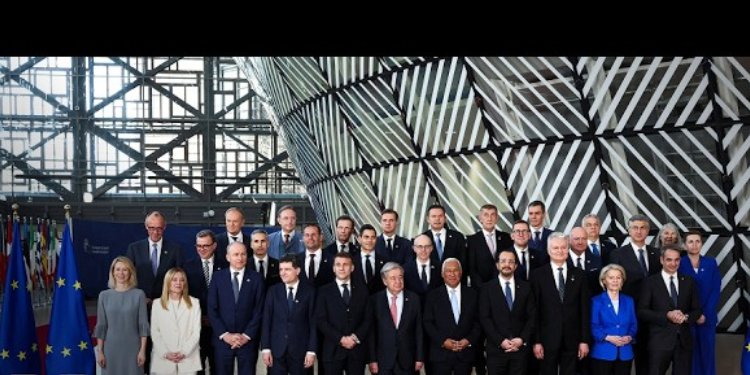
Starmer’s stance also mirrors a broader European position. At the EU summit in Brussels earlier this month, leaders called for de-escalation and respect for international law, reinforcing Europe’s reluctance to join the U.S.-led war effort in Iran.
On regional airspace and maritime security, the leaders condemned any acts that threaten navigation or prevent vessels from entering and exiting the Strait of Hormuz and welcomed efforts announced by member states to ensure freedom of navigation therein once the conditions are met.
While Washington and Israel have launched thousands of strikes on Iranian targets, European governments have largely avoided direct military involvement, focusing instead on diplomacy and humanitarian concerns.


Comments
No comments yet. Be the first to share your thoughts.