
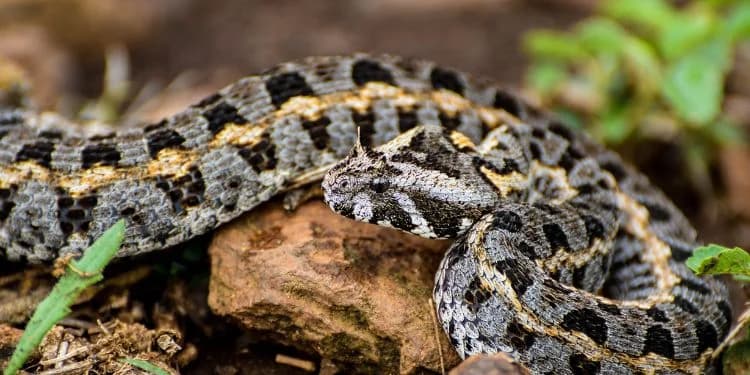
The Kenya horned viper (Bitis worthingtoni) is a small venomous snake found only in Kenya, mainly in the central Rift Valley and nearby highland areas.
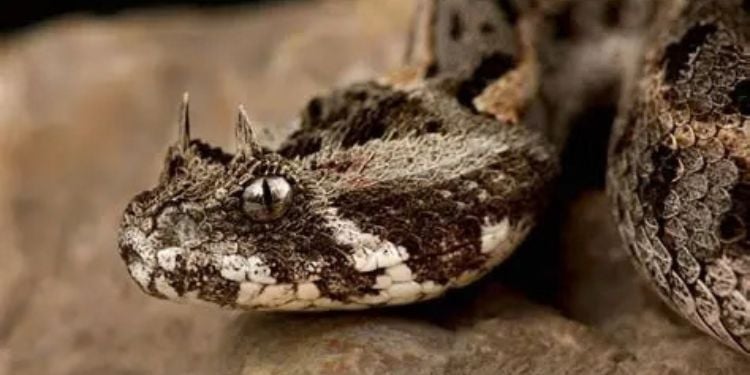
It takes its name from a pair of tiny horn-like scales above its eyes.
According to Global Biodiversity Information Facility (GBIF) data, Parker described the species in 1932, and it belongs to the family Viperidae and subfamily Viperinae.
It is classified under the genus Bitis, making it a true viper. Bitis (Keniabitis) worthingtoni has also appeared in taxonomic literature, but Bitis worthingtoni is the accepted species name.
“Bitis worthingtoni, also known commonly as the Kenya horned viper and the Kenyan horned viper, is a species of venomous snake in the subfamily Viperinae of the family Viperidae,” the Global Biodiversity Information Facility stated.
Kenya horned viper is a true viper, not a bush viper, and is sometimes recorded under the synonym Keniabitis worthingtoni.
Measuring generally 20–35 centimeters, the Kenya horned viper is short and stout, with some individuals reaching about 50 centimeters. It has a broad, flat, triangular head, a narrow neck, a thick body, and a short tail.
Small, modified scales above the eyes form the distinctive “horns” that give the species its common name.
Kenya Horned Viper Habitat, Range and Ecology
From CITES proposal documents, the Kenya horned viper is endemic to Kenya, with known records around Lake Naivasha and extending north through Gilgil and Elmenteita to Nakuru and northward toward Eldoret.
“Bitis worthingtoni is endemic to Kenya. It occurs in the Rift Valley and the surrounding escarpments; recorded from north-west of Eldoret to Lake Naivasha,” Kenya’s CITES proposal confirmed.
Historical records also include Uasin Gishu and Kinangop plateaus.
It occupies high-altitude grassland and scrub, generally above 1,500 meters and reportedly up to about 2,400 meters.
The species favors rocky, broken, and sparsely cultivated terrain, as well as leleshwa scrub and forest edges.
Reported prey includes lizards, small rodents, and elephant shrews, while important details such as the species’ full diet, activity patterns, and microhabitat use remain poorly studied.
Conservation and Threats: Kenya Horned Viper
The Kenya horned viper (Bitis worthingtoni) is considered highly vulnerable because it is endemic to Kenya, occurs at low densities in a restricted high-altitude Rift Valley range, and faces continuing habitat degradation and illegal collection.
Kenya’s CITES proposal reported that populations were declining or depleted in documented areas.
The main habitat threat is the conversion of forest, grassland, and scrubland to agriculture, particularly as the human population and demand for farmland increase. Illegal collection for the international exotic-pet trade also threatens the species.
Local superstition has associated the horned viper with “the devil” because of the scales above its eyes. Conservation reporting notes that this fear and superstition can complicate efforts to protect the species and prevent illegal trade.
Follow our WhatsApp Channel and X Account for real-time news updates.



Comments
No comments yet. Be the first to share your thoughts.