
Elections in Kenya, as in many democracies, are shaped by perception and delivery. But beyond both lies impact — the tangible difference a government makes in the lives of ordinary people.
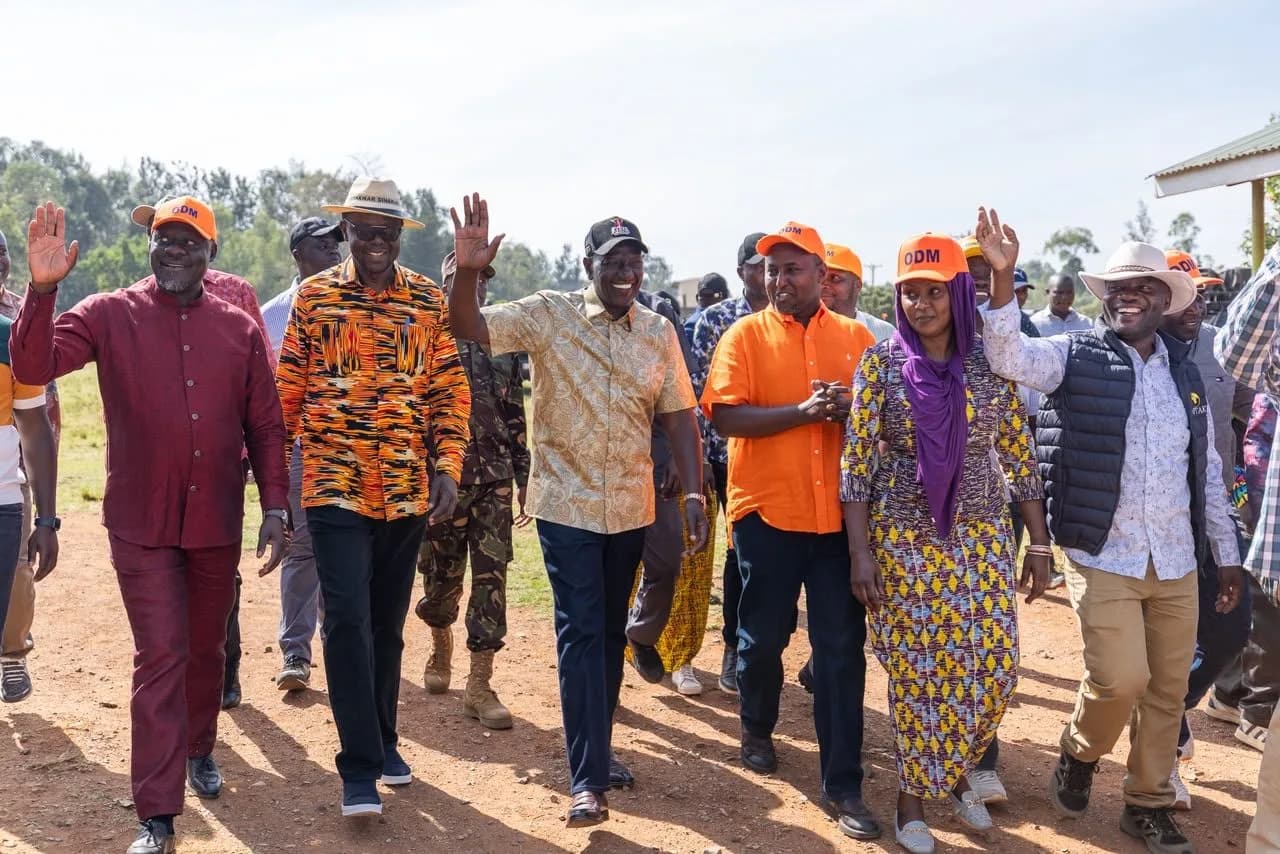
President William Samoei Ruto’s recent tour of Nyanza brought those questions into sharp focus.
The large crowds that turned out in Homa Bay, Siaya, Kisumu and Migori were politically significant. Nyanza has for decades been associated with opposition politics, particularly through its strong support for former Prime Minister Raila Odinga.
Crowds do not automatically translate into votes. But they can indicate political interest, changing attitudes and the level of engagement between government and citizens.
More importantly, President Ruto did not arrive in Nyanza with politics alone. He arrived with a development agenda.
The tour focused heavily on roads, markets, water, housing, energy and other infrastructure. That matters because development is ultimately experienced not in political speeches but in the daily lives of citizens.
Take my native Suna East.
For years, the Posta-Nyikendo-Nyarongi road towards Macalder and the wider Nyatike area has been a familiar source of frustration. It has featured in political promises for years.
Today, construction is under way.
During the Nyanza tour, President Ruto launched construction of the 32-kilometre Posta-Nyikendo-St Philgona-Nyarongi-Macalder-Osiri road at a reported cost of Sh2.11 billion.
For residents, this is the kind of development that can be seen and measured.
It is not simply a promise in a manifesto. It is machinery on the ground and construction taking place.
A better road can mean easier movement of people and goods, improved access to markets and services, and greater opportunities for farmers, traders and fishermen.
This is why the development agenda being advanced by Treasury Cabinet Secretary John Mbadi and other leaders from the region deserves attention. The underlying argument is straightforward: people in Nyanza are entitled to the same level of national investment and infrastructure as Kenyans elsewhere.
President Ruto has similarly framed development as an issue of equity, arguing that investment in Nyanza is not a favour but part of the region’s rightful share of national resources.
That represents an important shift in the political conversation.
For years, development in Kenya has sometimes been viewed through the lens of political loyalty — who voted for whom and which region supported which administration.
But a road does not ask which party someone supports. A water project does not distinguish between government and opposition supporters. A market serves citizens regardless of their political affiliation.
Development should be national.
When communities that have felt neglected see major projects being implemented, it is natural that they will take notice.
Critics may argue that roads are simply the responsibility of government. They are right in principle. Infrastructure is indeed a core responsibility of government.
But governments are also judged on how they discharge that responsibility.
The relevant question is whether projects are delivered, completed and ultimately provide the benefits promised to citizens.
Nyanza has every right to ask those questions.
For decades, many residents have felt that their region’s political choices were accompanied by uneven development. The perception of being an opposition region became deeply embedded in the political culture of Luo Nyanza.
President Ruto is attempting to change that relationship.
Whether this translates into lasting political realignment remains a question for voters to answer.
The role of local leaders will also be important.
For Suna East MP Junet Mohamed and other leaders who have embraced cooperation with the Kenya Kwanza administration, development projects provide an opportunity to demonstrate what political access can deliver for their constituents.
But the test should not simply be whether leaders can secure announcements. It should be whether those announcements become completed projects that improve people’s lives.
The same applies to projects highlighted elsewhere in Nyanza, including water and sanitation investments in Kisumu, roads and bridges in Siaya, markets and housing projects in Homa Bay, and infrastructure investments across Migori.
Together, these projects represent an attempt to make the national government’s presence more tangible in a region where opposition politics has historically been strong.
But development alone does not guarantee political loyalty.
Kenyans can appreciate a road while still demanding jobs. They can welcome a market while asking whether it will generate business. They can support housing while questioning its affordability.
That is why delivery must be continuous, measurable and inclusive.
Nyanza does not need sympathy. It needs equity.
It does not need to be reminded of its political history. It needs to feel that it is an equal participant in Kenya’s national development.
The President’s challenge is now to ensure that projects announced and launched during the tour are completed and deliver the promised benefits.
The challenge for Nyanza’s leaders is to ensure that the region gets maximum value from its relationship with the national government.
And the challenge for voters is to judge political promises against what eventually appears on the ground.
The significance of the Nyanza tour should therefore not be measured only by the size of the crowds.
It should be measured by what happens after the crowds have gone home.
If roads are completed, water reaches households, markets become centres of commerce and infrastructure unlocks new economic opportunities, the development dividend will be tangible.
And when development becomes tangible, it inevitably becomes part of how citizens assess government.
Whether that assessment influences voting decisions in 2027 will ultimately be determined by the people of Nyanza.


Comments
No comments yet. Be the first to share your thoughts.